How to Remove Window Blinds and Shades Safely and Easily
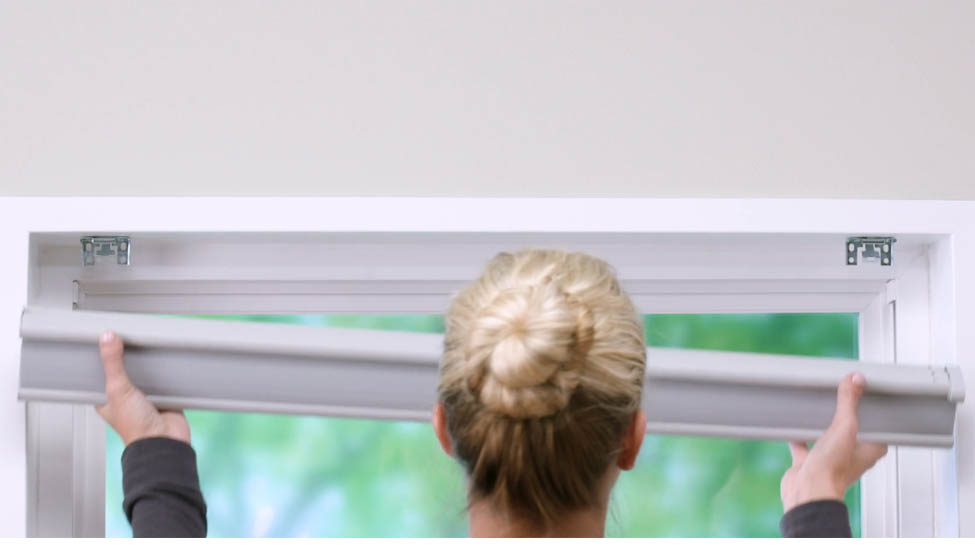
Taking down window blinds and shades looks simple until a bracket refuses to let go or a valance blocks the whole headrail. Whether you are swapping old treatments for new ones, prepping for a deep clean, or making room for a different look, knowing how to remove window blinds and shades the right way keeps your walls, frames, and hardware intact. This guide walks you through the process by product type so nothing stalls halfway.
The Safe Way to Take Down Any Blind or Shade
Every removal follows the same basic arc: clear the valance, figure out how your headrail is held in place, then release it using the method that matches your specific product. The trick is that a roller shade comes out of its brackets in a completely different way than a set of mini blinds, so identifying what you have before you start saves you the guesswork that leads to bent brackets and scratched frames.
Gather Your Tools
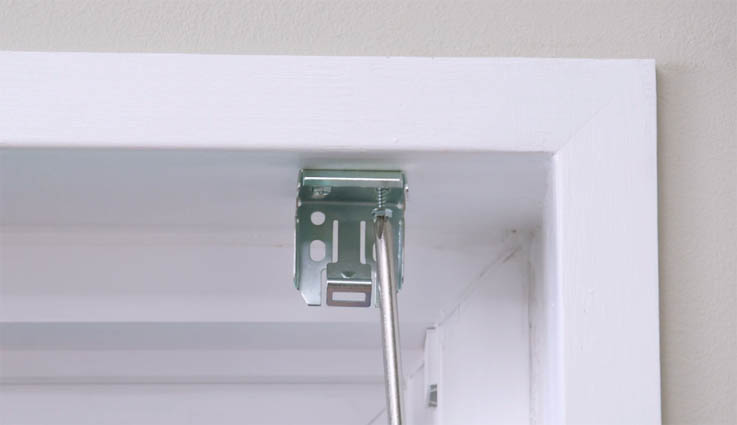
Before you start, set out the few tools that make removal smoother and safer. Having everything within reach means you will not be halfway up a step stool when you realize you need something.
A screwdriver or power drill handles the screws holding most brackets, with a Phillips head for cross-head screws and a flat head for slotted ones. A ladder or step stool gives you safe, stable access to high windows without stretching. Pliers help loosen stubborn clips or brackets that will not budge by hand. Protective eyewear guards against falling dust and debris when you are working overhead. Work gloves protect your hands from sharp edges, which matter most with aluminum mini blinds, since their thin metal slats can nick bare skin.
Remove the Valance (If Applicable)
Many blinds and shades sit behind a decorative valance that snaps onto the front of the headrail and hides the brackets entirely. If yours has one, this comes off first. Look for small plastic valance clips spaced along the top, then gently pull the valance straight toward you to release it from each clip. Some valances slide off to one side instead. Set it aside carefully, because you will usually want to reinstall it on your new treatment or keep it with the old one.
Identify Your Bracket Type
Once the valance is off, you can see how the headrail is mounted, and this determines your next move. Most windows use one of two systems. Box or open brackets are visible holders that the headrail sits inside, secured by a hinged front piece or a snap cover you flip open by hand. Spring-loaded or hidden brackets grip the headrail from behind and release when you push the shade up and toward the window, then tilt the front down. Knowing which one you have tells you whether to unclip, unsnap, or push and tilt.
Raise the Shade Completely
Before removing the shade, raise it up completely. This makes it easier to detach the shade from the brackets and to handle once you remove it. For horizontal window blinds, leaving a gap at the top (not fully raised) can help you hold the headrail directly by gripping it in the space between slats at the top of the blind.
Remove the Shade from Its Brackets
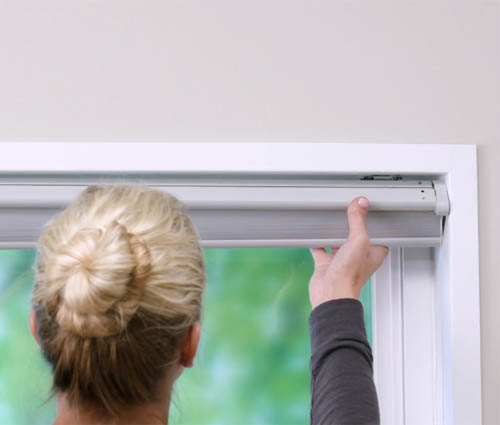
This is the step where product type matters most. The four methods below cover the treatments most homes have, so find the one that matches yours and follow those steps rather than forcing a generic approach.
Roller Shades
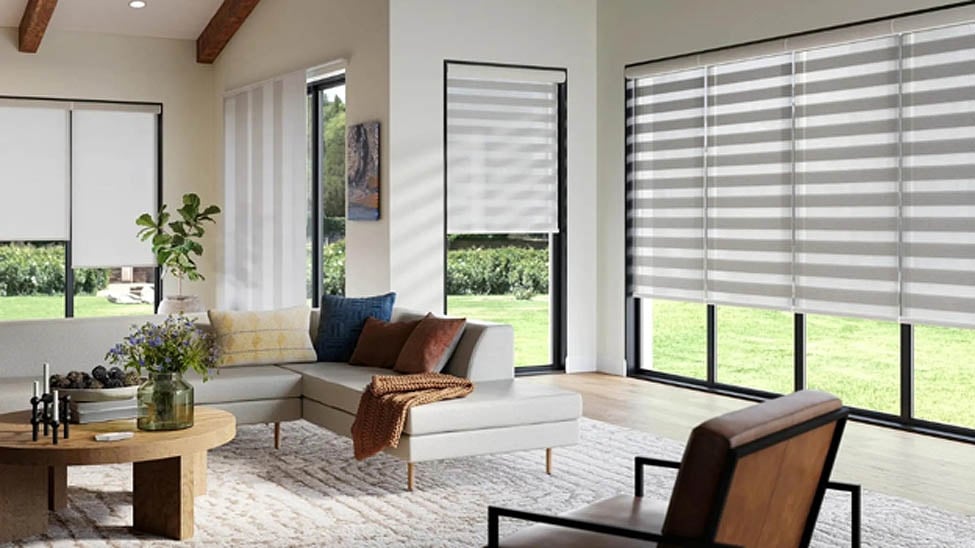
Look at the ends of the roller tube. One side has a pin and the other sits in a bracket slot. Push the shade gently toward the spring-loaded (pin) side to compress it, then swing the opposite end out of its bracket and release the pin side. If you have roller shades, this pin-and-slot design means the tube pops free without any tools once you know which end to push.
Cellular and Honeycomb Shades
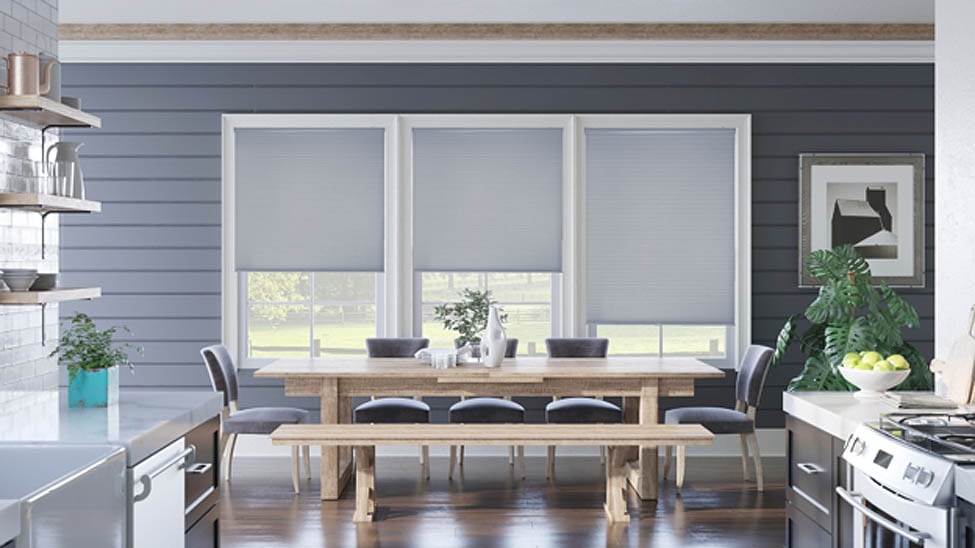
The headrail on cellular shades usually clips into hidden brackets at the top. Push the shade up and back toward the window to disengage the front lip of each bracket, then pull the front of the headrail down and toward you. Work along the width, releasing each bracket in turn while supporting the shade so it does not drop once the last clip lets go.
Roman Shades
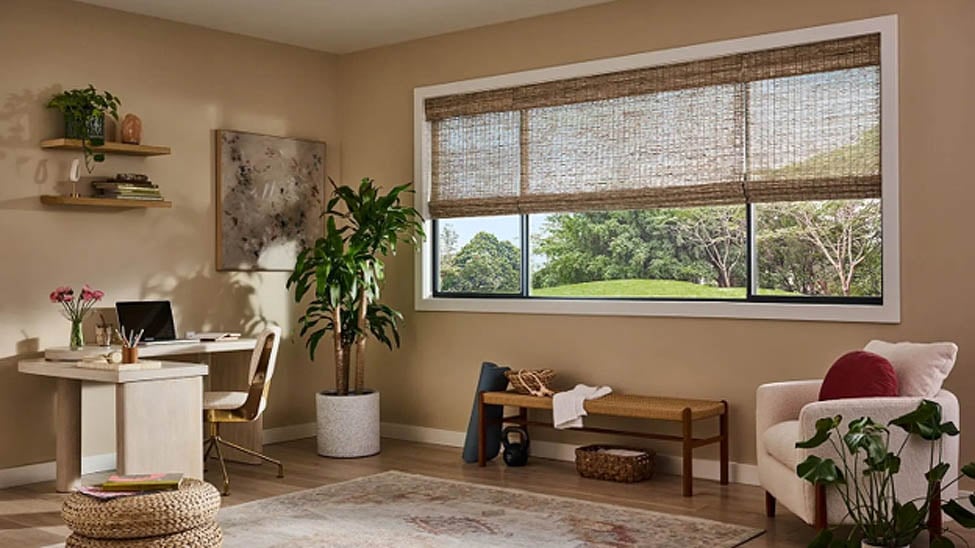
Roman shades typically mount on brackets with a hinged clip or cover. Flip open the front of each bracket, then lift the headrail up and out. If your Roman shade uses spring clips instead, push the headrail back and tilt the bottom edge down to release it. Keep the fabric gathered as you lower it to avoid catching the folds.
Mini and Horizontal Blinds
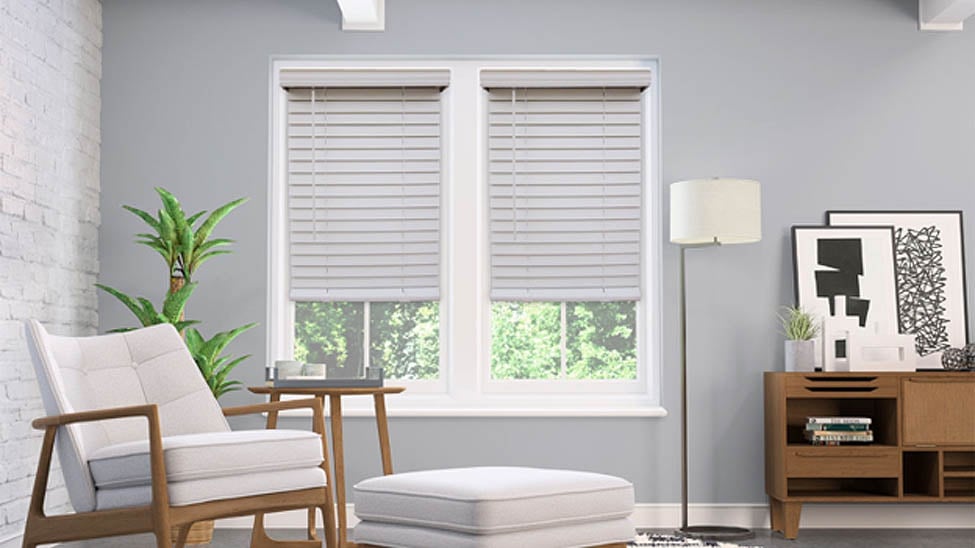
For aluminum mini blinds and other horizontal blinds, open the hinged cover on the front of each box bracket. Tilt the headrail toward you and lift it out of the open brackets. Wearing your work gloves here is worth it, since the metal slats and bracket edges on aluminum mini blinds can be sharp. Support the full weight as the last bracket releases.
Detach Any Safety Clips or Mounts
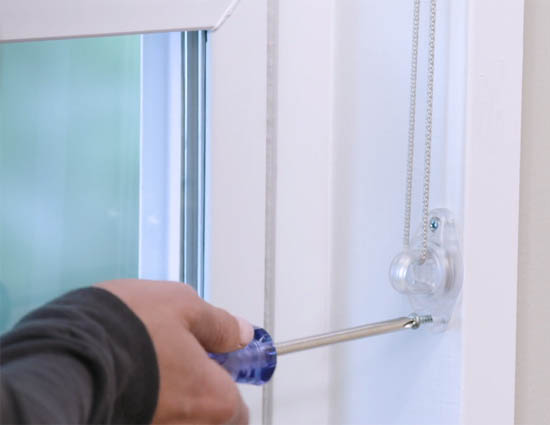
Some shades have additional safety clips or cord tensioners installed to prevent hazards. Before removing the hardware, carefully detach any clips, chains, or tension devices securing the shade. Then unscrew the mounting brackets. You can then install your new blind or shade.
Store or Dispose of the Shade Properly
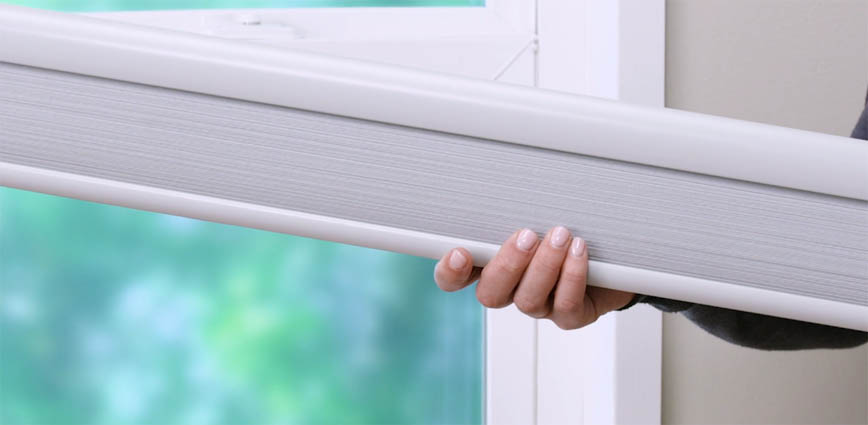
Once the shade is removed, decide whether to store, reuse, or dispose of it:
- Reinstalling Later? Store it in a clean, dry place to prevent dust buildup.
- Donating? If the shade is in good condition, consider donating it to a local charity or reuse center.
- Disposing? Check local recycling options for responsible disposal, especially for plastic, fabric, or metal shades.
Following these steps ensures a safe and efficient window shade removal process without damaging your window or surrounding area. And if you're considering installing a new window treatment, learn more about Installing Blinds Outside the Window Frame for a stylish and functional alternative.
Ready for What Comes Next
Removing a blind or shade cleanly is really the first step in a bigger project, whether that is a fresh look, a deep clean, or a better fit. When you are ready to measure and install the replacement, our measuring instructions and installation instructions walk you through getting a precise custom fit, and you can browse roller shades and cellular shades if you are rethinking the room entirely. Every Blindster order is custom made and backed by the Fit or Free Guarantee.
Frequently Asked Questions
How do you remove blinds from brackets?
Open the hinged cover or clip on the front of each bracket, then tilt the headrail toward you and lift it out. For hidden or spring-loaded brackets, push the headrail up and back toward the window, then pull the front down to release it. Support the weight as the final bracket lets go.
How do you take blinds off a window without a screwdriver?
Many blinds come out without any tools. Box brackets have a hinged front cover you flip open by hand, and spring-loaded brackets release when you push the headrail back and tilt it down. You only need a screwdriver when you also want to remove the empty mounting brackets from the wall afterward.
Can you remove and reinstall window blinds?
Yes. As long as you keep the brackets, valance, and any clips together, most blinds and shades can be taken down and put back up. Store the treatment in a clean, dry place while it is down, and follow our installation instructions to remount it level and secure.
How do you remove a shade from a window without damaging the wall?
Work slowly and support the headrail so it never drops and yanks the brackets. Release the brackets by hand where possible rather than prying with a screwdriver, and only unscrew the wall-mounted brackets themselves once the shade is safely down. Fill any leftover screw holes before repainting or reinstalling.
- The Best Dust-Resistant Blinds for Cleaner Homes & Less AllergiesBlinds, Shades & ShuttersHome Advice
- How Classic Value Faux Wood Blinds Compare to Real Wood and Faux Wood OptionsBlinds, Shades & Shutters
- Best Window Treatments for Living Rooms: Style, Light, and Privacy GuideBlinds, Shades & ShuttersDesign & Decor
- What Cell Size Do I Need? Cellular Shade Sizes ExplainedBlinds, Shades & Shutters
- How to Choose the Perfect Bamboo Shades for Your HomeBlinds, Shades & ShuttersHow To