Bamboo Blinds vs Wood Blinds: Which Is Better?
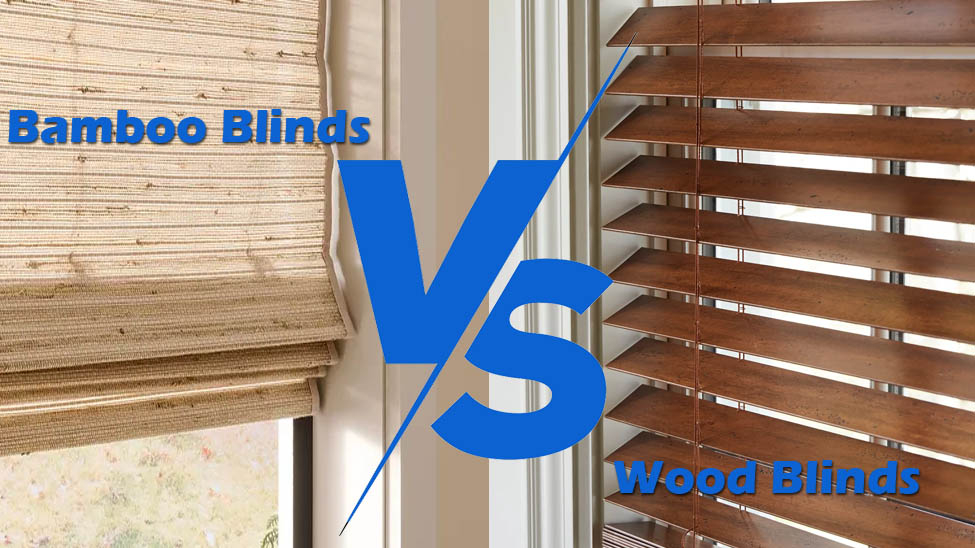
Bamboo blinds and wood blinds get cross-shopped constantly, and yet they are not really the same kind of product. One is a soft woven shade, the other a slatted blind, and they behave differently at the window because of it.
So the honest version of bamboo blinds vs wood blinds is not which is better outright, but which suits the look you want, the light control you need, and the room you are dressing.
Bamboo blinds and wood blinds are not the same product
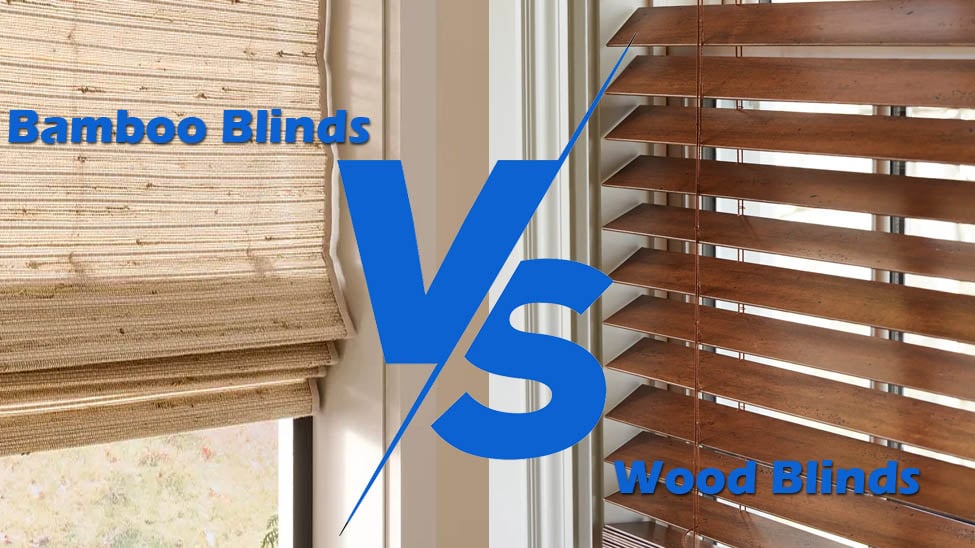
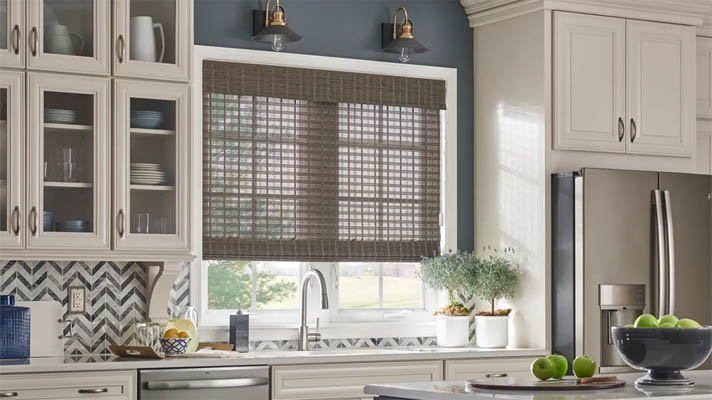
This is the distinction everything else follows from. A bamboo blind is a woven wood shade, made from real bamboo slats, grasses, and reeds strung together, and it raises in soft folds or rolls up rather than tilting. A bamboo woven wood shade filters daylight through the weave and brings organic, textured warmth to a room.
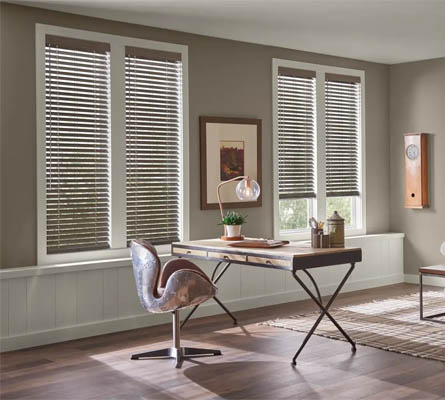
A wood blind is a slatted horizontal blind cut from real hardwood, usually kiln-dried basswood, and its slats tilt open and closed. A real wood blind gives you a tailored, classic look and precise, adjustable control that a woven shade simply cannot match.
Light control and privacy
This is where the structural difference shows up most. Wood blinds tilt, so you can angle the slats to soften harsh afternoon sun, let in morning light, or block sightlines from outside, all without raising the blind. That day-to-day adjustability is their strongest card.
Bamboo shades filter light beautifully but do not tilt, and because the weave has small gaps, an unlined bamboo shade is not fully private after dark, when interior lights make silhouettes visible from outside. The fix is a privacy or blackout liner, which most bamboo shades offer, but it is a decision to make up front rather than an afterthought.
Which holds up in humidity
Neither is a true moisture fighter, since both are natural materials. Real wood warps, cracks, and can discolor when it takes on steam, which rules it out of a busy bathroom. Bamboo's woven fibers flex a little more with humidity swings, but they still absorb moisture and can mildew if the room stays damp and poorly aired. If the window sits in a genuinely wet room, the right answer is neither; it is a faux wood blind, whose PVC construction shrugs off the moisture that damages both bamboo and wood.
Insulation and energy
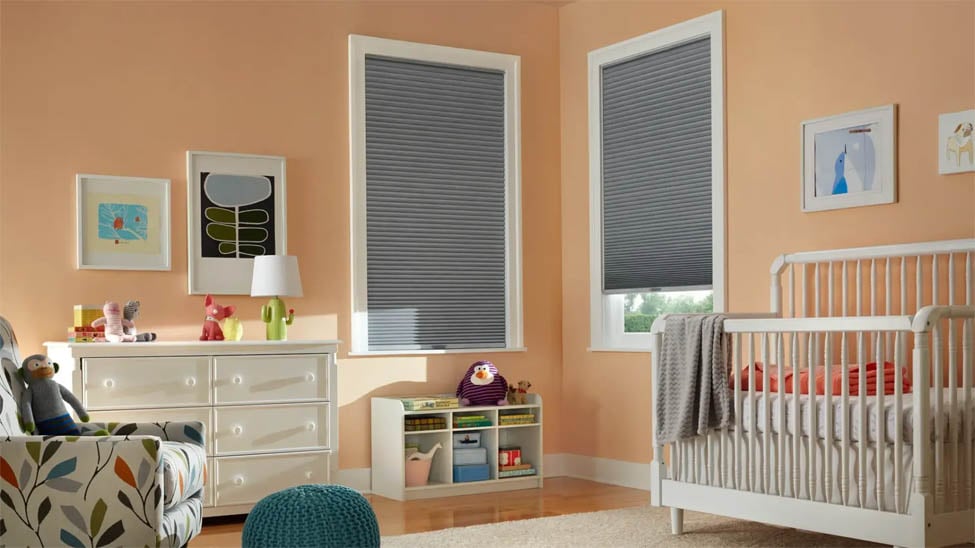
Both offer moderate insulation, with real wood's solid slats holding an edge over an open bamboo weave when the blind is tilted closed. Adding a liner to a bamboo shade closes that gap and cuts drafts and solar heat gain. Just keep the expectation realistic: for serious thermal performance, neither flat material beats a cellular shade, whose honeycomb cells trap air specifically to slow heat transfer. If the energy bill is the priority, that is the category to look at.
Eco credentials and lifespan
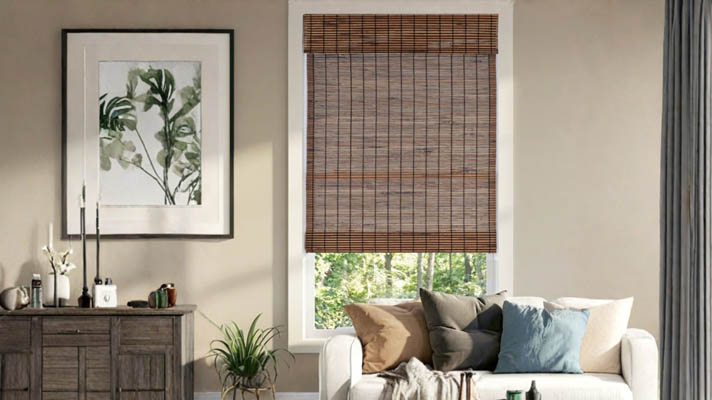
Sustainability is where bamboo shines, and it is worth being precise about why. Bamboo is a fast-growing renewable grass that reaches full size in months, whereas hardwood takes years, so the raw material is more renewable. Wood, though, tends to last longer, often a decade or more with care and the ability to be refinished, while bamboo usually runs a shorter span and cannot be refinished. Because a longer lifespan means fewer replacements, the per-year footprint of the two is closer than the raw-material story suggests.
Choose texture or tailored control
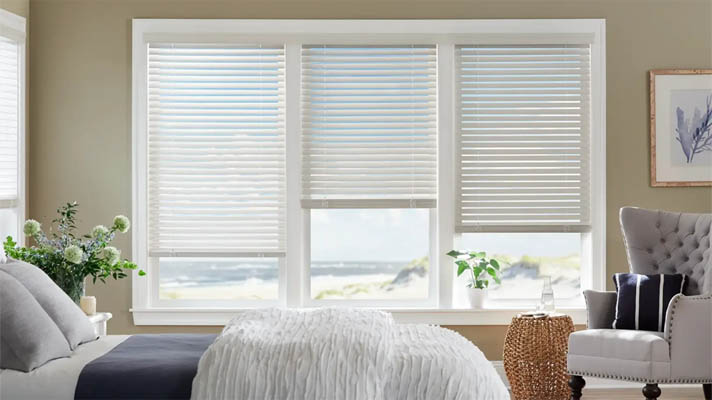
The real decision is what you want the window to give you. Choose bamboo for organic texture, a lighter environmental footprint, and a warm, filtered glow in a dry living space. Choose wood blinds for tailored good looks, precise daily light control, and a longer, refinishable life. And for a wet room, skip the debate and reach for faux wood. Browse the range of natural bamboo shades and real wood blinds and match the material to the room.
FAQs
Which option lasts longer in humid climates?
Faux wood outlasts both in humidity. Between bamboo and real wood, it is close and depends on ventilation and treatment, with real wood more prone to warping and cracking and bamboo more prone to mildew if it stays damp.
Do bamboo blinds provide the same privacy as wood blinds?
Not on their own. Wood blinds tilt closed for full privacy, while an unlined bamboo shade shows silhouettes at night with interior lights on. Adding a privacy or blackout liner brings a bamboo shade up to full privacy.
Which material is easier to maintain?
Both need little more than weekly dusting and should never be soaked. Wood can be wiped and, unlike bamboo, refinished after years of wear, while bamboo's woven texture can trap a bit more dust in the gaps.
Are bamboo blinds better for eco-conscious homes?
The raw material is more renewable, since bamboo is a fast-growing grass rather than a slow-growing tree. Wood's longer lifespan narrows the gap, so the greenest choice depends on how long each will last in your home.
Which option offers better insulation?
Real wood's solid slats insulate slightly better than an open bamboo weave, and a liner closes the gap on a bamboo shade. For real thermal performance, a cellular shade outperforms both.
Can you put bamboo or wood blinds in a bathroom?
It is not recommended for a wet bathroom. Both are natural materials that warp or mildew with sustained moisture. A moisture-proof faux wood blind is the better choice for bathrooms and kitchens.
- Best Cellular Shades for Winter Energy SavingsBlinds, Shades & ShuttersHome Advice
- Bamboo Blinds vs Wood Blinds: Which Is Better?Blinds, Shades & Shutters
- Window Treatment Trends for 2027Blinds, Shades & ShuttersDesign & Decor
- Best Roman Shades for BathroomsBlinds, Shades & Shutters
- Do You Need Blackout Curtains or Shades for a Nursery?Blinds, Shades & ShuttersCommon Questions