Do You Need Blackout Curtains or Shades for a Nursery?
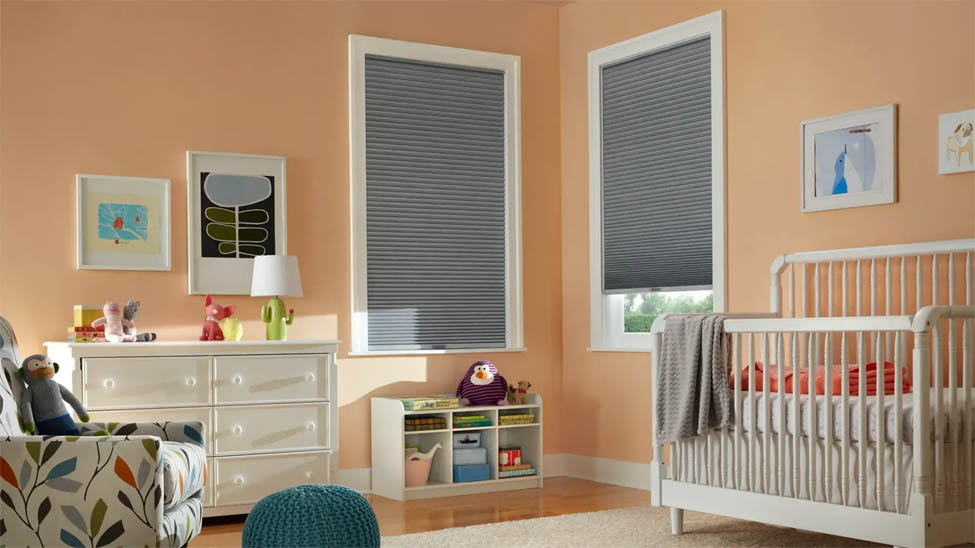
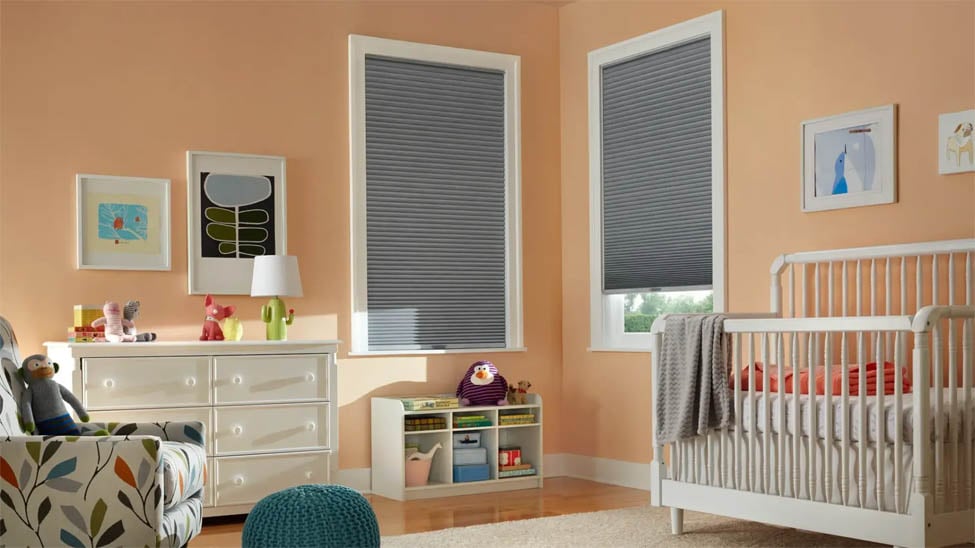
For most nurseries, the short answer is yes: a room that stays dark helps a baby fall asleep and stay asleep, especially for daytime naps and those early summer mornings that arrive long before you are ready. The more useful question is which form of blackout to use. Between blackout curtains and blackout shades, a cordless blackout shade usually wins on the three things that matter most in a baby's room: a tight custom fit, cord-free safety, and easier cleaning.
Why darkness helps a baby sleep
Babies spend most of their early months asleep, and their developing sleep cycles are strongly cued by light and dark. A dark room supports the natural melatonin release that helps a baby settle and stay down, which is why a consistent dark environment can make bedtime routines more effective. Naps are where it matters most. A bright midday room turns drowsy cues into wide-awake ones, so blocking daylight is often the difference between a full nap and a short one. Early morning light does the same thing at dawn, waking a baby sooner than anyone wants.
Safety comes first, so go cordless
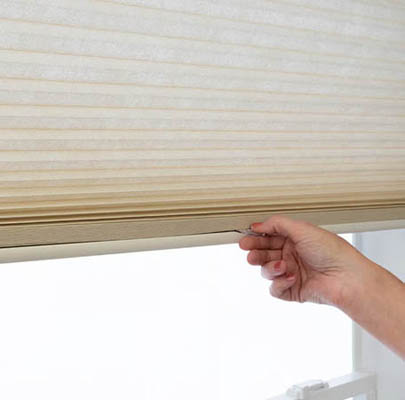
Before darkness, the non-negotiable in a nursery is cord safety. The U.S. Consumer Product Safety Commission has documented that around nine children under five die each year from accidents with corded window coverings, and it points to cordless products as the safest option, a priority reflected in the 2022 federal safety standard. The takeaway for a nursery is simple: skip any corded blind or shade near the crib. A cordless cellular shade removes the hazard entirely, and a motorized shade does the same while letting you raise or lower it by remote without disturbing a sleeping baby.
Shades or curtains for a nursery?
This is where shades pull ahead. A custom shade is built to the exact window, so it sits tight to the frame with fewer gaps than a curtain panel that hangs loose. A blackout roller shade wipes clean with a damp cloth, whereas curtains have to come down and go through the wash. And a cordless shade sidesteps the twin curtain hazards of heavy panels a toddler can pull down and fabric that pools on the floor. Curtains still have a role, but as a layer over the shade rather than the sole treatment. The most effective nursery setup is a cordless blackout shade at the window with a curtain layered over it to catch the light that slips around the edges.
The honest truth about blackout and light leaks
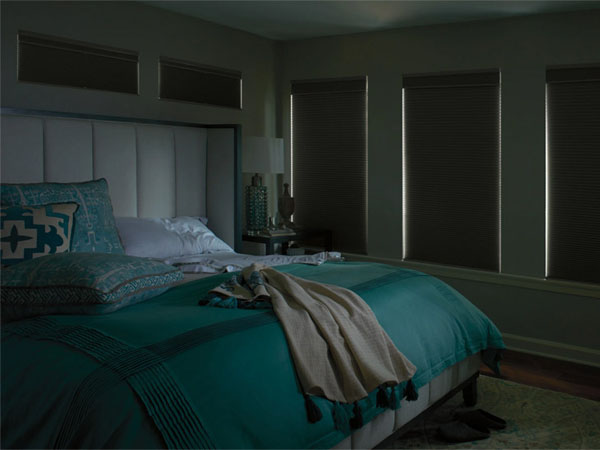
It helps to be clear about what blackout fabric actually does. It blocks light through the fabric itself, but it does not make a room pitch black on its own. An inside-mounted shade leaves a small gap between the shade and the window frame, and daylight seeps around that edge no matter how good the fabric is. In most windows, this looks like a subdued "halo" of light around the sides of the shade. Depending on the type of shade, this gap can be very small (under 1/4" for cellular shades) or slightly larger (between 1/2" and 3/4" for roller shades).
Either case is often suitable for most situations, as the majority of incoming light is blocked. If maximum light blockage is desired, you can choose to mount the shade outside the frame so it overlaps the wall on all sides, or layer a curtain over an inside-mounted shade, and you get far closer to true darkness than either piece manages alone. Set your expectations around the mount and the edges and the desired amount of light reduction, not the fabric's light-blocking rating.
Temperature matters too
Darkness is only half of a good sleep environment, since babies sleep best in a cool, stable room. Windows are one of the biggest sources of heat gain and loss in a house, which means the treatment you choose affects the temperature around the crib as much as the light.
A blackout cellular shade does double duty here: its honeycomb cells trap air to slow heat transfer, helping hold the room closer to a comfortable sleeping temperature while it blocks the light. If you want a softer glow for playtime rather than full dark, a light-filtering cellular shade keeps some of that insulation with a gentler light.
Start dark, safe, and cordless
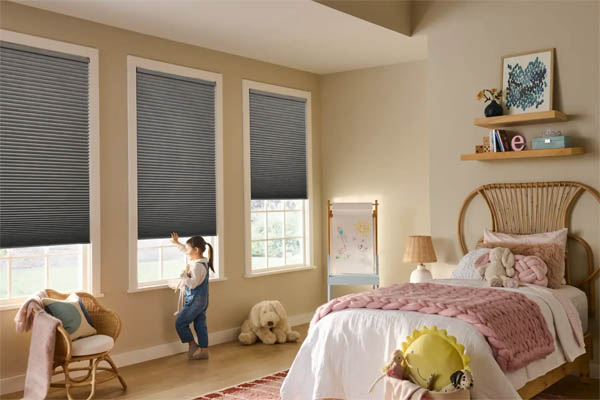
A nursery does benefit from blackout, and the best way to get there is a cordless blackout shade fitted tight to the window, layered with a curtain if you want true darkness. Lead with cord-free safety, use the mount and the edges to close light gaps if desired, and let an insulating shade help hold the temperature. Browse cordless roller shades and cellular options and build the room around safe, restful sleep.
FAQs
Do babies sleep better with blackout curtains or shades?
Babies do sleep better in a dark room, and shades tend to deliver it more reliably. A custom shade fits tightly to the window with fewer gaps than loose curtain panels, and layering a curtain over a shade gives the deepest darkness.
What percentage of light should nursery blackout treatments block?
Blackout fabric blocks nearly all light passing through the fabric itself, but the rating matters less than the mount. Most remaining light sneaks in at the edges, so an outside mount or a layered curtain does more for darkness than a higher fabric rating.
Are cordless blackout blinds safer for a nursery?
Yes. Corded window coverings are a documented strangulation hazard for young children, and safety authorities point to cordless as the safest option. A cordless or motorized shade removes the cord entirely, which is essential near a crib.
Do blackout shades help regulate nursery temperature?
They can, especially cellular shades. The honeycomb cells trap air and slow heat transfer through the window, helping keep the room closer to the cool, stable temperature babies sleep best in.
Are blackout shades good for daytime naps?
They are one of the best tools for naps. Daytime brightness is the main reason short naps happen, so blocking that light helps a baby settle and stay asleep through the middle of the day.
How do you layer blackout shades with curtains?
Mount the blackout shade tight to the window as the primary light blocker, then hang curtains over it, extended past the frame on all sides. The shade handles most of the light and the curtain catches the seepage around the edges.
- Do You Need Blackout Curtains or Shades for a Nursery?Blinds, Shades & ShuttersCommon Questions
- Best Window Treatments for Sunny RoomsBlinds, Shades & Shutters
- Best Fabrics for Roman Shades: How to Choose the Right MaterialBlinds, Shades & ShuttersHow To
- Faux Wood vs Aluminum Blinds: Which is Better?Blinds, Shades & Shutters
- Best Roller Shades for Kitchens & BathroomsBlinds, Shades & Shutters