Best Roller Shades for Kitchens & Bathrooms
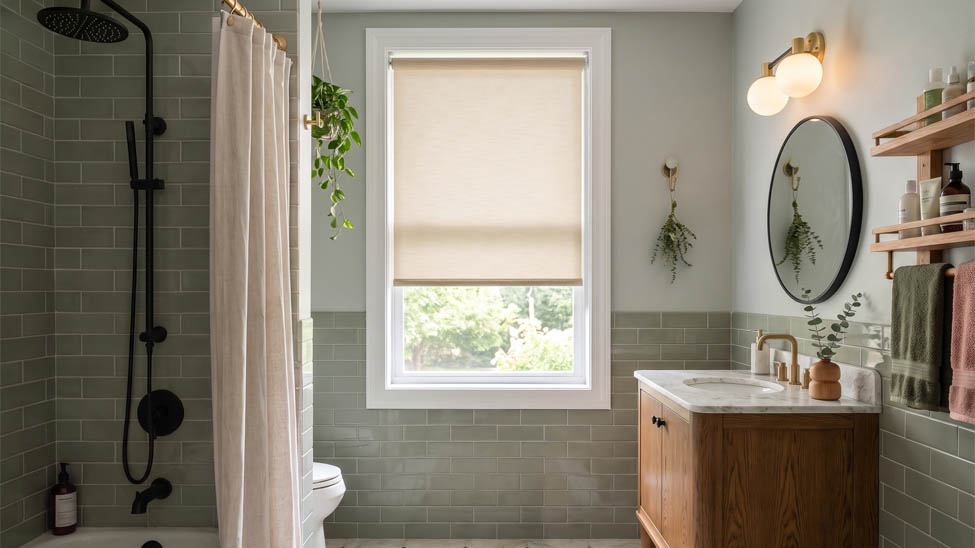
Kitchens and bathrooms wreck window treatments, just not in the same way. A bathroom attacks with steam, standing humidity, and mildew. A kitchen throws splashes, airborne grease, cooking odors, and hard afternoon glare over the sink.
A roller shade, sometimes called a roller blind, is a natural fit for both because it sits flat against the window and wipes down easily, but the best roller shades for a kitchen are not always the best ones for a bath. Matching the shade to the room's specific mess is the whole game.
Why kitchens and bathrooms need different rollers
Both rooms are humid, so people shop for them as one. Treat them separately, and you choose better. The enemy is different in each.
- Bathroom: sustained steam and humidity that feeds mold, plus a real need for privacy. The EPA advises keeping indoor humidity below 60 percent, and showering blows straight past that, so the priority is a shade that resists moisture and dries fast.
- Kitchen: direct splashes near the sink, greasy film in the air, lingering odors, and strong glare on screens and countertops. The priority is a surface that wipes clean and does not soak up smells.
The materials that actually shrug off water
"Waterproof" gets used loosely in this category. Only a couple of materials truly earn it, and the rest are water-resistant, which is often enough.
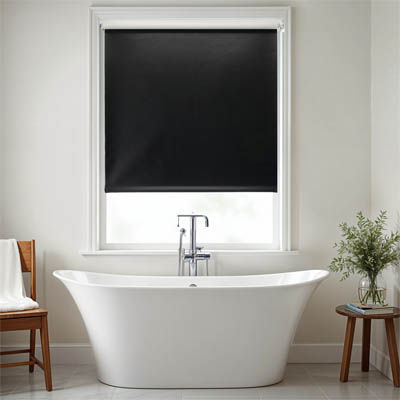
- Vinyl and PVC. Water beads up and rolls off, the surface wipes clean, and it will not warp, crack, or stain. A Deluxe Blackout Vinyl Roller Shade is the closest thing to a truly waterproof pick and the one to put where water lands.
- Coated and performance fabrics. A Deluxe Light Filtering Fabric Roller Shade handles steam and humidity and keeps a softer, more decorative look, but it is water-resistant, not splash-proof.
- Natural woven wood. Lovely in a dry room, wrong for a wet one.
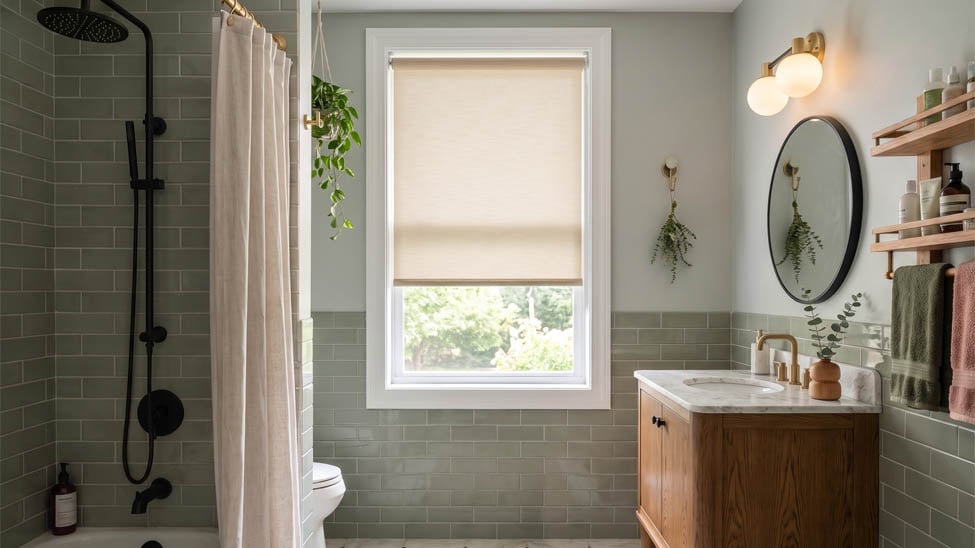
Best roller shades for the bathroom
In a bathroom, moisture and privacy drive the decision. Pick a material that dries fast and a liner that keeps you unseen.
- For a window near the shower, go vinyl. It repels moisture and wipes clean when steam leaves a film.
- For a window away from direct spray, a performance fabric roller adds warmth while still handling humidity.
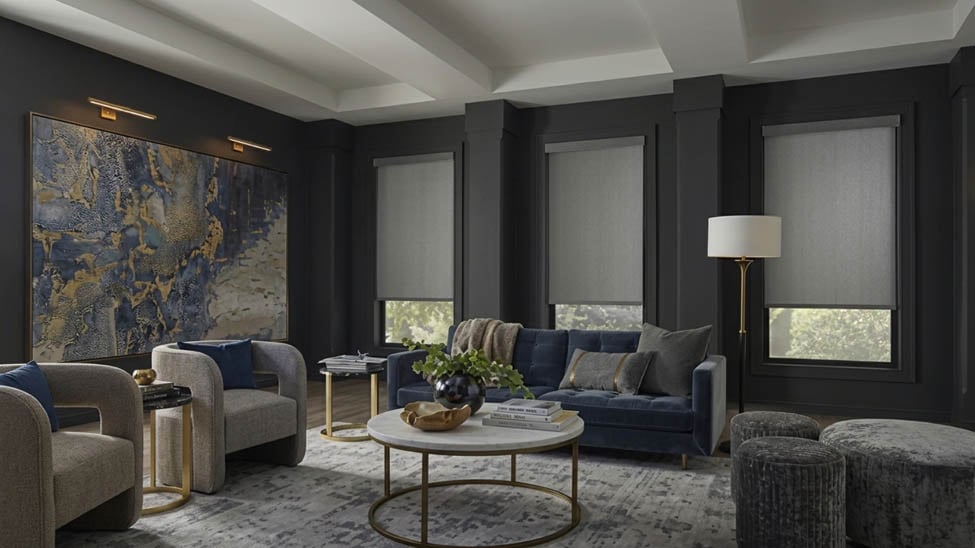
- For privacy, a light-filtering fabric keeps the room private day and night while holding a soft glow. On a street-facing bath, step up to a Deluxe Blackout Fabric Roller Shade for full coverage after dark.
- Mount outside the opening and run the fan so the shade dries between showers.
Best roller shades for the kitchen
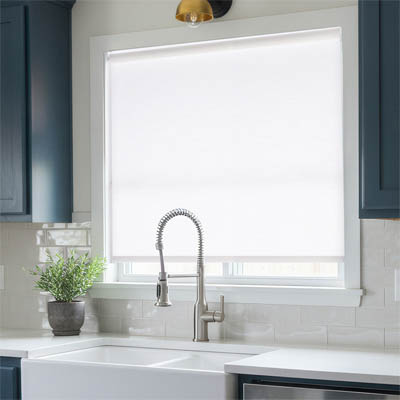
A kitchen asks for a surface you can wipe and controls you can work with your hands full. Function leads here; style follows close behind.
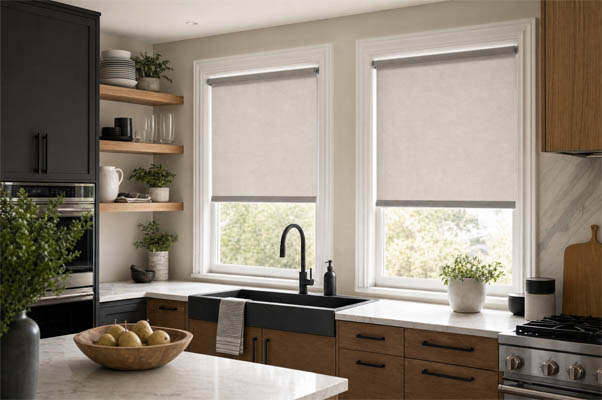
- Over the sink, choose wipeable vinyl. Splashes and grease come off with a damp cloth, which fabric cannot match.
- For hands-free control while cooking, a Motorized Deluxe Light Filtering Roller Shade adjusts light without touching the shade with wet or floury hands.
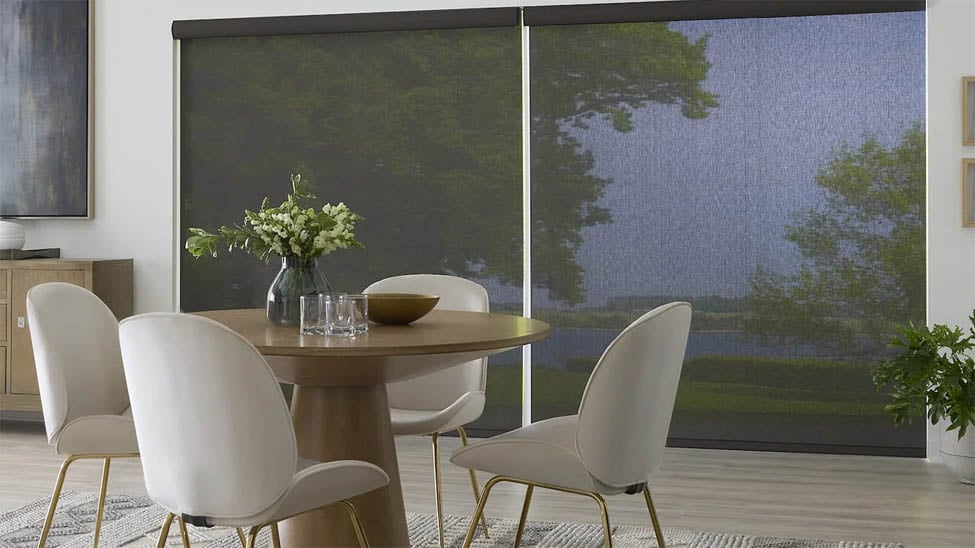
- For glare on screens and counters, a light-filtering or solar fabric cuts the harsh afternoon sun while keeping the view.
- Skip anything that traps odors. Porous fabrics hold cooking smells, while a smooth vinyl face does not.
"Waterproof" versus "water-resistant," and what you are really buying
This is the line most guides blur. Very few window shades are genuinely waterproof. Vinyl and PVC come closest because water cannot penetrate them, which is why they belong in splash zones. Coated and performance fabrics are water-resistant: they tolerate steam and the odd splatter and dry out fine, but they are not built to be rained on daily. Buy vinyl where water actually hits the shade, and buy a good performance fabric everywhere the air is just humid. Match the claim to the window, and you will not overpay for protection you do not need, or underbuy where you do.
Give each room the roller it can survive
The right roller shade is the one built for the exact abuse the window takes: vinyl where water lands, performance fabric where the air is merely humid, and a privacy liner wherever the neighbors can see in. Sort the window first, then the finish. Browse the full roller shade range and the wider selection of window shades to match each wet room with a shade that lasts.
FAQs
A few specifics come up once you are choosing a roller for a kitchen or bath. Here are the short answers.
Which roller shade material works best in humid rooms?
Vinyl and PVC for direct moisture and splashes, since water rolls off and they will not warp or stain. Coated performance fabric works well where the room is humid, but the shade does not get wet.
Do roller shades absorb cooking odors?
Fabric rollers can hold odors and greasy film over time. A vinyl or PVC roller has a smooth, non-porous face that wipes clean and does not trap smells, which is why it suits kitchens.
Are vinyl roller shades waterproof?
Effectively, yes. Water cannot soak into vinyl, so it beads and wipes away, and the shade will not warp or grow mold. That makes vinyl the go-to for windows right over a sink or beside a tub.
How do roller shades compare with faux wood blinds in kitchens?
Both resist moisture well, since faux wood is non-porous too. Roller shades give a sleeker, space-saving line and wipe down faster, while faux wood offers tilt control for fine-tuning light. In a splash zone, a vinyl roller is the easier surface to keep clean.
Can roller shades be cleaned without removing them?
Yes. That is a core advantage. Wipe a vinyl roller with a damp cloth in place, and dust or spot-clean a fabric roller on the window. Neither needs to come down for routine cleaning.
Are solar roller shades private at night in a bathroom?
No. Solar shades reduce daytime glare and let you see out, but after dark, with the interior lights on they become see-through from outside. For a bathroom, use a vinyl, light-filtering, or blackout fabric roller for real nighttime privacy.
- Best Roller Shades for Kitchens & BathroomsBlinds, Shades & Shutters
- Do Cordless Blinds Break Easily?Blinds, Shades & ShuttersCommon Questions
- Minimalist Window Treatment Ideas for Modern HomesBlinds, Shades & ShuttersDesign & Decor
- Best Window Treatments for Home Energy Efficiency (Beyond Cellular Shades)Blinds, Shades & ShuttersHome Advice
- Types of Roman Shade Styles ExplainedBlinds, Shades & Shutters