Do Cordless Blinds Break Easily?
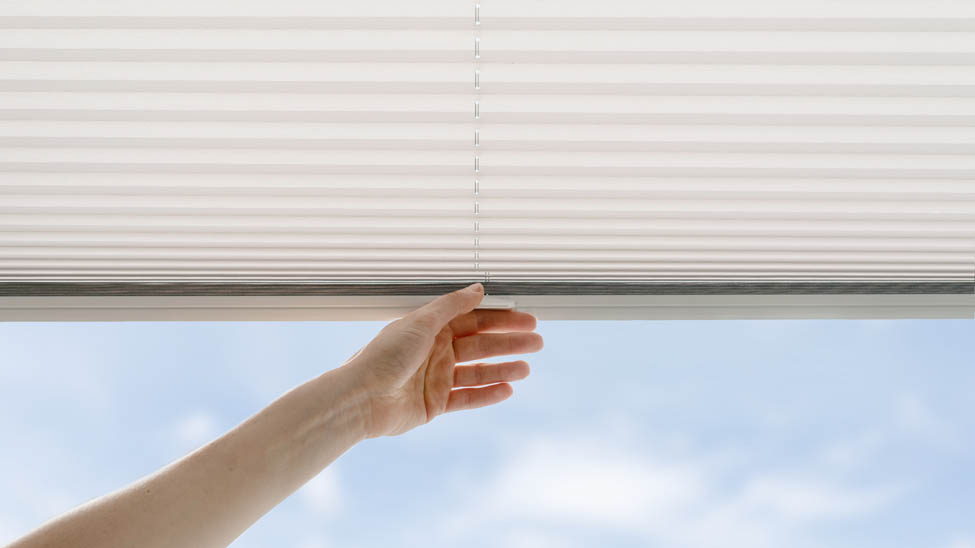
The worry behind "do cordless blinds break easily" is a fair one: you switched to cordless for safety, and now you are wondering if you traded a child hazard for a shade that jams in a year.
The honest answer is that a well-made cordless blind is one of the more reliable window coverings you can buy, because it removes the part that fails most on traditional blinds. The failures people do run into are almost always about sizing, quality, or handling, not some built-in fragility.
How reliable cordless blinds really are
A cordless blind trades external lift cords for an internal spring mechanism, and that matters because those external cords are the classic weak point. They fray, snap, and tangle, so taking them away removes the most common failure on a corded blind. With no pull cords to wear out, there are simply fewer things that can break with daily use, and on a quality custom blind, the tension system is built for regular raising and lowering, commonly holding up for many years and often longer on faux wood.
The thing to understand is that reliability tracks quality, not the category. A robust mechanism lasts, while a bargain spring flooded onto the market to hit a price point does not. The gap is the build, not the concept.
What actually makes a cordless blind fail
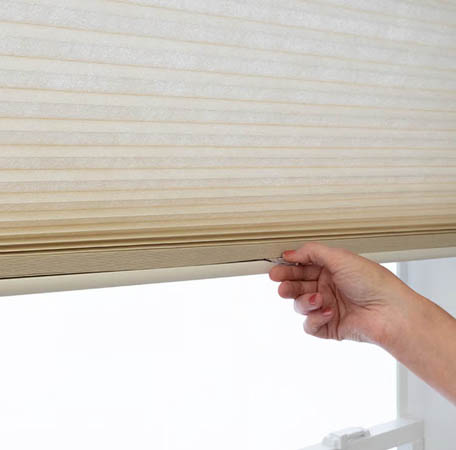
When a cordless blind does quit, the cause is usually predictable, and knowing these keeps you from buying the wrong shade or breaking a good one.
- Oversizing: cordless mechanisms rely on spring tension, so a shade that is too wide or too heavy can overwhelm the spring, which makes accurate measuring essential.
- Cheap internals: low-cost spring systems lose tension, jam, and wear out, especially on larger blinds, which is where a custom-built shade earns its price.
- Forcing a stuck shade: yanking a jammed blind can break internal components or the spring outright, so a stuck shade wants a gentle reset, not force.
- Uneven pulling: lifting from one corner rather than the center of the bottom rail racks the mechanism and shortens its life.
Why cordless became the default, and why that is good
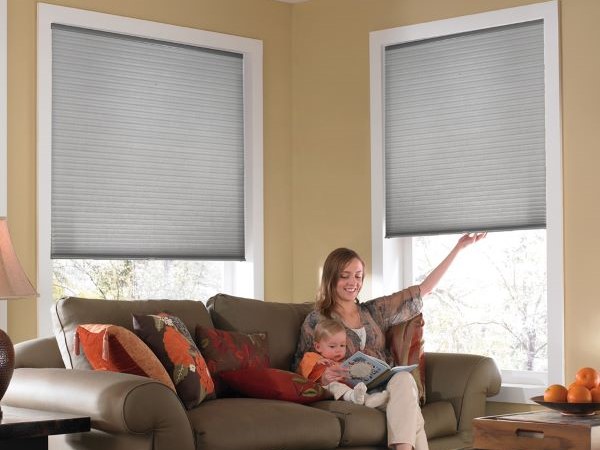
Cordless is not just a style trend. It is a safety response, and the numbers behind it are sobering. According to the CPSC, about nine children under five die each year from strangling in corded window coverings, and in more than 200 incidents recorded from 2009 through 2021, a child died in roughly half of them.
The CPSC calls cordless the safest option, and a 2022 federal standard tightened the rules on hazardous cords. With no accessible cords, the strangulation risk that drives those statistics is simply not there, which is why a cordless faux wood blind is the right call in homes with young children or pets. Losing the dangling cord also gives you a tidier, more modern window.
Getting the most years out of a cordless blind
Most cordless blinds that fail early were either sized wrong or handled roughly, and a little care goes a long way.
- Measure carefully, or let the fit be guaranteed: a 2-inch Deluxe Cordless Faux Wood Blind is custom cut to your window, and a Fit or Free guarantee covers a measuring mistake.
- Lift and lower from the center: pull and push the bottom rail evenly to keep the shade level and the spring balanced.
- Never fight a jam: if it sticks, lower it fully and raise it again slowly rather than forcing it.
- Match the lift to the window: for a very wide or heavy opening, a motorized lift or a continuous cord loop handles the weight better than a plain spring, while a budget-friendly Super Value Cordless Faux Wood Blind covers standard windows well.
Pick a lift built for your window
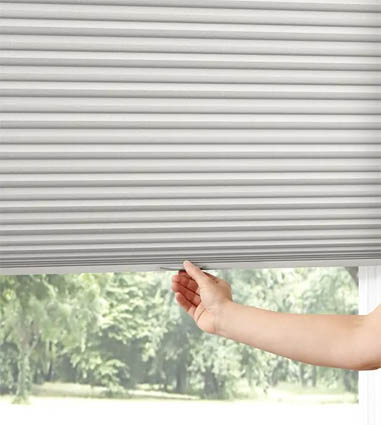
Cordless blinds do not break easily when they are the right size, decently made, and operated with a little care. Size the window accurately, choose a lift rated for the weight, and lift from the center. Browse the range of cordless window shades and faux wood blinds and match the mechanism to the window it has to serve.
FAQs
The same handful of questions come up when homeowners weigh the switch. Here are the straight answers.
What causes cordless blinds to stop working?
Usually a spring that has lost tension from an oversized shade, a low-quality mechanism, or damage from forcing a jam. Uneven lifting from one side over time is another common culprit.
Can broken cordless blinds be repaired?
Often, yes. A shade that will not hold position can sometimes have its spring tension reset, and worn clips or components can be replaced. A spring that has failed outright on a cheap unit is usually not worth repairing.
Do cordless blinds wear out faster than corded blinds?
Not inherently. They remove the external cords that fail most on corded blinds, so a quality cordless shade often lasts as long or longer. A cheap spring mechanism is the exception, which is why build quality matters more than the cord question.
How long do cordless lift mechanisms typically last?
On a well-built custom blind, commonly several years of daily use, and longer on durable materials like faux wood. Correct sizing and gentle operation are the biggest factors in reaching the top of that range.
Are cordless blinds reliable for large windows?
Up to a point. Very wide or heavy shades can strain a spring, so for large openings, a correctly sized roller shade, a continuous cord loop, or a motorized lift is the more dependable choice. For very tall or difficult to reach windows, a motorized or continuous cord loop shade is more practical than a cordless blind.
Are cordless blinds safe for kids and pets?
Yes, and that is the main reason to choose them. With no accessible cords, they eliminate the strangulation hazard that makes corded coverings dangerous in homes with young children or pets.
- Best Roller Shades for Kitchens & BathroomsBlinds, Shades & Shutters
- Do Cordless Blinds Break Easily?Blinds, Shades & ShuttersCommon Questions
- Minimalist Window Treatment Ideas for Modern HomesBlinds, Shades & ShuttersDesign & Decor
- Best Window Treatments for Home Energy Efficiency (Beyond Cellular Shades)Blinds, Shades & ShuttersHome Advice
- Types of Roman Shade Styles ExplainedBlinds, Shades & Shutters