Faux Wood vs Aluminum Blinds: Which is Better?
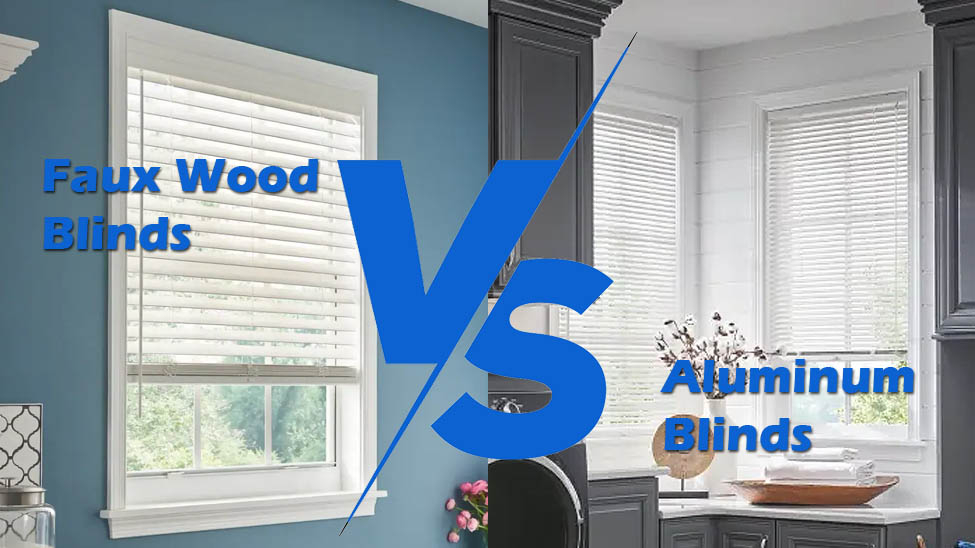
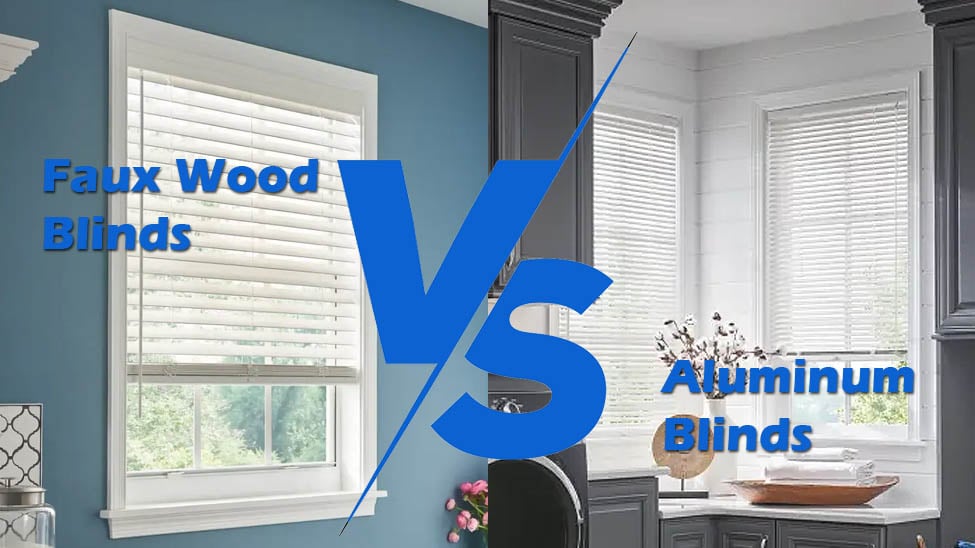
Faux wood and aluminum blinds land on the same shortlist because they solve the same practical problems: both resist moisture, both wipe clean, and both cost far less than real wood. That is exactly why faux wood vs aluminum blinds is less a performance question than a question of look and feel.
Once you accept that both will hold up, the choice comes down to the character you want at the window and how the room gets used.
What they have in common
It helps to clear the shared ground first, because it is bigger than most comparisons admit. Both faux wood and aluminum are moisture-resistant, so either works in a kitchen or bathroom where real wood would warp. Both wipe clean with a damp cloth. Both tilt on adjustable slats for everyday light and privacy control. And both come in at a friendly price next to hardwood. With the fundamentals matched, the differences that remain are what should actually decide it.
Look and feel
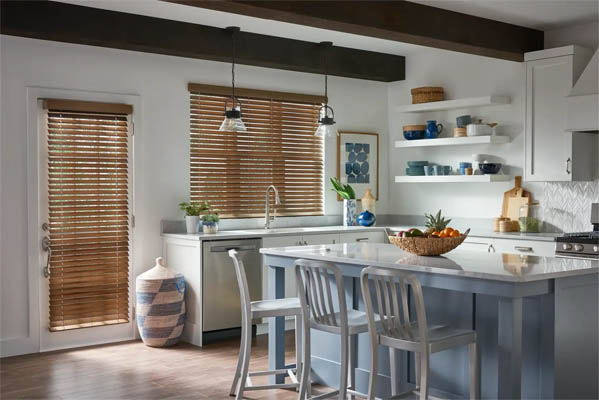
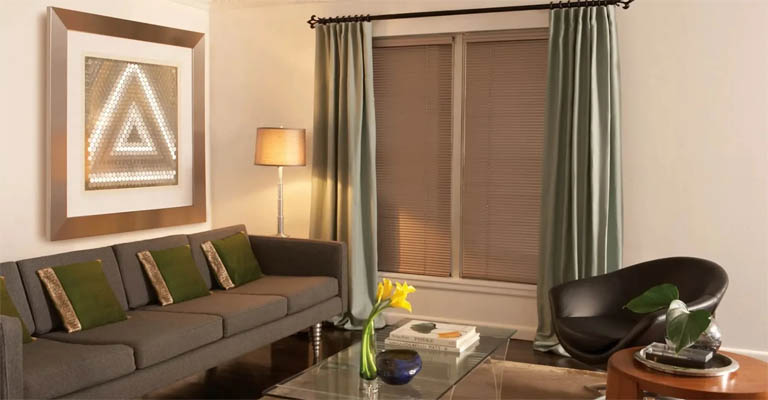
This is the clearest split. Faux wood blinds carry the warm, grained look of real wood and a more substantial, furniture-like presence, which reads as classic and cozy in living spaces and bedrooms. Aluminum blinds go the other way: sleek, minimal, and metallic, with a slim profile and a wide range of finishes and bold colors that suit modern rooms, home offices, and lofts. If you want warmth, faux wood wins on looks. If you want clean, contemporary lines, aluminum does.
Durability and daily use
Both are durable, but they fail differently. Faux wood's thicker engineered slats resist dents, scratches, and the abuse of a busy household, which makes them the sturdier pick in homes with kids or pets. Aluminum will not warp or fade, but its thin metal slats can bend, dent, or crease if handled roughly, and a lower-gauge slat is easier to damage than a heavy-gauge one. Aluminum can also rattle a little when raised, whereas faux wood operates more quietly. For a high-traffic window that takes knocks, faux wood is the more forgiving material.
Insulation and light-blocking
Faux wood's thicker, less conductive slats give it a real edge on insulation, buffering heat and cold better than metal and helping a room hold its temperature. Aluminum is highly conductive, so it can get hot in direct sun and does less to slow heat transfer.
The differing slat sizes of aluminum and faux wood blinds have an effect on light blocking. While both slats close tightly and provide full privacy, there is always some indirect light seepage that occurs between the slats. The typical 1" slat size of aluminum blinds means more slats for light leakage vs faux wood blinds with 2" slats. It's not a dramatic difference but if insulation and a darker close are priorities, faux wood is the stronger choice.
Cost and large windows
Aluminum blinds are the budget champion and the lightest option, which is why they are a staple in rentals and multi-window projects. A Super Value Cordless Faux Wood Blind narrows that gap while keeping the wood look, and faux wood generally lasts longer, so the higher upfront cost buys more years. Large windows are where weight comes back into it: faux wood's wider slats look cleaner and more proportional on a big span, but the material is heavy, so a 2-inch Deluxe Cordless Faux Wood Blind on a wide window benefits from a two-on-one headrail. Aluminum stays light on a large window, but its narrow slats can look busy across a wide expanse.
Warmth or clean modern lines
Both faux wood and aluminum are moisture-proof, affordable, and easy to clean, so you are really choosing a character. Pick faux wood for warmth, insulation, a more sealed light block, and the durability that suits living spaces and family homes. Pick aluminum for a sleek modern look, the lowest price, and the lightest weight, which is ideal for offices, rentals, and contemporary rooms. Browse the range of moisture-resistant blinds and match the material to the room's style and how hard it works.
FAQs
Which material is better for humid rooms?
Both handle humidity well, since neither absorbs water the way real wood does. Faux wood has a slight edge in feel and a more upscale look, while aluminum is the lighter, cheaper option. Either is safe for a kitchen or bathroom.
Are aluminum blinds more durable than faux wood?
They are durable in different ways. Aluminum will not warp or fade, but its thin slats can bend or dent, while faux wood's thicker slats resist dents and daily wear better. In a busy or pet-friendly home, faux wood usually holds up better.
Which option is easier to clean?
Both wipe clean with a damp cloth. Aluminum's smooth surface is fast to wipe but can bend if you press too hard, while faux wood's wider slats are easy to dust and more forgiving of firm cleaning.
Do faux wood blinds provide better insulation?
Yes. Faux wood's thicker, less conductive slats buffer heat and cold better than metal aluminum, which is highly conductive and can warm up in direct sun. For temperature control, faux wood is the stronger insulator.
Which type is better for large windows?
Faux wood's wider slats look more proportional on a big window, though the weight means more effort to raise the blind. Aluminum stays lightweight, but its narrow slats can look cluttered across a wide span. For very large openings, vertical blinds are another option to consider.
Which is more budget-friendly, faux wood or aluminum?
Aluminum is typically the cheaper upfront option, which makes it popular for rentals and covering many windows. Faux wood costs a bit more but tends to last longer and look more upscale, so it often wins on long-term value.
- Best Fabrics for Roman Shades: How to Choose the Right MaterialBlinds, Shades & ShuttersHow To
- Faux Wood vs Aluminum Blinds: Which is Better?Blinds, Shades & Shutters
- Best Roller Shades for Kitchens & BathroomsBlinds, Shades & Shutters
- Do Cordless Blinds Break Easily?Blinds, Shades & ShuttersCommon Questions
- Minimalist Window Treatment Ideas for Modern HomesBlinds, Shades & ShuttersDesign & Decor