Best Blinds by Window Direction (North, South, East & West)
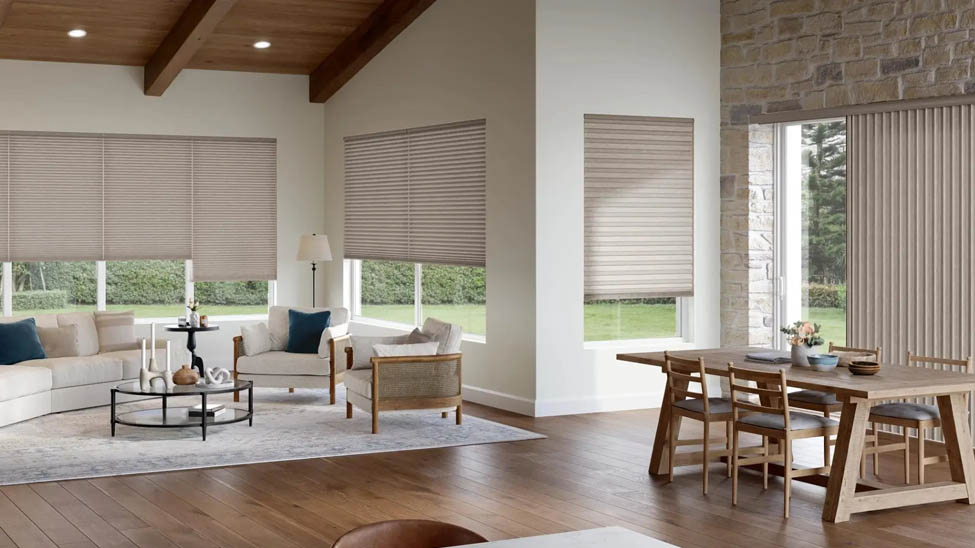
The same blind that is perfect on a north-facing window can struggle on a south-facing one. Direction decides how much sun a window takes, when it takes it, and how much heat and UV come with it, so the treatment that works depends entirely on which way the glass faces.
Match the blind to the compass, and every room gets easier to live in. Here are the best blinds for south, west, east, and north-facing windows, and why each direction asks for something different.
South-facing: The most sun, all day
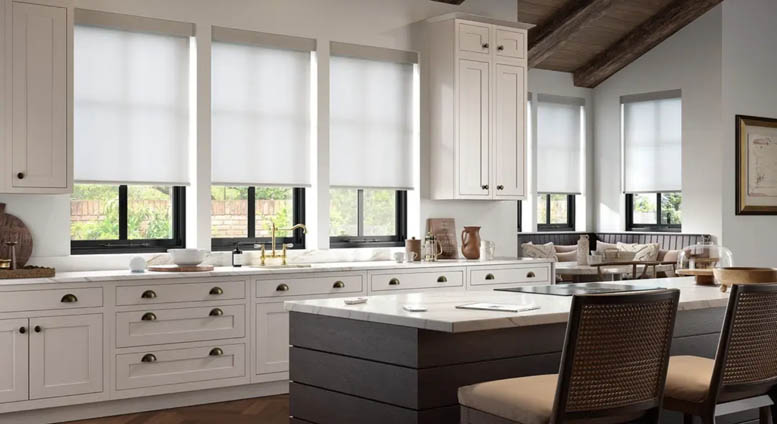
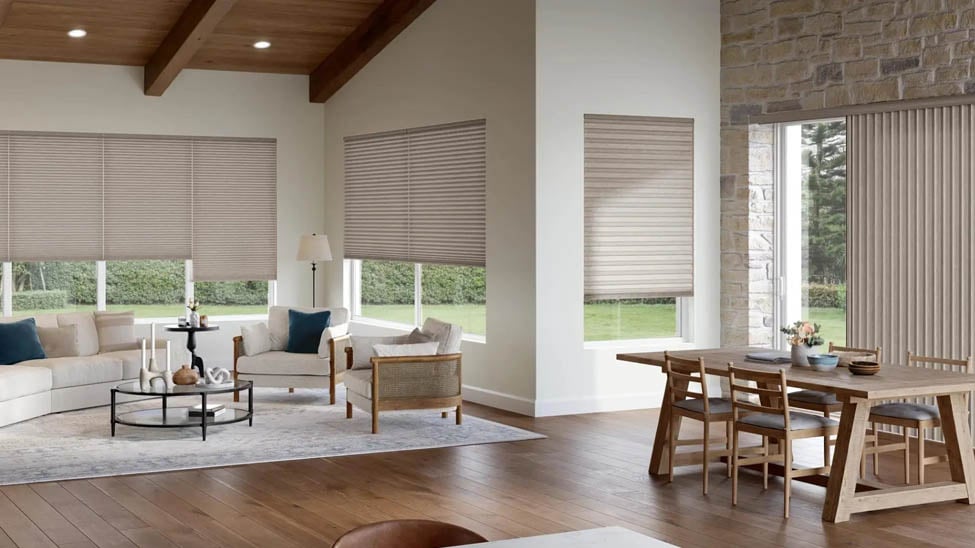
South-facing windows get the strongest, longest exposure of any direction, which means heat, glare, UV, and steady fading of whatever sits nearby. The goal is to cut the sun's intensity without blacking out a room you probably chose for its light. Solar shades are the natural answer, filtering glare and blocking most UV while keeping the view. Pair or swap in a cellular shade where heat is the bigger issue, since its honeycomb cells trap air and slow the heat transfer that drives up cooling bills. Add a room-darkening layer only in the spots that need it, like a south-facing bedroom.
West-facing: The brutal afternoon
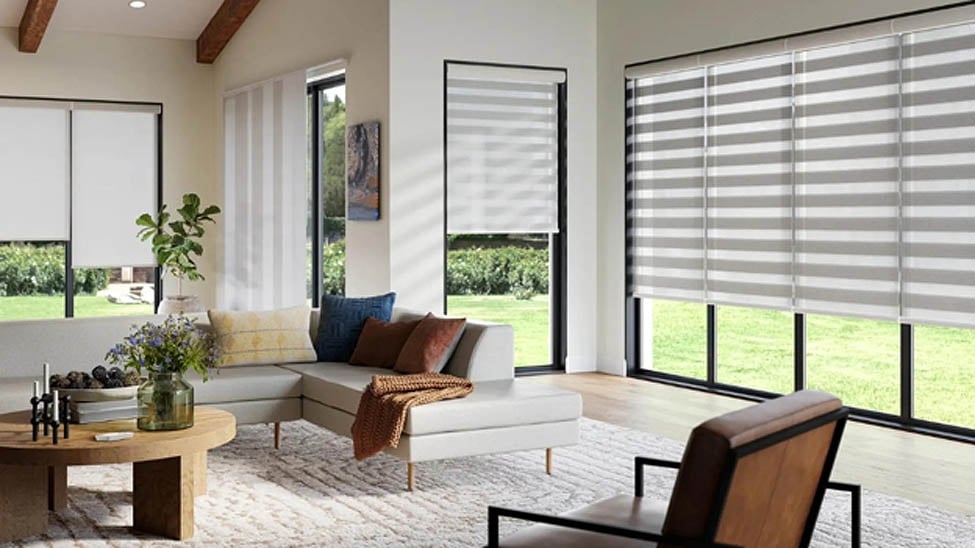
West-facing rooms are fine all morning and punishing by late afternoon, when low-angle sun pours straight in at eye level. This is the worst direction for screen glare and for that end-of-day heat that lingers into the evening. A low-openness solar shade handles the glare while keeping some view, and for a west-facing media room or office, a blackout roller shade shuts the reflections down entirely. Because west sun brings heat as well as light, an insulating cellular shade is worth pairing in if the room runs hot in summer.
East-facing: Early, bright mornings
East-facing windows flip the west problem to the other end of the day. They catch strong, direct sun at sunrise, then settle into softer light by afternoon. For most rooms, that early brightness is welcome, but a bedroom is the exception, where you want to sleep past dawn rather than wake with the sun. That makes room-darkening or blackout cellular shades the right call for east-facing bedrooms and nurseries, while a light-filtering shade is plenty for a kitchen or breakfast nook that benefits from the morning glow.
North-facing: Soft, cool, even light
North-facing windows get the least direct sun, which gives them soft, consistent light with little glare and almost no fading, but also cooler rooms in winter. The priority flips from blocking sun to preserving light and holding warmth. A light-filtering roller shade keeps the gentle daylight while adding privacy, and a light-filtering cellular shade does the same while insulating against the chill that north rooms often carry.
Direction and UV: Protecting what's inside
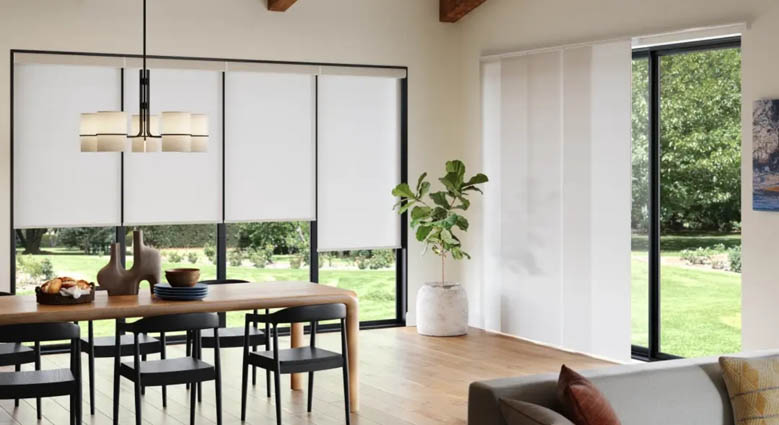
Sun does more than light a room; it slowly bleaches floors, furniture, and art, and the south and west windows that take the most sun also deliver the most UV. This is where solar shades pull double duty: a 5 percent openness fabric blocks around 95 percent of UV rays while keeping the view, which protects your interiors without darkening the space. It matters for comfort as well as decor, since windows account for 25 to 30 percent of a home's heating and cooling energy use, so the right treatment on a sun-facing window pays back in both fading and utility bills.
Let the compass pick the treatment
The best blind for a window starts with the direction it faces: solar and cellular shades for the heat, glare, and UV of south and west exposures, blackout for east-facing bedrooms, and light-filtering to make the most of soft north light. Check which way each window faces, then match the treatment to the sun it actually gets. Browse solar shades and the full range of shades and pick by direction, room by room.
FAQs
Why do south-facing windows need different blinds?
Because they get the strongest sun all day, bringing more heat, glare, UV, and fading than any other direction. They benefit from solar or cellular shades that cut the sun's intensity while keeping the room usable, rather than a treatment built only for privacy.
Which blinds reduce afternoon heat the most?
Cellular shades for insulation and solar shades for blocking solar heat gain. On a hot west-facing window, pairing an insulating cellular shade with a low-openness solar fabric handles both the heat and the glare of late-day sun.
Do east-facing windows need blackout shades?
Only where you want to sleep in. Blackout or room-darkening shades suit east-facing bedrooms and nurseries that catch strong sunrise light. For kitchens and living spaces, a light-filtering shade is usually enough for the softer morning sun.
What window treatments work best for bright west-facing rooms?
Low-openness solar shades for glare with a view, or a blackout roller for a media room that needs the reflections gone. Adding an insulating cellular shade helps with the heat that low afternoon sun brings.
Does window direction affect UV protection needs?
Yes. South and west windows take the most UV, so they benefit most from solar shades that block up to around 95 percent of UV rays and protect floors and furniture from fading. North windows get little direct UV and need far less protection.
What blinds are best for north-facing rooms?
Light-filtering roller or cellular shades. North rooms have soft, even light and little fading risk, so the aim is to keep that daylight and add insulation against the cooler temperatures north-facing rooms tend to hold.
- Best Blinds by Window Direction (North, South, East & West)Blinds, Shades & ShuttersHome Advice
- Black Friday Shopping Guide for Buying Blinds, Shades, and ShuttersBlinds, Shades & ShuttersHow To
- The Best Dust-Resistant Blinds for Cleaner Homes & Less AllergiesBlinds, Shades & ShuttersHome Advice
- How Classic Value Faux Wood Blinds Compare to Real Wood and Faux Wood OptionsBlinds, Shades & Shutters
- Best Window Treatments for Living Rooms: Style, Light, and Privacy GuideBlinds, Shades & ShuttersDesign & Decor