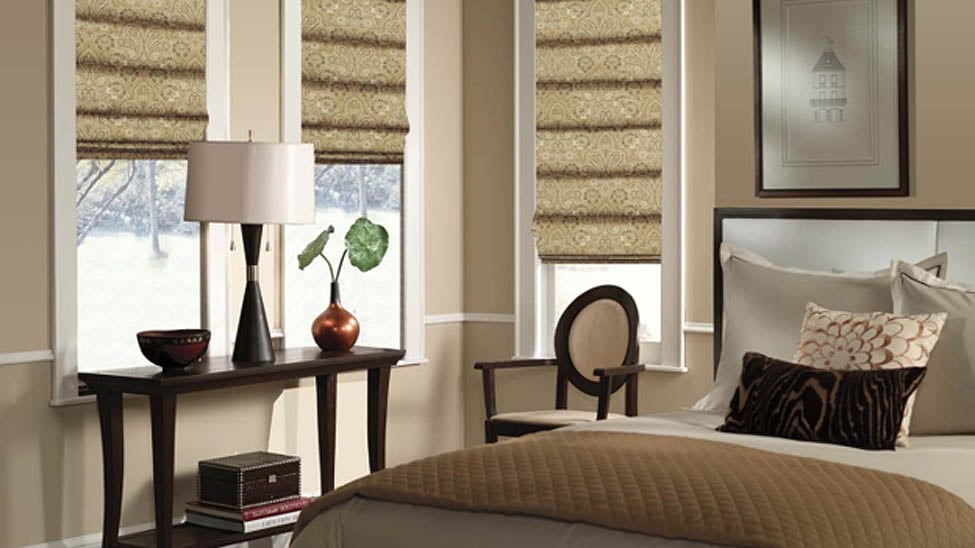
Best Window Treatments for Living Rooms: Style, Light, and Privacy Guide
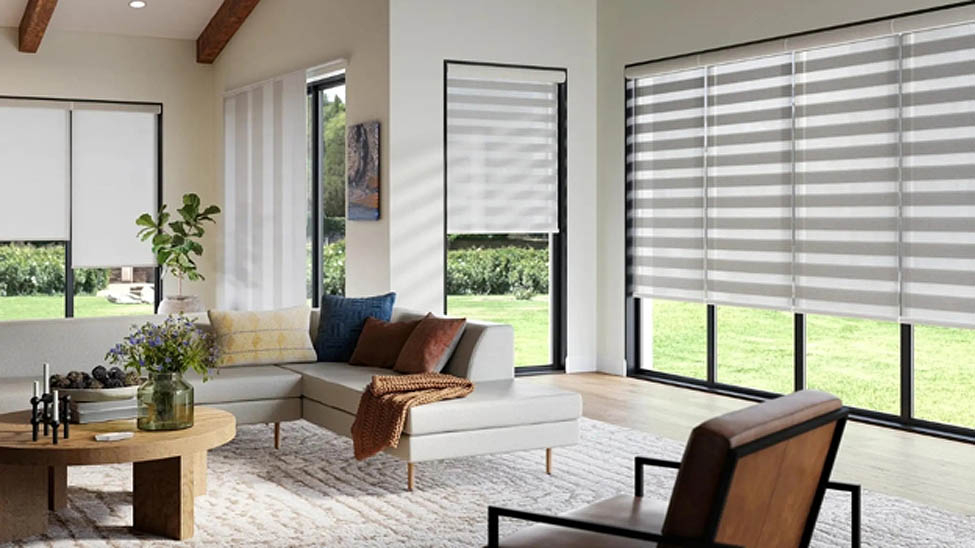
The living room asks more of its window treatments than any other room in the house. It is where you host, where you unwind, and where the quality of natural light shapes the entire atmosphere. A bedroom needs darkness. A bathroom needs moisture resistance. But a living room needs something harder to define: the right relationship between openness and privacy, between sunlight and softness, between a treatment that disappears and one that becomes part of the design.
Finding window treatments for living rooms that handle all of this is not as difficult as it sounds, but it does require thinking about what you want from the room before choosing a product. The style that works best depends on how much light you want, how much the view matters, and whether you lean toward a clean, minimal look or something warmer and more textured.
What Makes a Living Room Different from Every Other Room
Living rooms occupy a unique space in the home because they serve multiple purposes throughout the day. In the morning, you may want bright, open light. In the afternoon, glare on a screen becomes a problem. In the evening, privacy matters more than it did at noon.
The best window treatments for living rooms are the ones that give you control over these shifting needs without requiring you to swap products or add extra layers. Adjustable light control, a clean appearance from both inside and outside the home, and a profile that suits the scale of larger living room windows are the qualities that matter most.
The Best Window Treatments for Living Room Light
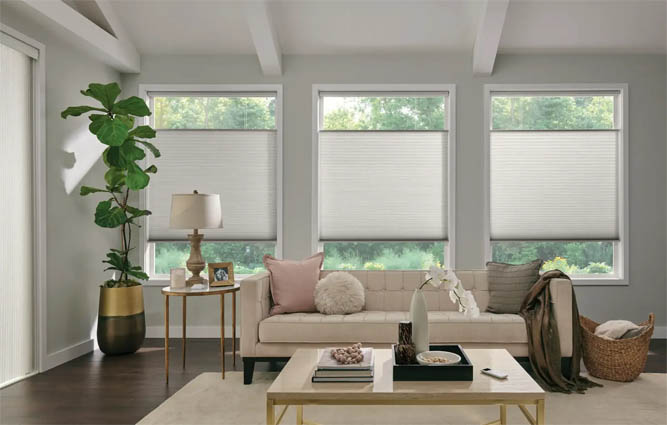
Light is the defining feature of a living room. The treatment you choose determines whether that light feels soft and inviting or harsh and overpowering. Here are three styles that handle living room light especially well.
Roller Shades
Roller shades are one of the most versatile choices for a living room because of their clean, minimal profile. A single piece of fabric rolls up completely out of sight when you want an open view and lies flat against the window when you want filtered light or privacy.
Light-filtering roller shades are particularly well-suited for living rooms. They diffuse incoming sunlight into a soft, even glow that fills the room without harsh shadows or glare, and the fabric provides privacy while still letting you sense the weather and time of day through the window.
Sheer Shades
Sheer shades diffuse daylight across the whole room while giving you a privacy option whenever you want it. They feature soft fabric vanes suspended between two layers of sheer material. Tilt the vanes open to let light filter gently through the room, or close them for privacy while a soft ambient glow still passes through.
This combination of even light diffusion and adjustable privacy makes sheer shades an excellent fit for living rooms, especially street-facing ones where you want brightness during the day without giving up the ability to close off the view after dark.
Cellular Shades
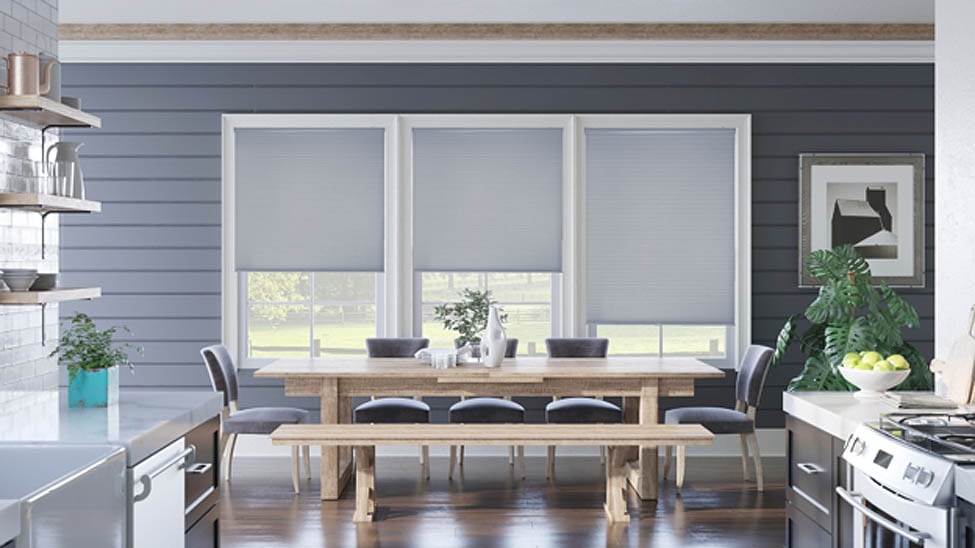
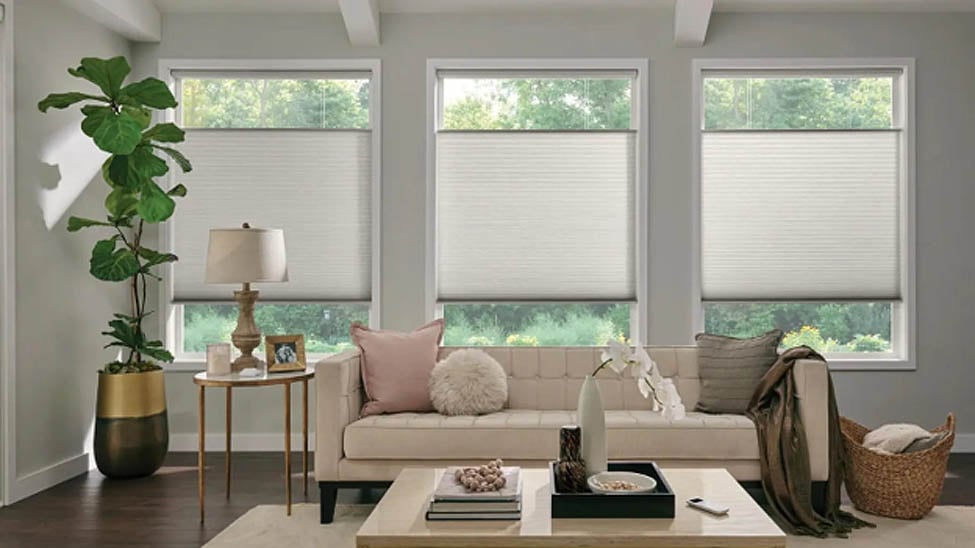
Cellular shades bring insulation into the equation alongside light control. Their honeycomb-shaped cells trap air between the window and the room, helping regulate temperature in living rooms that run hot in summer or cold near drafty windows in winter.
Available in light-filtering and blackout fabrics, cellular shades give you control over how much daylight enters while also reducing energy costs over time. For living rooms where comfort and efficiency matter as much as style, they are a strong, practical choice.
When Privacy and Style Need to Work Together
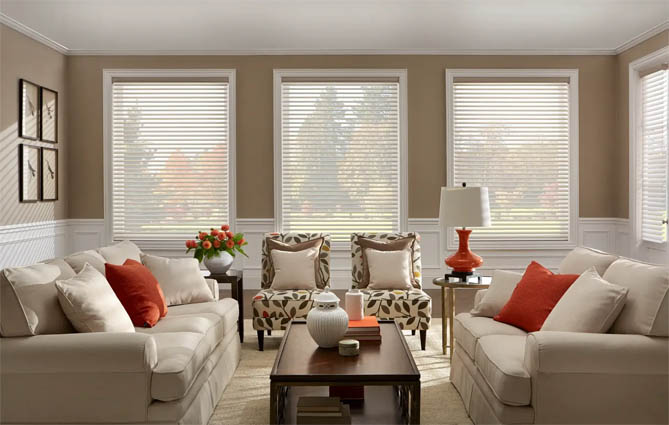
Living rooms that face a street, a sidewalk, or a neighbor's home need window treatments that offer privacy without making the room feel closed off. These two styles strike that balance especially well.
Faux Wood Blinds
Faux wood blinds provide adjustable privacy through tilting slats that let you control exactly how much of the outside world you let in. Tilt them open for full light, angle them for privacy without darkness, or close them completely when you want the room to yourself.
Their warm, classic appearance suits traditional and transitional living rooms, and the non-porous material resists fading in rooms with large, sun-facing windows.
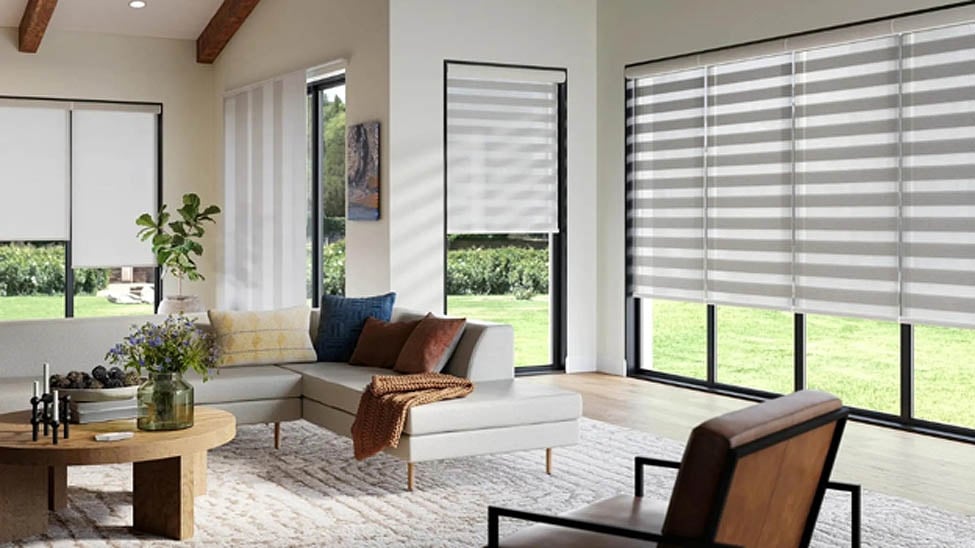
Zebra Dual Shades
Zebra dual shades offer a design-forward approach to privacy and light. Two layers of fabric with alternating sheer and opaque bands glide past each other as you raise or lower the shade. Align the bands one way for filtered light and a view. Shift them for more privacy and less light.
The striped pattern gives zebra shades a contemporary, graphic quality that works especially well in modern and transitional living rooms where the window treatment is part of the design story rather than something meant to blend into the background.
Bringing Warmth and Texture to the Window
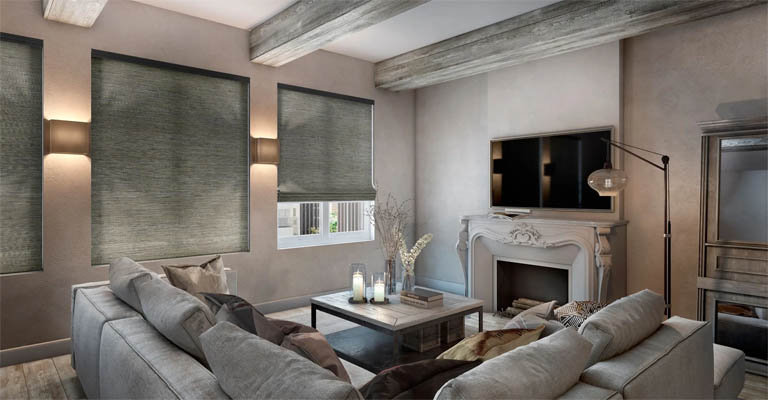
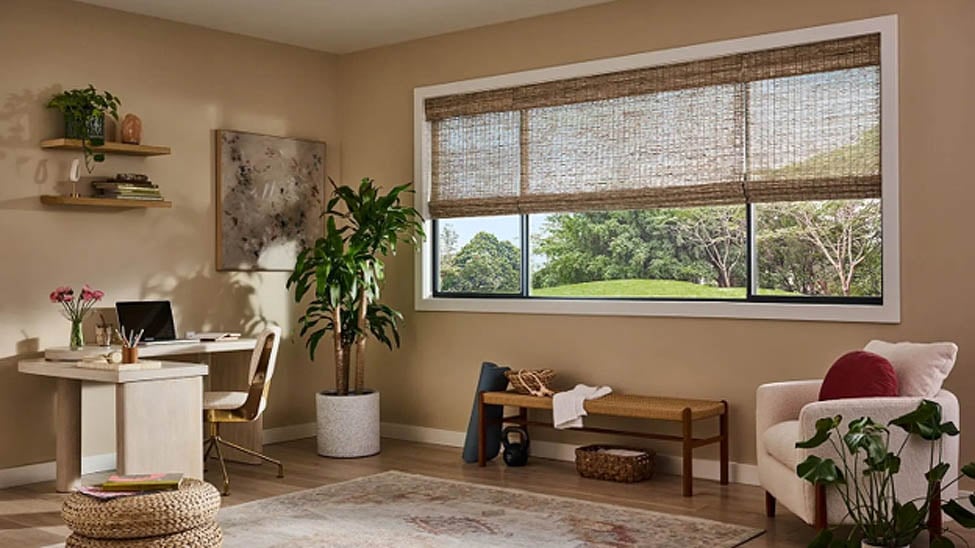
If your living room design leans toward natural materials, warm tones, or organic textures, bamboo shades deserve a close look. Made from sustainable materials like bamboo, jute, and woven grasses, they filter light into a warm, dappled glow that gives the room a layered, lived-in feeling.
Bamboo shades pair beautifully with wood furniture, earthy color palettes, and spaces where you want the window treatment to feel like a natural extension of the room's materials. For more ideas on matching your shade to your living room's aesthetic, Blindster's guide on statement window shades covers how to choose with intention.
Dressing the Room You Live In Most
The best window treatments for living rooms are the ones that let you live in the room the way you actually want to. They manage light without blocking it, offer privacy without closing you in, and contribute to the design rather than sitting apart from it. Whether that means a clean roller shade, a textured bamboo weave, or a graphic zebra pattern depends entirely on your space, your light, and your taste.
Every Blindster window treatment is custom-made to your exact measurements and backed by the Fit or Free Guarantee. If you want to see fabrics, textures, and colors in your own room before deciding, order up to 10 free samples shipped within one business day. A living room is the room your guests notice first, and the room your family returns to most, and the windows deserve to be dressed with that kind of care.
Frequently Asked Questions
What is the best window treatment for a living room?
It depends on what matters most to you. Roller shades offer the cleanest profile and easiest light control. Cellular shades add insulation. Faux wood blinds provide adjustable privacy. The best choice is the one that matches your room's priorities.
Should I choose light filtering or blackout for a living room?
Light filtering is the better choice for most living rooms because it softens daylight without eliminating it. Blackout fabric works well if the room doubles as a media space, but for everyday living, the warmth and openness of filtered light are usually preferred.
Do solar shades provide privacy at night?
Solar shades offer daytime privacy by reducing visibility from outside while the sun is out. At night, when interior lights are on, the transparency reverses. If nighttime privacy is important, consider layering solar shades with drapery panels for full coverage.
Can I use different window treatments on different windows in the same room?
Yes, as long as the color and tone remain consistent. Using roller shades on standard windows and a vertical blind on a sliding door in the same room works well when the fabrics and finishes coordinate.
What window treatments make a living room look bigger?
Shades that mount above the window frame and extend past it on each side create the illusion of a larger window. Light filtering fabrics in neutral tones also help a room feel more open and spacious than darker or heavier treatments.
Are motorized shades worth it for a living room?
Motorized shades are especially useful for large or hard-to-reach living room windows. They let you adjust light and privacy with a remote or smart device, which is convenient for rooms where you spend the most time and change settings frequently throughout the day.
- Best Window Treatments for Living Rooms: Style, Light, and Privacy GuideBlinds, Shades & ShuttersDesign & Decor
- What Cell Size Do I Need? Cellular Shade Sizes ExplainedBlinds, Shades & Shutters
- How to Choose the Perfect Bamboo Shades for Your HomeBlinds, Shades & ShuttersHow To
- What Is a Window Treatment? Types, Uses & How to ChooseBlinds, Shades & ShuttersCommon Questions
- How to Choose the Right Window Covering for Every Room: A Decision GuideBlinds, Shades & ShuttersHow To