Cordless Faux Wood Blinds: Everything You Need to Know Before You Buy
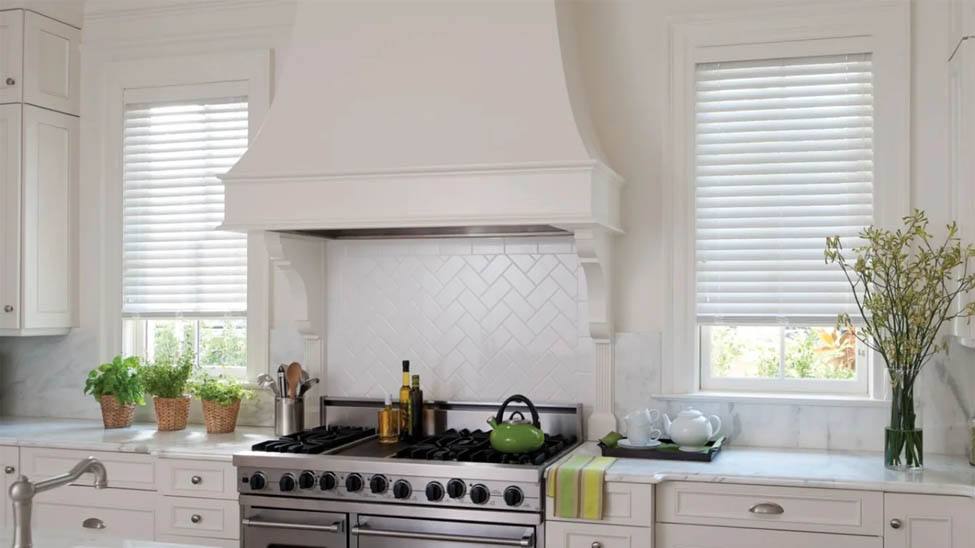
There is no cord to pull. You raise a cordless faux wood blind by taking hold of the bottom rail and lifting, and it holds wherever you let go. That single change, driven by federal safety rules that pushed accessible pull cords out of window coverings, quietly reshaped the most common blind in American homes. Combine it with a material that shrugs off humidity real wood never could, and you get the blind now hanging in more kitchens, bathrooms, and children's rooms than any other.
How cordless faux wood blinds work
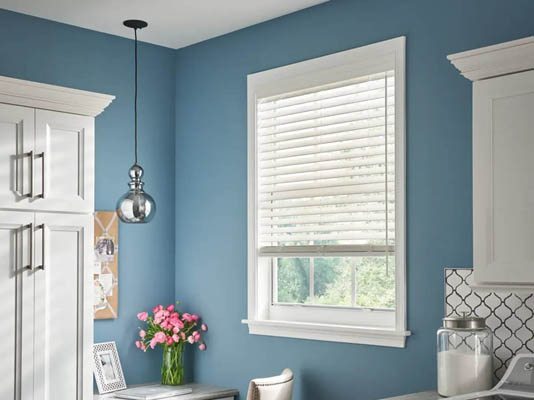
There is no pull cord and no external lift string. A spring mechanism inside the headrail counterbalances the weight of the slats, so you raise the blind by lifting the bottom rail with your hand and lower it by pulling it back down. It holds wherever you stop.
Tilting is separate from lifting. The slats still angle open and closed with a wand or a hidden tilt control, which means you keep the light control that makes horizontal blinds useful in the first place.
Two things this changes day to day:
- The window looks cleaner: No dangling cord down one side, which is why cordless suits minimal rooms.
- Operation is two-handed on wide blinds: A large faux wood blind is heavy, and lifting it evenly takes a hand toward each end.
Why cordless matters for child and pet safety
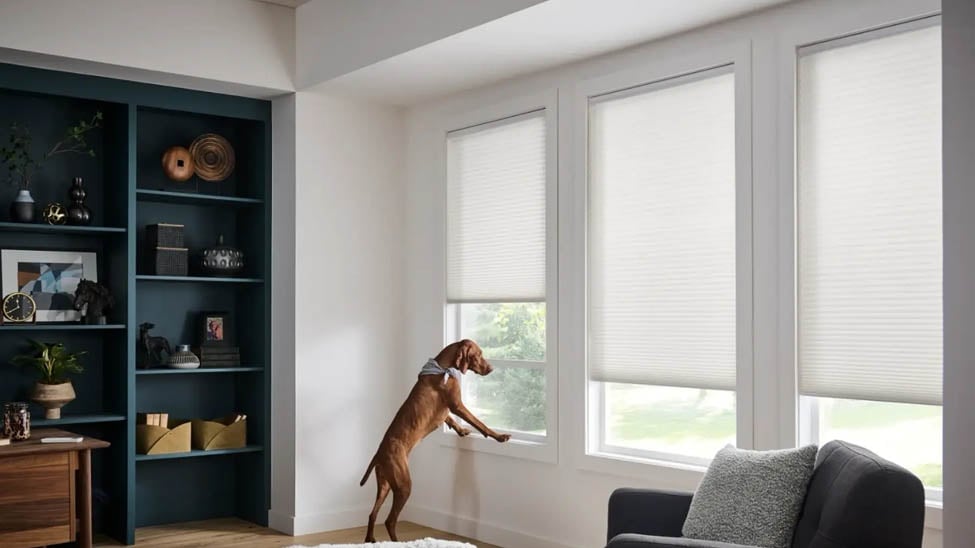
This is not a marketing angle; it is the reason the category exists. The U.S. Consumer Product Safety Commission has documented that around nine children under five die each year in incidents involving corded window coverings, and it identifies cordless products as the safest option. A federal safety standard adopted in 2022 pushed accessible operating cords out of stock window coverings for that reason.
The practical takeaway is simple. In any room a child or pet uses, a cordless blind removes the hazard rather than managing it, which is a different thing from tying a cord up out of reach. Blindster's child and pet safer range exists for exactly this decision.
Where faux wood beats real wood
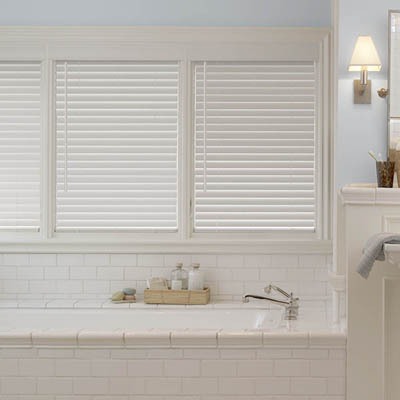
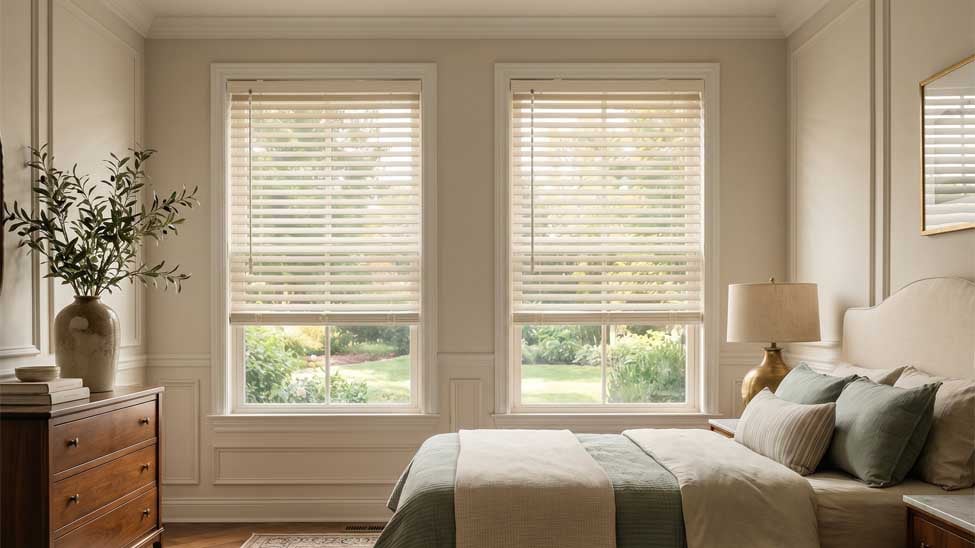
Faux wood is made from PVC or a wood composite, and the difference from hardwood shows up in specific rooms rather than across the board.
- Moisture: This is the decisive one. Faux wood does not warp, crack, or swell in humidity, which makes it the right pick for bathrooms, kitchens, laundries, and basements where real wood fails.
- Sun exposure: It resists the fading and warping that intense direct sun causes in hardwood, so it holds up on south- and west-facing glass.
- Cleaning: A non-porous surface wipes down with a damp cloth, including grease near a cooktop.
- Cost: Faux wood blinds deliver the wood look for less than hardwood, which matters when you are covering a whole house.
The tradeoff is weight. Faux wood slats are denser than real wood, so large faux wood blinds can require a bit more effort to raise vs real wood blinds. Day to day, it's more likely that the blinds will just be tilted open and closed, but if you have a very large window and plan to raise the blind regularly, you may want to consider real wood blinds.
Slat width and window size: What to check before ordering
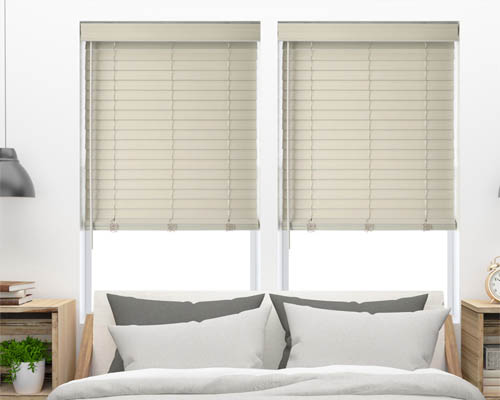
- 2-inch slats: The standard, and the best balance of a clean look, light control, and a compact stack when raised.
- 2.5-inch slats: A wider, more architectural look that suits larger windows and stacks slightly tighter per inch of height.
- Wide windows: Because the material is heavy, a very wide opening is sometimes better served by two blinds on one headrail than a single span, which makes raising and lowering the blinds easier. If you plan to mainly just tilt the slats open and closed, then a single blind is aesthetically more appealing.
- Tall windows: Remember the stack. A tall blind gathers a deeper pile of slats at the top when fully raised. Again, if you mainly plan to just rotate the slats then this isn't a problem, but a long blind has a large stack and will cover more of the window. Also, cordless blinds require that you can reach as high as you want to raise the blinds.
A 2-inch Deluxe cordless faux wood blind covers most standard windows, while a Super Value cordless faux wood blind is the sensible option when you are doing many windows at once.
Cleaning, lifespan, and the light gaps nobody mentions
Faux wood is close to maintenance-free. Dust regularly with a microfiber cloth or a vacuum brush attachment, and wipe with a damp cloth and mild soap when grease or grime builds up. Never soak a blind or submerge it, whatever the material.
One detail worth knowing before you buy: Standard slats have small routing holes for the lift strings, and a little light comes through them when the blind is closed. If you want the tightest closure in a bedroom, ask about routeless or privacy slats, which move those holes out of the light path. Our Deluxe Cordless Faux Wood Blinds have offset route holes which get covered up when the slats are rotated closed to provide maximum light blocking.
Buy for the room, not the price tag
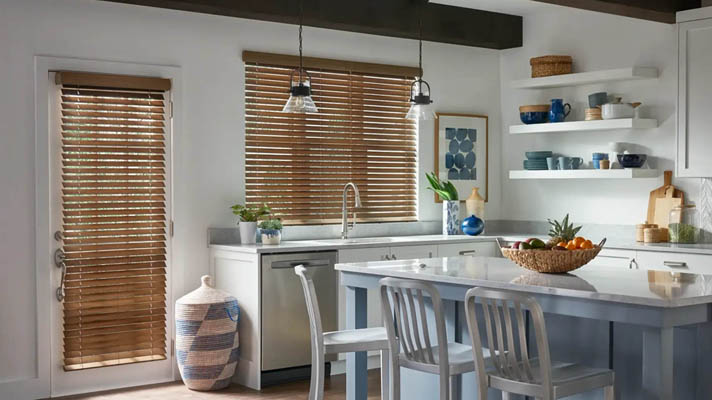
Cordless faux wood earns its place where windows are used daily, and rooms get damp, dirty, or bright. Take the cordless lift for safety, the material for moisture and sun, and the 2-inch slat as your default. Browse the range of faux wood blinds and measure before you fall for a finish.
FAQs
Are cordless faux wood blinds safe for kids and pets?
Yes, and that is their main advantage. Removing the pull cord removes the strangulation hazard that safety authorities associate with corded window coverings, which is why cordless is the recommended choice in children's rooms.
Do cordless faux wood blinds work in bathrooms?
They do. Faux wood is made from PVC or composite, so it resists the warping, cracking, and swelling that humidity causes in real wood, making it the standard choice for bathrooms and kitchens.
How long do faux wood blinds last?
With routine dusting and occasional wiping, they commonly last many years. Their moisture resistance, resistance to fading, and resistance to dents are what keep them looking right longer than hardwood in demanding rooms.
Should you choose 2 inch or 2.5 inch slats?
Two inch slats are the versatile default for standard windows. Two and a half inch slats give a wider, more architectural look that suits large windows and shows more of the view when tilted open.
Are faux wood blinds heavier than real wood?
Yes. The engineered material is denser than hardwood, so very wide windows are often better covered by two blinds on a single headrail rather than one heavy span.
Do cordless blinds still tilt?
Yes. Lifting and tilting are separate functions. The blind raises by hand at the bottom rail, and the slats tilt open and closed with a wand or hidden tilt control.
- Cordless Faux Wood Blinds: Everything You Need to Know Before You BuyBlinds, Shades & Shutters
- Where to Buy Blinds With the Best Guarantee: What to Compare Before You OrderBlinds, Shades & ShuttersCommon Questions
- How to Buy Faux Wood Blinds with FinancingBlinds, Shades & ShuttersHow To
- Best Cellular Shades for Winter Energy SavingsBlinds, Shades & ShuttersHome Advice
- Bamboo Blinds vs Wood Blinds: Which Is Better?Blinds, Shades & Shutters