Best Window Blinds for Kitchens
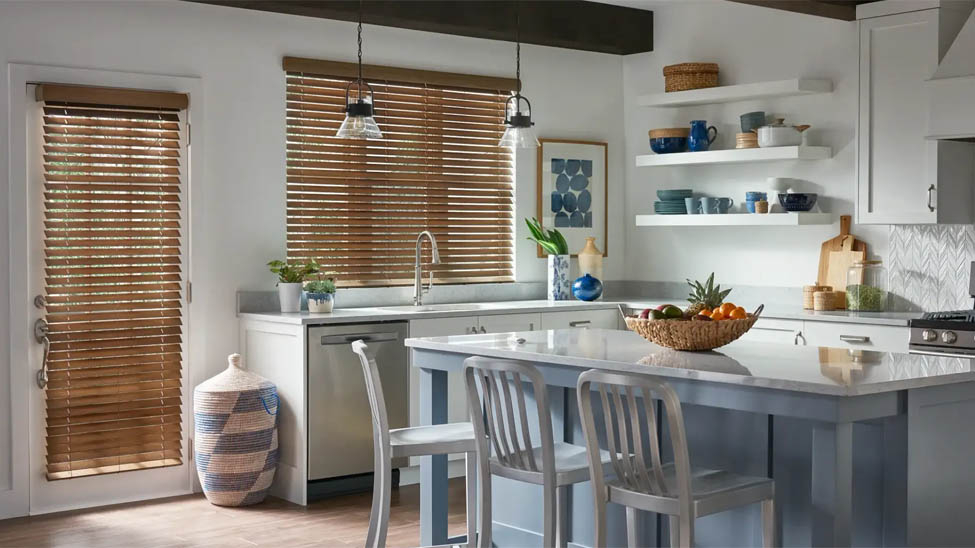
Run a finger along a kitchen blind that has not been wiped in six months, and you find a film, not dust. Cooking releases an oil aerosol that settles across every surface in the room, binds to the dust already there, and hardens into something a dry cloth will not lift.
Add steam cycling off the sink and heat radiating from the cooktop, and a kitchen window covering faces conditions no bedroom ever produces. The material you choose decides whether that film wipes away or becomes permanent.
What a kitchen window actually puts your blinds through
Three forces are at work, and they explain every material recommendation that follows.
- Grease: Cooking releases an oil aerosol that lands on every surface in the room. It bonds with dust and hardens, and porous materials trap it permanently.
- Moisture: Boiling, dishwashing, and running taps push humidity into the air, which warps natural wood and encourages mildew in absorbent fabrics.
- Heat and light: A window near a cooktop takes direct heat, and a sun-facing kitchen window creates glare exactly where you need to see what you are doing.
The best materials for kitchen windows
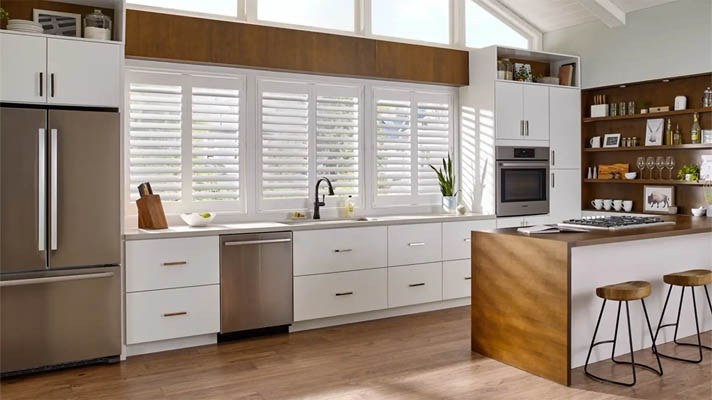
Ranked by how well they handle the conditions above.
- Faux wood: The strongest all-rounder. Faux wood blinds are PVC or composite, so they shrug off humidity that would warp hardwood; they wipe clean of grease, and they still give the warm wood look most kitchens want. Faux wood shutters are another strong option, especially if you plan to have shutters in the rest of the home.
- Aluminum: The most heat-tolerant and the lightest option, which makes aluminum mini blinds a sensible pick for a small window close to a cooktop. Slim slats wipe fast, though they dent if pressed hard.
- Vinyl roller shades: A single flat, non-porous surface with no slats for grease to settle between, so a blackout vinyl roller shade is the easiest thing in the room to clean.
- Solar shades: The answer to a sun-facing kitchen, cutting glare and UV while keeping the view over the yard.
What to avoid near the working zone: Real wood, bamboo, and soft fabric shades. They absorb moisture and odour, and grease cannot be wiped out of a woven or fabric surface.
Above the sink or beside the cooktop: Placement changes the answer
Two windows in the same kitchen can call for two different products.
- Above the sink: This window takes constant water splashes and steam, and you often reach it with wet hands. A vinyl roller shade or faux wood blind handles both. Cordless operation helps here, since there is no cord to hang into the sink.
- Beside or behind a cooktop: Heat and grease are heaviest. Choose aluminum or vinyl, keep the profile slim, and avoid anything with fabric or long hanging elements near a flame.
- Breakfast nook or eating area: This sits away from the mess, so you have freedom. Softer materials and warmer textures work here, and it is where a kitchen can pick up the look of the adjoining living space.
- Sun-facing glass: A solar shade handles glare on the counter without darkening a room you need to see in.
Keeping kitchen blinds clean
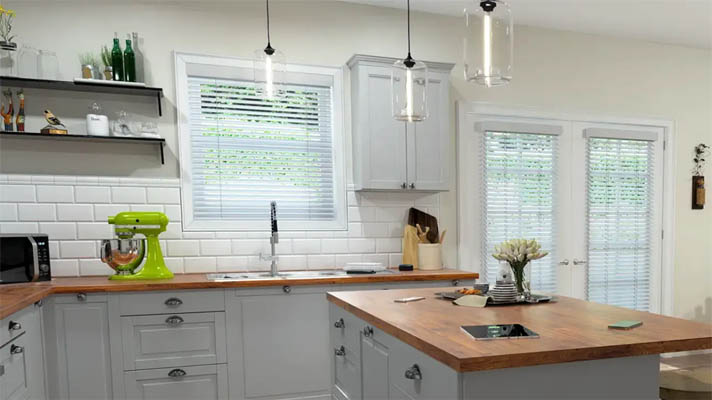
The routine matters more in this room than anywhere else, because grease sets.
- Dust weekly: Removing loose dust before it bonds with oil is most of the job.
- Wipe monthly: Warm water with a little mild dish soap on a wrung-out cloth, wipe along the slat, and dry afterwards.
- Cut heavy film with diluted vinegar: A vinegar and water solution breaks down set grease without harsh chemicals.
- Never soak a blind: Whatever the material, submerging damages mechanisms and often voids warranties.
Light, privacy, and the practical details
- Glare on work surfaces: A tilting blind lets you angle light up toward the ceiling instead of onto a counter or a screen, which a fixed shade cannot do.
- Evening privacy: A light-filtering material gives privacy day and night, which matters in a kitchen that stays lit long after dark.
- Cordless operation: Worth choosing throughout a kitchen, both for safety and because there is no cord to trail into a sink or near a burner.
- Mount for coverage: An outside mount above a sink window gives wider coverage and keeps the covering further from splashes.
- Moisture-tolerant construction: If the room runs humid, start from the water-resistant range rather than filtering by color first.
Pick the material for the mess, then the look
The kitchen is the one room where function has to lead. Choose faux wood for the wood look with none of the moisture risk, aluminum where heat is closest, vinyl roller shades where cleaning speed matters most, and a solar shade on bright glass. Then let color and finish follow. Browse the range of moisture-resistant blinds and shades and match each window to its job.
FAQs
What are the best blinds for a kitchen window?
Faux wood blinds are the best all-rounder because they resist humidity, wipe clean of grease, and look like wood. Aluminum suits windows near heat, and vinyl roller shades are the easiest of all to clean.
Can you put real wood blinds in a kitchen?
It is not recommended near the sink or cooktop. Real wood absorbs moisture and can warp, crack, or stain, and grease is difficult to remove from a porous finish. Faux wood gives the same look without the risk.
What is the easiest kitchen blind to clean?
A vinyl roller shade. It is one flat, non-porous surface with no slats for grease to collect between, so it wipes down in a single pass.
How do you remove grease from kitchen blinds?
Wipe with warm water and mild dish soap on a wrung-out cloth, then dry. For hardened film, a diluted vinegar and water solution cuts through it without damaging the finish.
Are fabric shades a bad idea in a kitchen?
Near the sink and cooktop, yes, because fabric absorbs moisture, grease, and cooking odours. In a breakfast nook away from the working zone, softer materials are fine.
What blinds work above a kitchen sink?
Vinyl roller shades or faux wood blinds, ideally cordless. Both handle splashes and steam, and cordless operation avoids a cord hanging into the sink or getting wet.
- Blinds for Sliding Glass Doors: The Complete GuideBlinds, Shades & Shutters
- Best Window Blinds for KitchensBlinds, Shades & Shutters
- Blackout Roller Shades vs. Blackout Roman Shades Which Is Right for Your Room?Blinds, Shades & ShuttersHome Advice
- Cordless Faux Wood Blinds: Everything You Need to Know Before You BuyBlinds, Shades & Shutters
- Where to Buy Blinds With the Best Guarantee: What to Compare Before You OrderBlinds, Shades & ShuttersCommon Questions