Blackout Roller Shades vs. Blackout Roman Shades Which Is Right for Your Room?
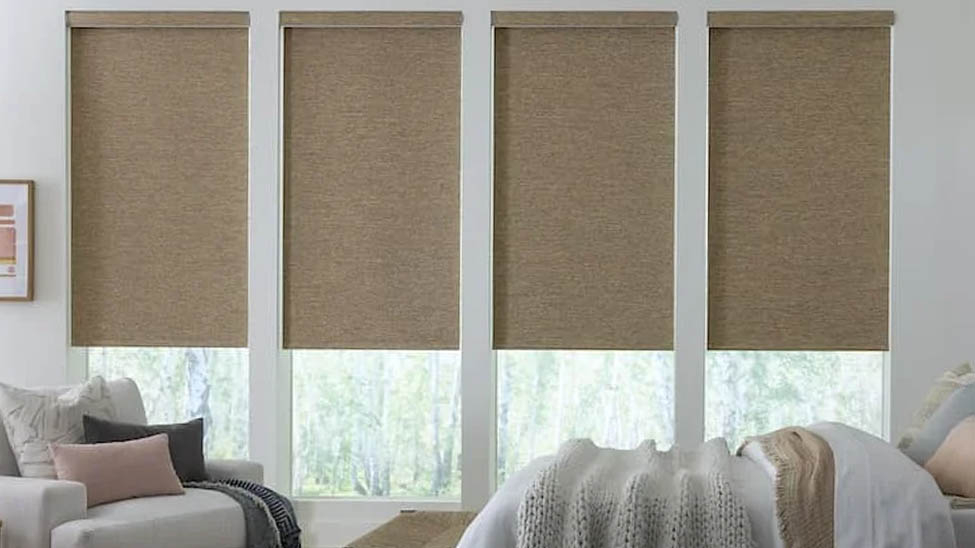
Raise a roller shade and a roman shade side by side, and the difference announces itself at the top of the window. The roller disappears into a tube barely thicker than your wrist. The roman gathers into a stack of folds that covers the upper few inches of glass and stays there. Both can be made in a blackout fabric, so blocking light is not what separates them. What separates them is what each does to the window when open, where each lets light past when closed, and how much room it needs to exist.
What blackout means on a roller shade and a roman shade
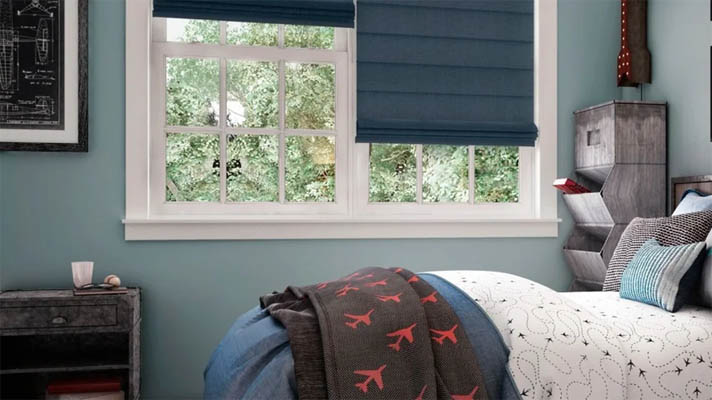
Blackout describes the fabric, not the finished result in your room. A blackout fabric stops light from passing through the material, which both styles do equally well. Neither delivers a pitch-black room on its own, because light still enters around the edges of any shade.
The structural difference is what happens to that fabric:
- Roller: A single flat panel wraps onto a slim tube at the top and disappears almost entirely when raised.
- Roman: A wider panel gathers into horizontal folds as it lifts, stacking fabric at the top of the window.
Where each shade leaks light
This is the practical heart of the comparison, and it is where the two behave differently.
A blackout roller shade needs clearance to travel up and down the tube, so an inside mount leaves a narrow gap at each side. That gap is where most of the light in a "blackout" room actually comes from, and it surprises people who expected the fabric rating to do all the work.
A blackout roman shade sits flatter against the opening, and its folds meet more closely at the sides, so it tends to leave less of a side channel. The fabric bulk works in its favor here.
The fix for either is the same, and it is worth stating plainly: Mount outside the frame so the shade overlaps the wall on all sides. An outside mount does more for darkness than upgrading the fabric ever will.
When a blackout roller shade is the better choice
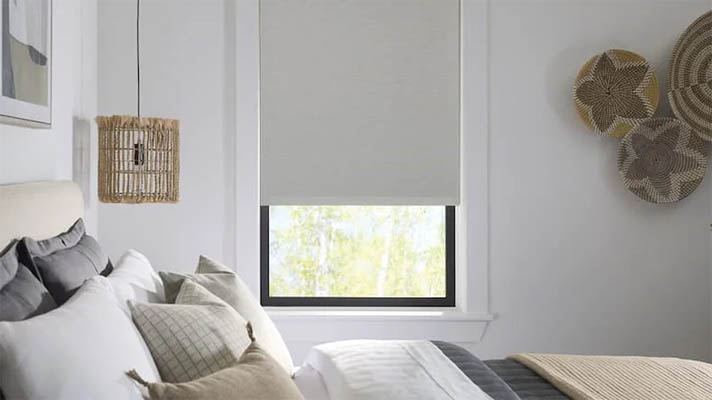
Choose the roller when function and clean lines lead:
- Media rooms and home offices: The flat panel kills screen reflections without adding visual weight.
- Small or shallow windows: There is no fabric stack eating into the glass when raised.
- Modern and minimal rooms: A roller shade reads as part of the architecture rather than a decorative layer.
- Easy upkeep: A smooth surface wipes clean with a damp cloth, which matters in a kitchen or a child's room.
- Wide windows: A roller scales across a broad opening more cleanly than gathered fabric.
When a blackout roman shade is the better choice
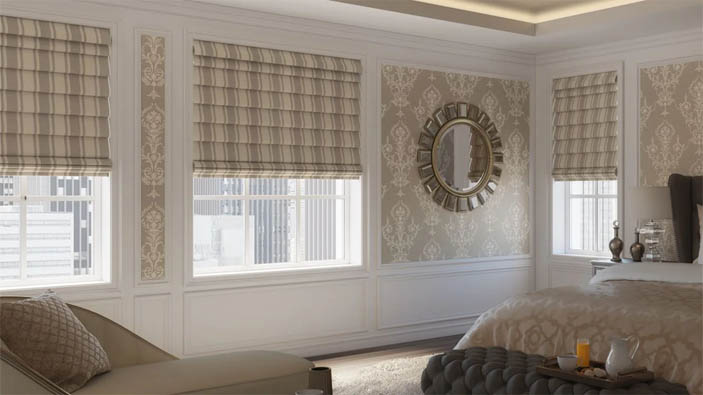
Choose the roman when the room needs softness as well as darkness:
- Primary bedrooms: A flat-fold Roman shade delivers darkness with warmth and texture that a flat panel cannot.
- Formal living and dining rooms: The tailored folds give a window the finish of drapery without the bulk.
- Windows with deep sills: There is room for the stack, so you get the full effect of the folds.
- Rooms that need acoustic softness: The extra fabric absorbs a little more sound than a single flat panel.
A plain fold roman shade is the middle path, seamed at intervals so it hangs neatly and keeps a slimmer profile than a soft fold.
Stack space, cleaning, and cost
Three practical points decide a surprising number of these choices.
- Stack: A raised roman shade covers the top few inches of glass. A raised roller shade covers almost none, which matters on a short window or where you want the full view back.
- Cleaning: Roller fabric wipes down. Roman shades want dusting or vacuuming with a brush attachment and spot treatment rather than a wet cloth.
- Cost: A roller uses less material and less construction, so it is generally the more economical of the two at the same fabric grade.
Match the shade to the room's job
If the window's job is light control and a clean line, a blackout roller shade is the efficient answer. If the room is somewhere you relax and you want the window to add texture and warmth, a blackout roman shade earns its extra cost. Either way, mount it outside the frame if maximum darkness is the priority (although an inside mount does block the vast majority of incoming light). Browse the full range of blackout shades and pick the one that suits how the room is used.
FAQs
Which blocks more light, a blackout roller or a blackout roman shade?
The fabric blocks light equally. In practice, a roman shade often leaks slightly less at the sides because it hangs flatter and closer to the edges of the window, while a roller needs clearance to roll. Mounting either outside the frame helps close those gaps.
Do blackout shades make a room completely dark?
No shade makes a room pitch black. Blackout fabric stops light through the material, but some light still enters around the edges. An outside mount that overlaps the frame gets you closest to true darkness.
Are blackout shades more private than light-filtering shades?
Not necessarily. Light-filtering shades already provide privacy day and night. Blackout fabric is about controlling light and darkness, not about adding privacy on top of what a light-filtering shade gives you.
Which is easier to clean, roller or roman shades?
Roller shades. The smooth, flat surface wipes down with a damp cloth. Roman shades should be dusted or vacuumed with a brush attachment and spot-cleaned rather than soaked.
Do roman shades take up more of the window?
Yes. The fabric gathers into folds at the top when raised, covering the upper few inches of glass. A roller shade rolls into a slim tube and leaves the view almost entirely clear.
Which is better for a bedroom?
Both work. Choose a roman shade if you want warmth and a tailored look, or a roller if you prefer clean lines and easier cleaning. Mount either outside the frame for the darkest result.
- Blackout Roller Shades vs. Blackout Roman Shades Which Is Right for Your Room?Blinds, Shades & ShuttersHome Advice
- Cordless Faux Wood Blinds: Everything You Need to Know Before You BuyBlinds, Shades & Shutters
- Where to Buy Blinds With the Best Guarantee: What to Compare Before You OrderBlinds, Shades & ShuttersCommon Questions
- How to Buy Faux Wood Blinds with FinancingBlinds, Shades & ShuttersHow To
- Best Cellular Shades for Winter Energy SavingsBlinds, Shades & ShuttersHome Advice