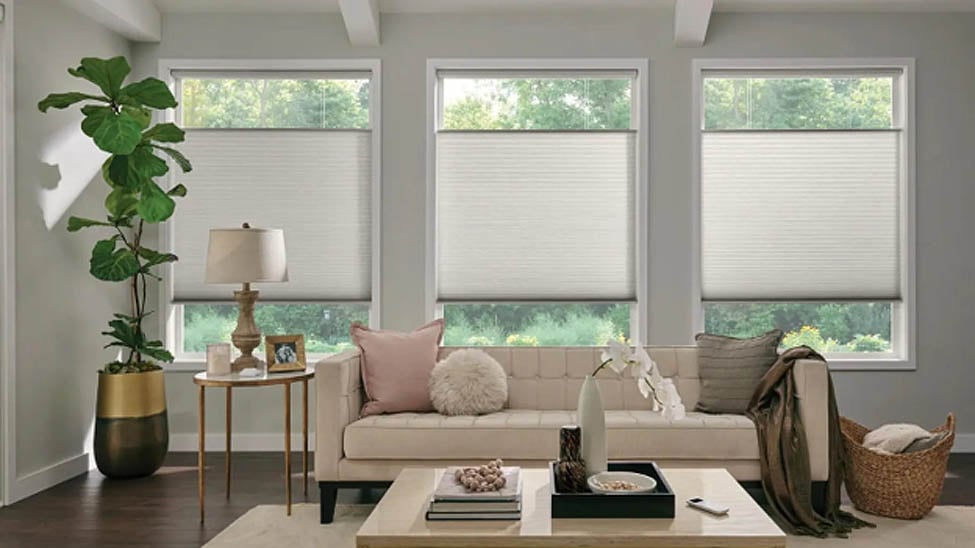
Every Type of Blind and Shade, Explained by What It Actually Does

There are more types of window shades and blinds available today than most people realize, and the names alone do not always make it clear what each one actually does. A roller shade and a Roman shade sound similar but look and behave very differently.
Cellular shades and pleated shades appear almost identical at first glance but perform differently where it matters most. If you are choosing new window treatments for your home, the most useful thing is not a list of names but a clear picture of what each type does best, where it belongs, and where it falls short.
Types of Shades
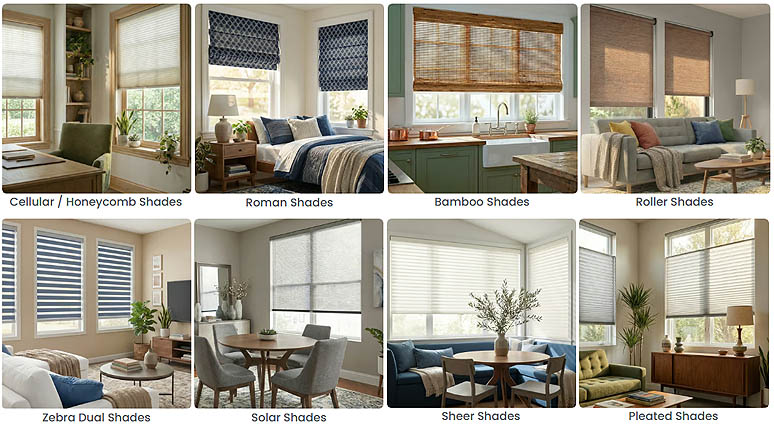
Shades are made from continuous panels of fabric or woven material rather than individual slats. They raise and lower as a single piece, and their style is defined by how the material folds, rolls, or stacks when lifted.
Roller Shades
Roller shades are one of the most popular types of window shades today for good reason. A single panel of fabric rolls up around a tube at the top of the window, creating a clean, modern profile with almost no visible hardware. They work in nearly every room and come in light-filtering, room-darkening, and blackout fabrics. Motorized roller shades are especially popular for hard-to-reach windows and convenience throughout the home.
Cellular Shades
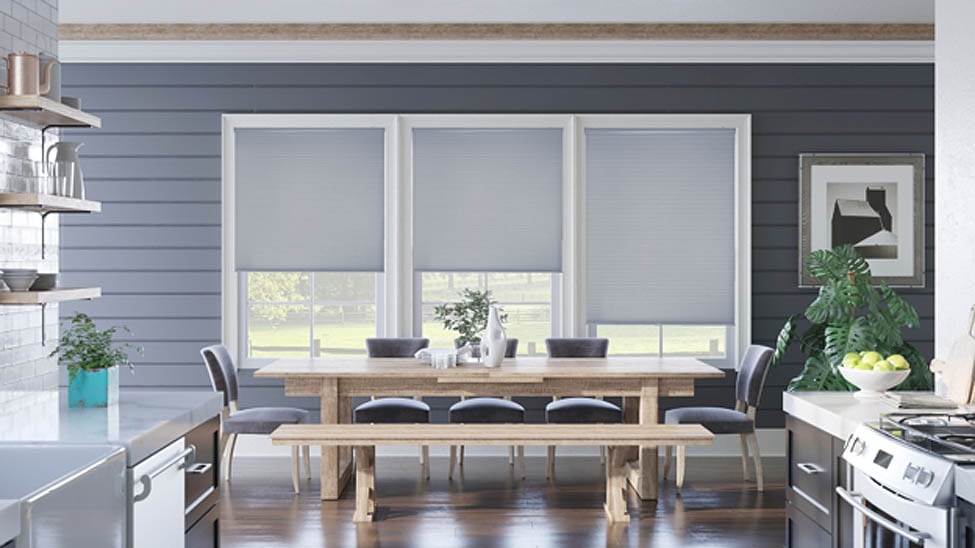
Cellular shades, also called honeycomb shades, are an energy-efficient option with a structure that traps air between your window and the room. That insulating layer helps keep rooms warmer in winter and cooler in summer. Cellular shades come in single-cell and double-cell construction, and are available in light-filtering and blackout options. Top-down/bottom-up versions let you control light and privacy from both directions.
Bamboo and Woven Wood Shades
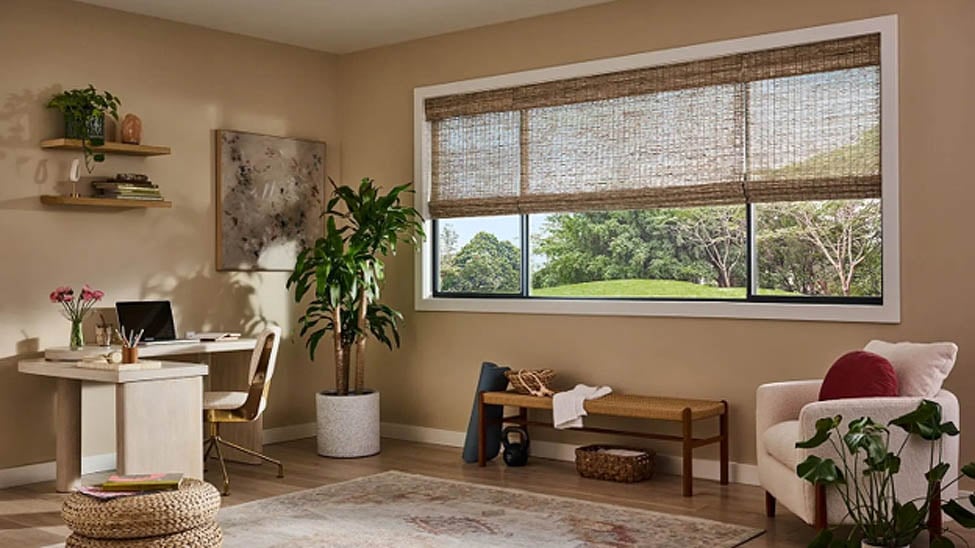
Bamboo shades are made from natural materials like bamboo, grasses, reeds, and jute woven into panels. They bring organic texture and warmth to a room, filtering light through the natural weave. Room darkening liners are available for bedrooms or media rooms. Bamboo shades work especially well in spaces with neutral tones, earthy decor, or a casual coastal feel.
Roman Shades
Roman shades are made from fabric that folds into neat, horizontal pleats as the shade is raised, creating a soft, tailored look. They are one of the most versatile types of shades for living rooms, bedrooms, and dining areas. Choose flat fold for a crisp, structured appearance or soft fold for a more relaxed drape. Roman shades come in a wide range of fabrics, patterns, and textures.
Solar Shades
Solar shades are designed to reduce glare and block UV rays while preserving your view of the outdoors. They are made from woven mesh fabric and come in different openness levels that control how much light passes through. Solar shades are ideal for sunrooms, home offices, and any room where you want to protect furniture from fading without sitting in the dark.
Zebra Dual Shades
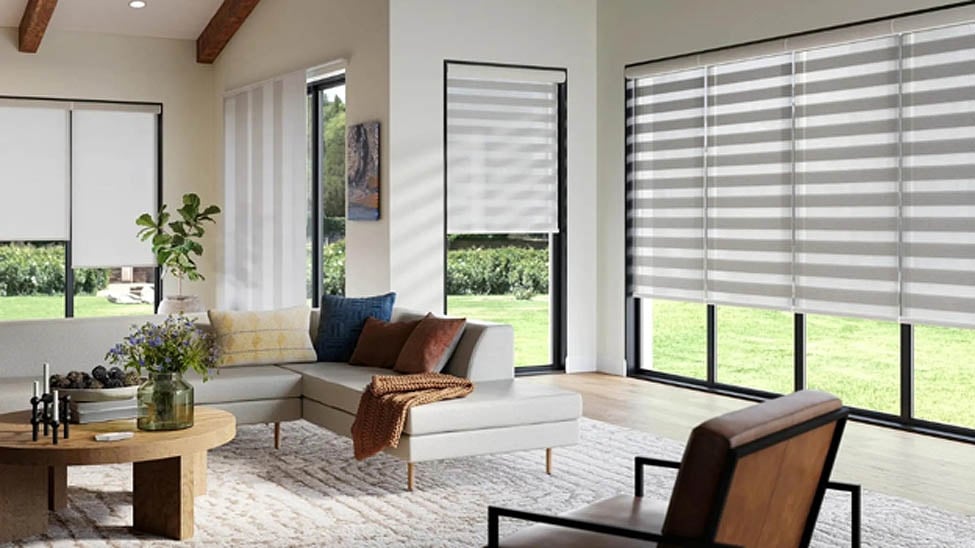
Zebra dual shades feature two layers of alternating sheer and opaque fabric bands that shift when you raise or lower the shade. Aligning the opaque bands lets light filter through the sheer sections, while offsetting them creates privacy and light blocking. The result is a shade that gives you something close to the adjustability of blinds with the clean look of a roller shade.
Pleated Shades
Pleated shades look similar to cellular shades but are made from a single layer of folded fabric without the honeycomb air pockets. They are lighter, more affordable, and still offer a clean, crisp appearance. Pleated shades are a smart choice for rooms where insulation is less of a priority, and you want a streamlined, budget-conscious window treatment. Because of their crimped fabric design, pleated shades need a slightly different care routine than flat shades — our guide on how to clean pleated shades walks through it step by step.
Sheer Shades
Sheer shades combine soft, translucent fabric with adjustable vanes suspended between two sheer panels. They diffuse light beautifully while giving you the ability to tilt the vanes for more or less privacy, similar to the way blinds work but with a far softer appearance. Sheer shades are a natural fit for living rooms and dining areas.
Types of Blinds
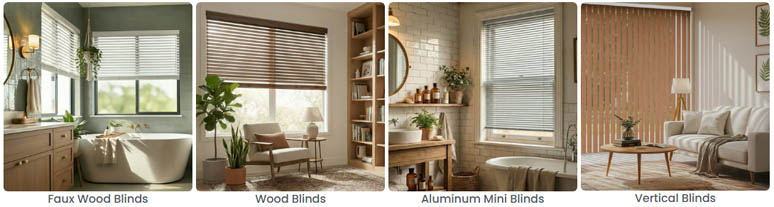
Blinds are made from individual slats or vanes that tilt open and closed. That tiltable design gives you precise, adjustable control over light and privacy that shades cannot match in quite the same way.
Faux Wood Blinds
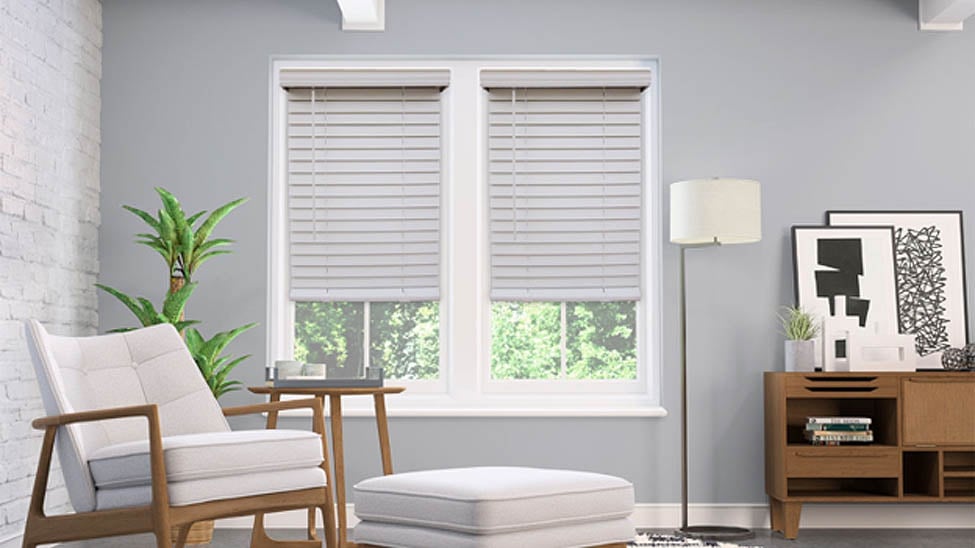
Faux wood blinds are the most popular type of blind and one of the most popular window treatments overall. They look nearly identical to real wood but resist moisture, warping, and fading, which makes them safe for kitchens, bathrooms, and high-humidity rooms. Faux wood blinds are also more affordable than real wood while offering the same adjustable light control.
Wood Blinds
Wood blinds offer natural warmth and a rich, traditional aesthetic. Each slat is made from real hardwood, and the grain and finish vary slightly from blind to blind, which gives them a handcrafted quality. Wood blinds are best suited for low-humidity rooms like bedrooms, living rooms, and offices.
Vertical Blinds
Vertical blinds feature long vanes that hang from a top track and move side to side rather than up and down. They are practical for sliding glass doors and extra-wide windows because they allow walk-through access without needing to raise the entire treatment. Simply draw them to one side the way you would a curtain.
Aluminum Mini Blinds
Aluminum mini blinds are a lightweight, durable, and affordable option. The narrow slats tilt for light control and raise completely out of the way when you want a clear view. They are easy to clean and work well in rental properties, utility rooms, and any space where you want function without a large investment.
Choosing the Right Shade or Blind for Your Room
The right type of window shade depends on what the room needs most. If temperature control matters, cellular shades are the strongest performer. If you want a view with UV protection, solar shades are built for exactly that. For adjustable light control room by room, faux wood blinds give you the most flexibility. If you are not sure which material or style will work best, you can order up to ten free samples from Blindster to compare fabrics and finishes in your own light, and every order is protected by the Fit or Free Guarantee.
Frequently Asked Questions
What are all the different types of window blinds?
The main types of blinds are faux wood blinds, wood blinds, aluminum mini blinds, and vertical blinds. Each uses individual slats or vanes that tilt for precise light and privacy control. Faux wood is the most popular choice due to its durability, moisture resistance, and classic appearance.
What is the most popular window shade?
Roller shades and cellular shades are the two most popular types of window shades. Roller shades are favored for their clean, modern profile, while cellular shades appeal to homeowners who want energy efficiency and insulation along with a polished look.
What blinds are currently in style?
Cordless faux wood blinds, motorized roller shades, and zebra dual shades are all trending. Clean lines, minimal hardware, and the ability to operate window treatments remotely are the design preferences driving the most popular choices right now.
Should blinds be lighter or darker than the walls?
It depends on the effect you want. Lighter blinds make a room feel more open and allow the window to recede visually. Darker blinds create contrast and draw the eye toward the window as a design feature. A shade or blind that closely matches your wall color creates the most seamless, integrated look.
- How Classic Value Faux Wood Blinds Compare to Real Wood and Faux Wood OptionsBlinds, Shades & Shutters
- Best Window Treatments for Living Rooms: Style, Light, and Privacy GuideBlinds, Shades & ShuttersDesign & Decor
- What Cell Size Do I Need? Cellular Shade Sizes ExplainedBlinds, Shades & Shutters
- How to Choose the Perfect Bamboo Shades for Your HomeBlinds, Shades & ShuttersHow To
- What Is a Window Treatment? Types, Uses & How to ChooseBlinds, Shades & ShuttersCommon Questions