How to Make Bamboo Blinds More Private: 5 Practical Solutions
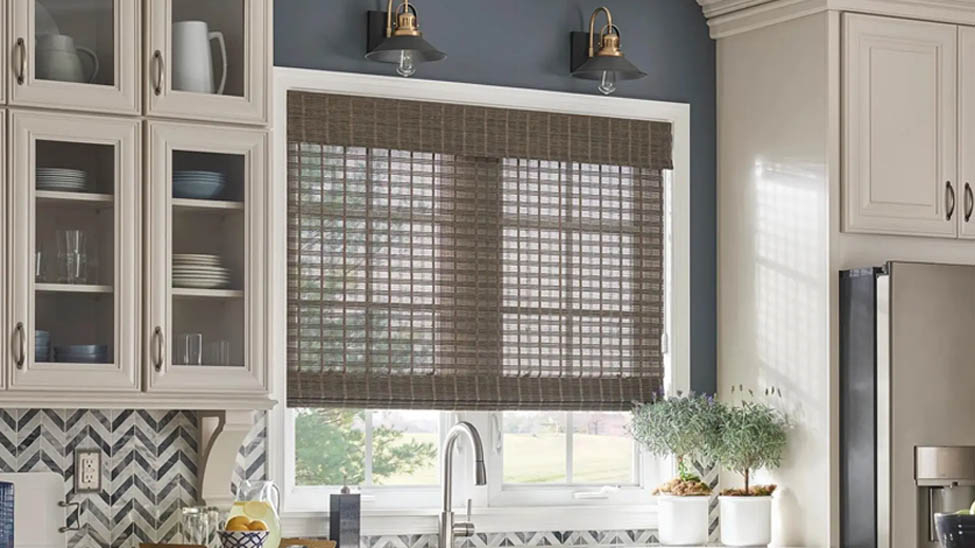
So you installed bamboo shades (or blinds, same thing) and they look great during the day. Natural texture, warm tones, exactly the aesthetic you were going for. Then night hits, you turn on the lights, and you realize... oh. People outside can see in way more than you expected.
This is probably the most common complaint about bamboo window treatments. The natural weave that makes them so visually appealing also creates gaps that let light—and visibility—pass through. During daylight hours, no big deal. At night with interior lights on? That's when the privacy issue becomes obvious.
The good news is you don't have to rip them down and start over. There are several ways to improve privacy while keeping your bamboo shades. Some solutions are simple, others require a bit more effort, but all of them work to varying degrees.
Let's get into what actually helps.
Why Bamboo Shades Have Privacy Issues in the First Place
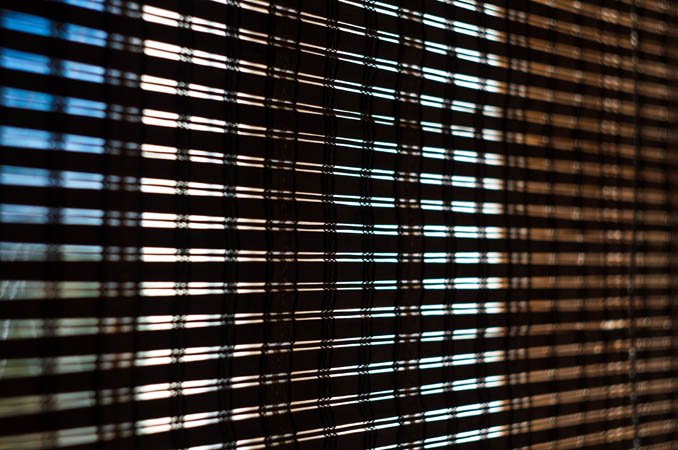
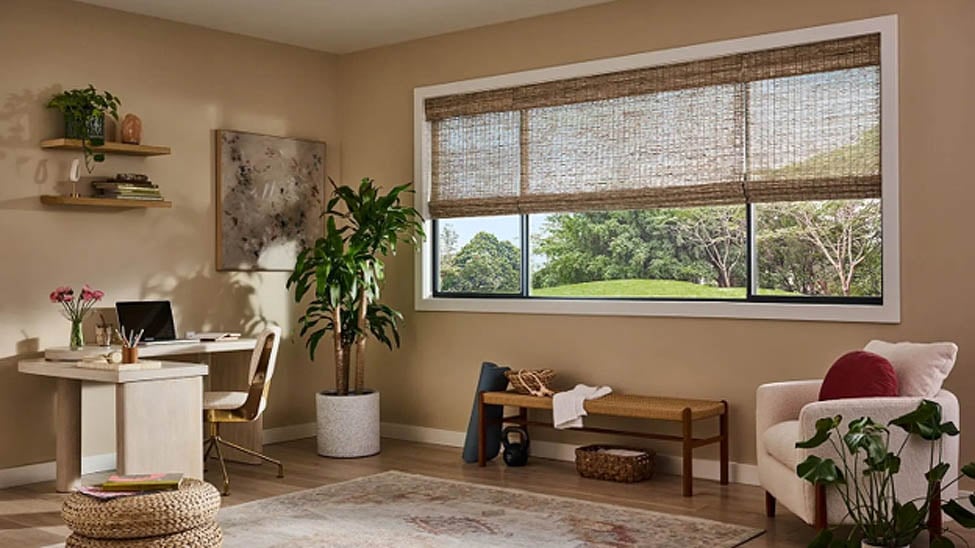
Bamboo is a natural material woven together with spacing between the reeds. That's part of the design—it allows light to filter through and creates that organic look everyone loves. But those gaps also mean the shade isn't opaque.
The weave density matters. Tighter weaves have smaller gaps and provide more privacy. Looser weaves let more light and visibility through. If you bought bamboo shades without thinking about this (most people don't until after installation), you might have ended up with a weave that's more open than you realized.
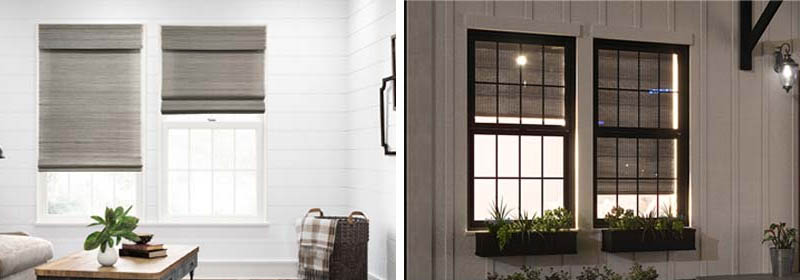
From inside looking out during the day, bamboo shades feel private enough and usually are since the brighter daylight outside makes seeing through the shade more difficult from the outside. But flip the lighting situation—nighttime with lamps on—and the physics change. Light from inside illuminates the gaps in the weave, making silhouettes and movement visible from outside, sometimes with a clear view into the room and of everything inside.
This isn't a defect. It's just how natural woven materials work. But yeah, it can be frustrating if you installed them in a bedroom or bathroom or any space where privacy matters.
Solution 1: Layer with Curtains or Drapes
Yeah, this feels like the obvious answer, and honestly... it works. Adding curtains in front of your bamboo shades gives you adjustable privacy without removing the shades you already paid for.
During the day, keep the curtains open and let the bamboo shades do their thing—filtering light, adding texture, looking good. At night when privacy matters, close the curtains. You get the best of both worlds.
The trick is choosing curtains that complement rather than compete with your bamboo shades. Sheer curtains in a neutral color work well if you want to maintain a light, airy feel. Heavier drapes in coordinating tones add more drama and block light completely when closed.
Layering does add visual weight to your windows, so this works better in larger rooms where the windows can handle more going on. In smaller spaces or with smaller windows, doubling up window treatments could feel overwhelming.
Installation is straightforward—you need a curtain rod, mounted above the window at whatever height you prefer, but usually just a few inches above the window opening. Hardware and home stores carry everything you need, and it's a pretty quick DIY project if you're comfortable with basic tools. Don't forget drywall anchors if you're not able to screw the brackets into a stud in the wall.
Solution 2: Add a Privacy Liner or Backing Material
One potential solution is adding a privacy liner or backing material behind your bamboo shades to block the gaps and prevent light from passing through.
Privacy liners or backing materials can be added behind bamboo shades, sitting between the bamboo and your window. From inside the room, you still see the bamboo texture. From outside at night, the backing blocks visibility and light leakage. It's pretty much invisible from the interior view, which keeps the aesthetic you wanted while addressing the privacy problem.
Aftermarket liner options may be available, though attachment methods and compatibility vary depending on the product and your specific shade construction. Some backing materials are designed to attach along the top and sides, while others may require more custom installation.
Blackout backing works best if you want to significantly reduce light transmission. Light-filtering options provide privacy without making the room totally dark. Depends what you need.
Depending on the product, installation complexity varies. Some solutions are relatively straightforward, others require more measuring and permanent attachment. It's worth noting that availability and compatibility of privacy liners for bamboo shades may vary by manufacturer—not all bamboo shades are designed to accommodate add-on backing, and installing an after-market liner may interfere with the operation of the shade and void the warranty. If you're considering this option, check with the manufacturer or retailer about compatible products before purchasing.
Solution 3: Use Sheer Drapery Panels for Diffused Privacy
This solution is more about softening visibility than completely blocking it, so whether it works depends on your privacy needs.
Sheer panels paired with bamboo shades can help obscure the view from outside without adding heavy fabric. At night, people outside can still tell lights are on and might see vague shapes, though sheer panels can help obscure details. Think of it like... frosted glass. You know something's there, but clarity is reduced.
This works best if your privacy concern is more about not being fully exposed rather than needing complete blackout. Like if your windows face the street but you're not right up close to the glass all the time. Or if neighboring houses are far enough away that diffused visibility is sufficient.
White or cream sheer panels tend to work best with natural bamboo tones. They let in light during the day while providing that layer of diffusion at night. The downside is this won't help if you need actual privacy—like for bedrooms or bathrooms where you're changing or showering. For living rooms or dining areas where you just want to avoid feeling like you're on display? Sheer panels can be enough.
Solution 4: Replace with Bamboo Shades with a Liner or a Tighter Weave
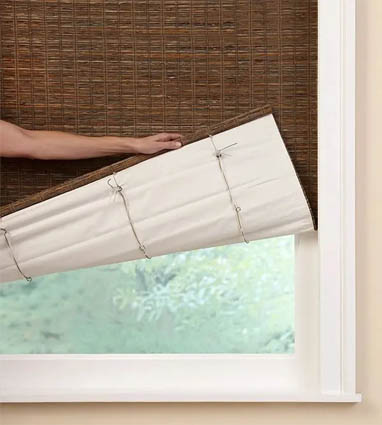
If you're open to replacing what you have, ordering bamboo shades with a liner already included, or just a tighter weave solves the privacy issue while keeping the material and aesthetic you want.
Not all bamboo shades are created equal. The spacing between reeds varies significantly depending on the product. Some have loose, open weaves that prioritize airiness and light filtering. Others have tight weaves that provide more coverage and privacy.
When shopping for tighter weave options, look for styles that have a tighter construction or better privacy. Ordering samples of the styles you're interested in lets you see the actual shade material in person and you can test the opacity in your windows before buying. Product photos can be misleading, so reading descriptions or asking customer service about weave density also helps.
Blindster offers various bamboo shade options, including cordless bamboo shades, and their customer service team can help identify which styles provide better privacy if that's your priority. It's worth asking before ordering rather than hoping it'll work out.
Tighter weaves let in slightly less light during the day, but the tradeoff is significantly better privacy at night. If privacy was the main issue with your current shades, this is probably the most permanent solution.
Solution 5: Install a Second Layer of Shades
This might sound excessive, but hear me out—some people install roller shades or cellular shades behind their bamboo shades for functionality, keeping the bamboo for aesthetics. The bamboo stays as the visible layer from inside the room. Behind it (closer to the window), you install a light-filtering or blackout roller shade that pulls down at night for privacy. During the day, the roller shade stays up and you just see the bamboo.
This works especially well if you also need better light control. Bamboo shades don't block light completely even with tight weaves, so adding a blackout shade behind them gives you full room-darkening capability when needed.
It's definitely more involved than other solutions. You typically need a large amount of space in your window frame for installing both shades inside the fame, or you'll install the room darkening shade inside the frame and the bamboo shade outside the frame on your wall. Installation takes longer. And yeah, you're buying a second window treatment, which adds cost.
But functionally? It's probably the most versatile option. You get the natural look of bamboo with the practical benefits of modern shades—privacy, light blocking, energy efficiency.
Blindster carries both bamboo shades and roller shades, so you can coordinate colors and order both for a cohesive look. Cellular shades are another option if you want the added benefit of insulation along with privacy.
What Doesn't Really Work
Before you waste time on ineffective solutions, here's what people try that doesn't help much:
Hanging fabric behind the shade without securing it properly. Sure, a loose piece of fabric technically blocks some visibility, but it looks messy, moves around, and doesn't stay in place. If you're going to add fabric, secure it correctly.
Just "hoping it gets better." The privacy issue doesn't improve over time. If it's a problem now, it'll still be a problem six months from now. Better to address it with one of the actual solutions.
Choosing the Right Solution for Your Situation
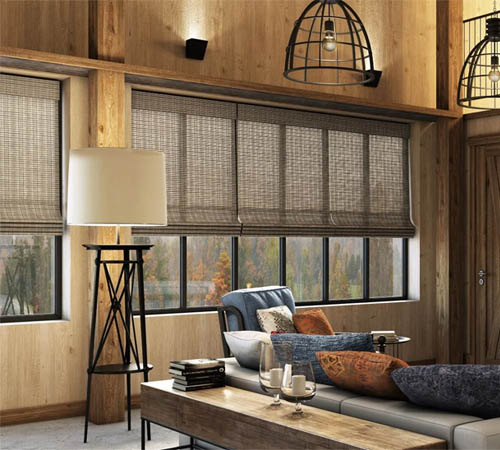
Which privacy fix makes sense depends on your specific needs, budget, and how much effort you want to put in.
If you want a straightforward approach, layering with curtains is your best bet. They're relatively affordable, installation is simple, and they immediately solve the problem while giving you control over when you need privacy.
If you're okay with a more involved project and want maximum flexibility, installing a second set of shades gives you the most control over privacy and light.
If you're willing to start fresh with new shades, ordering tighter weave bamboo shade or ordering one with an attached liner eliminates the privacy issue at its source while keeping the natural material aesthetic.
Budget matters too. Curtains and sheer panels are the most economical. Adding a second layer of shades costs more but provides the most comprehensive solution.
The Bottom Line
The Bottom Line
Bamboo shades are great for aesthetics and natural light filtering, but privacy is their weakness—especially at night. The good news is you have options that don't require ripping them down and starting over.
Curtains provide the most straightforward fix. Sheer panels offer diffused privacy. Tighter-weave bamboo shades solve it permanently. Second-layer installations give you maximum control. All of these work to varying degrees depending on what you need.
The key is matching the solution to your actual privacy requirements. Bedroom facing the street? Go with curtains or a second blackout shade. Living room where you just don't want to feel on display? Sheer panels might be enough.
Whatever you choose, addressing the privacy issue makes your bamboo shades actually functional instead of just decorative. And that's kind of the whole point of window treatments.
Frequently Asked Questions
Can you see through bamboo blinds?
Yes, you can see through most bamboo blinds to some degree, especially during the day when light from outside is stronger than light inside. The amount of visibility depends on weave tightness: loose, open weaves show more shadow and movement, while tight weaves with narrower gaps between reeds significantly reduce see-through visibility.
How do I line bamboo shades myself?
Lining bamboo shades involves attaching a fabric or vinyl backing to the underside of the shade using adhesive strips, sew-in liner kits, or clip-on privacy liners designed for woven shades. Many manufacturers sell liner kits sized to fit standard bamboo shade widths, making this a DIY-friendly weekend project rather than a full shade replacement.
What are the disadvantages of bamboo blinds?
The main disadvantages of bamboo blinds are limited nighttime privacy and inconsistent light control due to the natural woven gaps, plus vulnerability to moisture damage in humid rooms like bathrooms. Advantages include natural texture, warmth, affordability compared to real wood, and eco-friendly material sourcing that suits farmhouse and coastal interiors.
What are the best upgrade options for bamboo shades that lack privacy?
If your current bamboo shades feel outdated for privacy, upgrade options include ordering new shades with a tighter factory weave, adding a clip-on or sew-in privacy liner, or choosing a cordless bamboo shade with a built-in blackout backing. Requesting fabric samples first helps compare opacity levels before committing to a full shade replacement.
Are bamboo shades worth it?
Bamboo shades are worth it for homeowners who want natural texture and warmth at a lower cost than real wood blinds or plantation shutters. They excel at daytime privacy and light filtering but require a liner for full nighttime privacy and are less durable in high-moisture rooms than faux wood options. Most buyers find the aesthetic value outweighs the tradeoffs for living rooms and bedrooms.
Do bamboo shades block out light?
Unlined bamboo shades filter and soften light rather than block it, letting a warm, diffused glow into the room even when lowered. They do not achieve blackout-level darkness on their own. For rooms needing full light control, such as bedrooms or media rooms, a room-darkening liner or a second shade layered behind the bamboo shade is necessary.
Are bamboo shades still in style?
Yes, bamboo shades remain in style and have grown more popular as homeowners favor natural textures and sustainable materials over synthetic finishes. They suit farmhouse, coastal, boho, and transitional interiors especially well. Darker stains and tighter weaves give them a more contemporary look for homes wanting a less rustic appearance.
- The Best Dust-Resistant Blinds for Cleaner Homes & Less AllergiesBlinds, Shades & ShuttersHome Advice
- How Classic Value Faux Wood Blinds Compare to Real Wood and Faux Wood OptionsBlinds, Shades & Shutters
- Best Window Treatments for Living Rooms: Style, Light, and Privacy GuideBlinds, Shades & ShuttersDesign & Decor
- What Cell Size Do I Need? Cellular Shade Sizes ExplainedBlinds, Shades & Shutters
- How to Choose the Perfect Bamboo Shades for Your HomeBlinds, Shades & ShuttersHow To