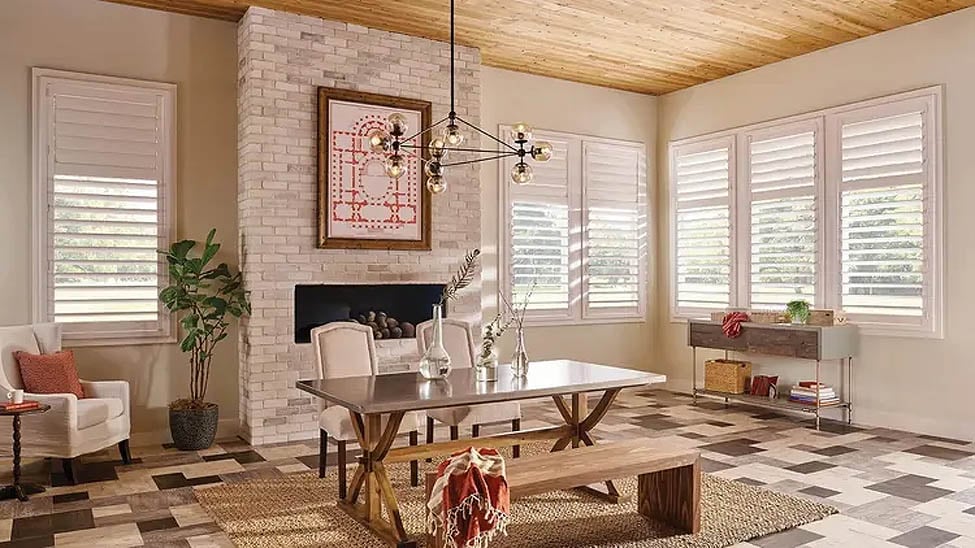
Window Coverings for Maximalists
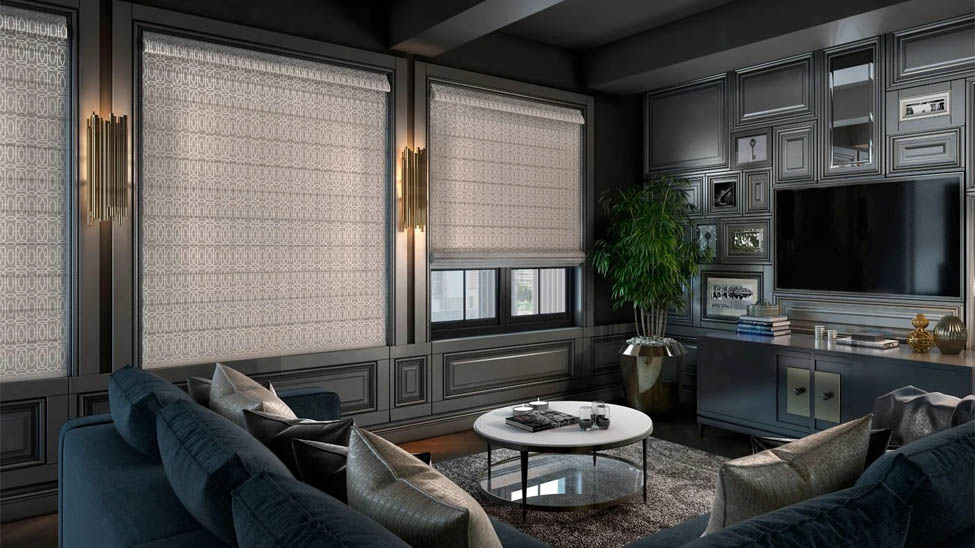
Minimalism had its moment. Now? Maximalism is having its time of its life.
If you're decorating with bold patterns, rich textures, and the philosophy that more is actually more, your windows deserve the same energy as the rest of your space. Bare windows or plain white blinds don't cut it when you've got jewel-toned walls, layered rugs, and shelves packed with collected treasures.
The good news: window treatments are one of the most effective ways to amplify a maximalist aesthetic. Taking up significant visual real estate, they add texture and dimension while giving you a chance to introduce pattern, color, or both without committing to repainting entire rooms.
Here's how to choose window coverings that actually fit a maximalist approach.
Why Window Treatments Matter in Maximalist Spaces
Maximalism thrives on intentional chaos. Every element should contribute to the overall vibe, whether that's through color, pattern, texture, or scale. Windows are often the largest uninterrupted vertical space in a room, which means leaving them plain creates a void.
Window coverings in a maximalist room do a few things. Another layer of pattern or texture gets added to an already busy space. Architectural interest comes through, especially with something that has visual weight like Roman shades or shutters. Functional benefits (light control, privacy) don't sacrifice style.
Think of your window treatments as an opportunity, not an obligation. You're not covering windows because you have to. You're adding another piece to the puzzle.
Roman Shades for Pattern Play
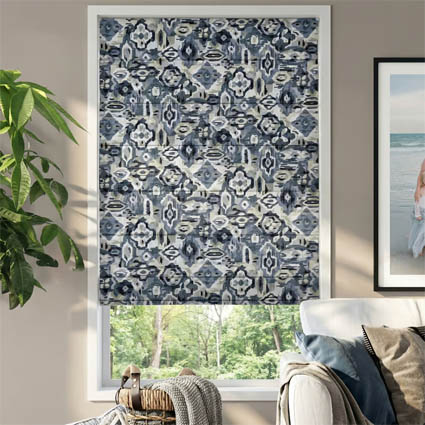
Roman shades are a maximalist's best friend. The fabric panels fold up in horizontal pleats when raised, which means you get a clean look when they're up and a full display of pattern when they're down. Choose a botanical print, geometric pattern, or richly colored fabric? Roman shades show it off without competing for attention with curtains or hardware.
Structure keeps even busy prints from looking chaotic. Natural breaks form in the design where the fabric folds, so patterns read as intentional rather than overwhelming.
Custom Roman shades can be sized to your exact window dimensions, which means you're not stuck with standard sizes that leave awkward gaps or don't quite cover the frame.
Roman shades work well on their own in spaces where the window treatment is the statement piece. Want the softness of fabric panels with the structure of shades? Layer them under curtains.
Bamboo Shades for Texture and Warmth
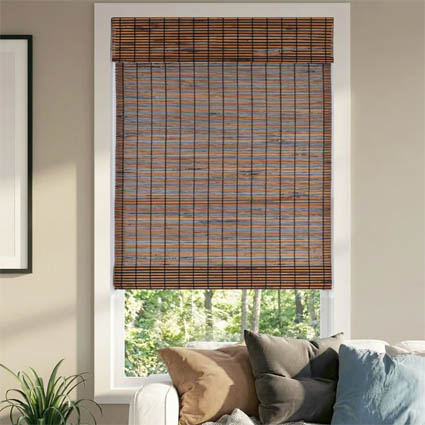
Maximalism isn't just about pattern. Texture plays a huge role, and bamboo shades deliver it in spades.
Natural woven materials like bamboo add warmth and organic texture that contrasts nicely with more polished elements in the room. Got velvet furniture, glossy ceramics, or metallic accents? Bamboo shades ground the space and prevent it from feeling too slick.
Bamboo also reads as collected and intentional, which fits the maximalist ethos of curating rather than coordinating. Natural variation in the weave means no two shades look identical. That kind of organic imperfection works well in spaces that celebrate individuality over uniformity.
Light filters beautifully through these shades. Harsh sunlight gets diffused without being blocked completely, which keeps rooms feeling warm and lived-in rather than cave-like. Need more light control? Add a blackout liner or layer them with curtains.
Bamboo shades pair well with strong wall colors. Neutral tones of natural bamboo provide visual relief without feeling boring, and they don't compete with the rest of the room's color palette.
Layering Shades and Curtains
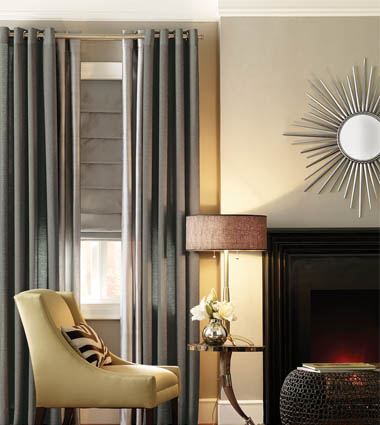
Layering is a cornerstone of maximalist design, and window treatments are no exception. Pairing shades with curtains gives you the best of both worlds: the clean lines and light control of shades plus the softness and drama of fabric panels.
Start with functional shades. Cellular shades, roller shades, or solar shades handle the practical stuff (blocking light, insulating windows, reducing glare). Then add curtains for color, pattern, or texture. Sheer panels give you a softer look. Velvet drapes add richness. Patterned fabric can pick up colors from elsewhere in the room.
This approach gives you flexibility. Pull the curtains closed for a full wall of fabric. Leave them open to frame the window and show off the shades underneath. Change your mind about the look? Swapping out curtains is easier than replacing the shades.
Rooms with multiple windows benefit especially from this strategy. Keep the shades consistent across all windows for cohesion, then vary the curtains to add interest or adjust the level of visual weight in different parts of the room.
Just make sure your curtain rod extends beyond the window frame so the curtains don't block the shades when they're open. Both layers should be functional, not just decorative.
Shutters for Architectural Drama
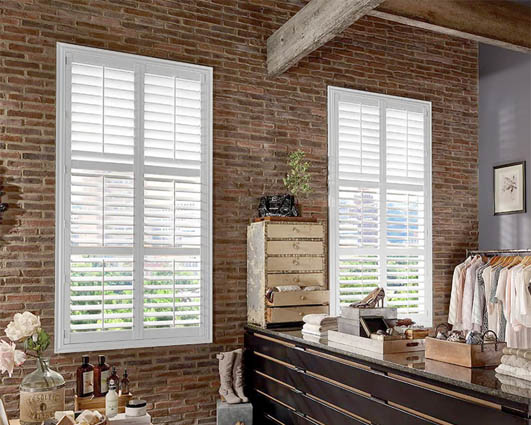
Shutters bring structure and permanence to a maximalist space. They're not subtle, which is exactly the point.
Faux wood shutters have the look of traditional plantation shutters without the drawbacks of real wood (warping, moisture damage, high cost). Durable and easy to clean, they hold up well in humid environments like kitchens and bathrooms where real wood would struggle.
Rooms with high ceilings or large windows are perfect candidates for shutters. Vertical lines and panel construction add architectural interest and break up expansive wall space. Already have crown molding, wainscoting, or other detailed trim work? Shutters reinforce that layered, historically-inspired aesthetic.
Paint shutters to match your trim for a cohesive look, or go contrasting. Deep green, navy, black, or even a rich terracotta can turn shutters into a focal point rather than a background detail.
Installation is straightforward for most DIYers, especially if you're comfortable with basic tools. Blindster offers faux wood shutters custom-sized to fit your windows, which eliminates the guesswork of cutting panels to size or dealing with gaps around the frame. Measure carefully, mount the panels, and you're done.
Precise light control comes standard with shutters. Adjust the louvers to direct light where you want it, close them completely for privacy, or swing the panels open to let in maximum sunlight. That level of control is useful in maximalist spaces where you might want to highlight certain areas or objects at different times of day.
Mixing Patterns Without Losing Your Mind
Maximalism encourages pattern mixing, but there's a difference between curated chaos and actual mess. Adding patterned window treatments to a room that already has patterned rugs, upholstery, and wall art requires a few guidelines.
Vary the scale of your patterns. Large-scale floral print on the sofa? Choose window treatments with a smaller geometric or abstract pattern. Busy rug? Go with a simpler pattern on the windows so they don't compete for attention.
Stick to a cohesive color palette. Mix florals, stripes, geometrics, and abstracts as long as they share a few key colors. This creates visual connections across the room even when the patterns themselves are different.
Use solid colors strategically. Not every surface needs a pattern. Solid-colored shades or shutters can anchor a room full of prints and give your eyes a place to rest. Neutral bamboo shades, white shutters, or solid-colored Roman shades work well in spaces where walls, furniture, and accessories are already doing a lot.
Uncertain about committing to a strong pattern on window treatments? Start with one window (maybe the one in your home office or bedroom) and see how it feels. Expand to other rooms if you love it, or stick with that single statement window if you prefer.
Cellular Shades for Function and Flexibility
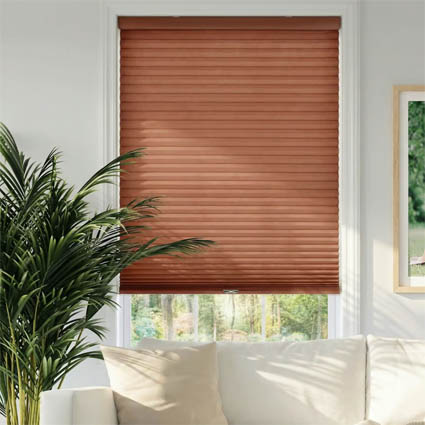
Cellular shades aren't flashy, but they're workhorses in a maximalist room where you're combining treatments.
These shades trap air in their honeycomb structure, which provides insulation and helps with energy efficiency. Heavy curtains, thick rugs, and layered textiles are already part of your maximalist aesthetic? Cellular shades fit right in from a functional standpoint while staying visually understated.
Different levels of opacity (sheer, light-filtering, blackout) let you choose how much light control you need. Pair them with statement curtains or patterned valances, and you've got a setup that's both practical and visually interesting.
Budget considerations matter too. Cellular shades typically cost less than custom Roman shades or shutters, which frees up money for statement curtains or other decorative elements.
DIY Installation and Cost Considerations
Going the DIY route with window treatments saves money. Professional measuring and installation can add $100 to $300 per window on top of the product cost, which adds up fast if you're outfitting an entire house.
Custom window treatments from Blindster are designed for DIY installation. Measure your windows (detailed guides are available for this), order the exact size you need, and install them yourself with basic tools. Most products take 15-20 minutes per window once you've done the first one.
Installation varies depending on the product type. Roman shades, roller shades, and cellular shades typically mount with brackets that screw into the window frame or wall. Shutters require more precision since you're mounting hinged panels, but the process is still manageable if you're comfortable with a drill and a level. Bamboo shades are among the easiest to install, thanks to lightweight material and simple mounting brackets.
Custom sizing requires careful measurement. Measure width and height in three places (top, middle, bottom for width; left, center, right for height) and use the smallest measurement to ensure a proper fit. Double-check before ordering.
When to Go Strong and When to Pull Back
Maximalism doesn't mean every element has to scream for attention. Some windows can have patterned treatments while others stay neutral to balance the room.
Consider the room's focal point. Windows that face a garden or cityscape with a great view might benefit from simpler treatments that frame the view without competing with it. Large picture windows, floor-to-ceiling glass, or interesting architectural shapes deserve treatments that match their importance: shutters, rich fabrics, or combined approaches.
In smaller rooms, heavy or dark window treatments can make the space feel closed in. Lighter colors, sheer fabrics, or bamboo shades keep the room feeling open while still adding texture and interest.
Varying window treatments within the same room works too if you have multiple windows. Match the style (all Roman shades, or all shutters) but vary the color or pattern. This keeps the room feeling cohesive while adding variety.
The Point of It All
Maximalist design is about creating spaces that feel personal, collected, and rich with detail. Window treatments are a big part of that equation. Not an afterthought or something you add just for privacy, they're an opportunity to introduce more color, more texture, more personality.
Choose window coverings that fit the room's energy. Gone strong everywhere else? Your windows should match that commitment. Still building your maximalist space? Window treatments can be the anchor that sets the tone for everything else.
Doing it yourself gives you more budget to spend on the good stuff: the patterned fabrics, the custom sizing, the combinations that make maximalist rooms feel intentional instead of chaotic.
- Standard vs Reverse Roll Roller Shade: Differences & How to ChooseBlinds, Shades & Shutters
- When to Repair vs Replace Your Window TreatmentsBlinds, Shades & ShuttersCommon Questions
- Common Mistakes When Ordering Blackout Shades (and How to Avoid Them)Blinds, Shades & ShuttersCommon Questions
- Are Vertical Blinds Still in Style?Blinds, Shades & ShuttersDesign & Decor
- Are Plantation Shutters Still in Style in 2026?Blinds, Shades & ShuttersCommon Questions