Best Blinds for Glare Control (Home Office & TV Rooms)
Glare is not a darkness problem; it is a light-direction problem. A hard beam of afternoon sun hits your monitor or TV, washes out the screen, and closing everything until the room feels like a cave is the wrong fix. The better move is to soften or redirect that light while keeping the room usable. Which glare-reducing blinds you want comes down to one question: do you need to keep the daylight and the view, or can you kill the light entirely?
What actually stops screen glare
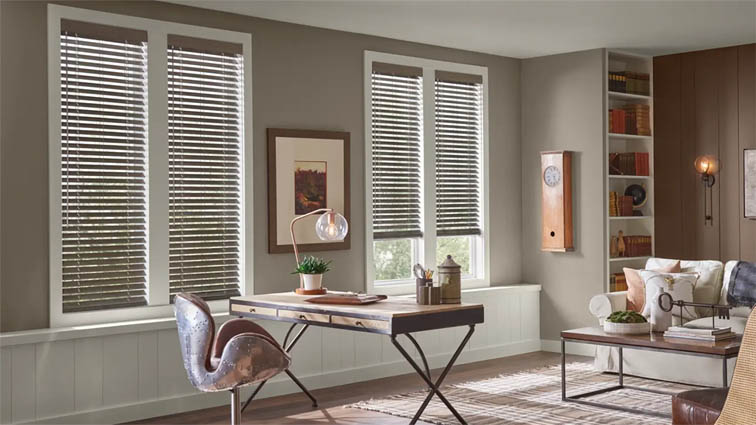
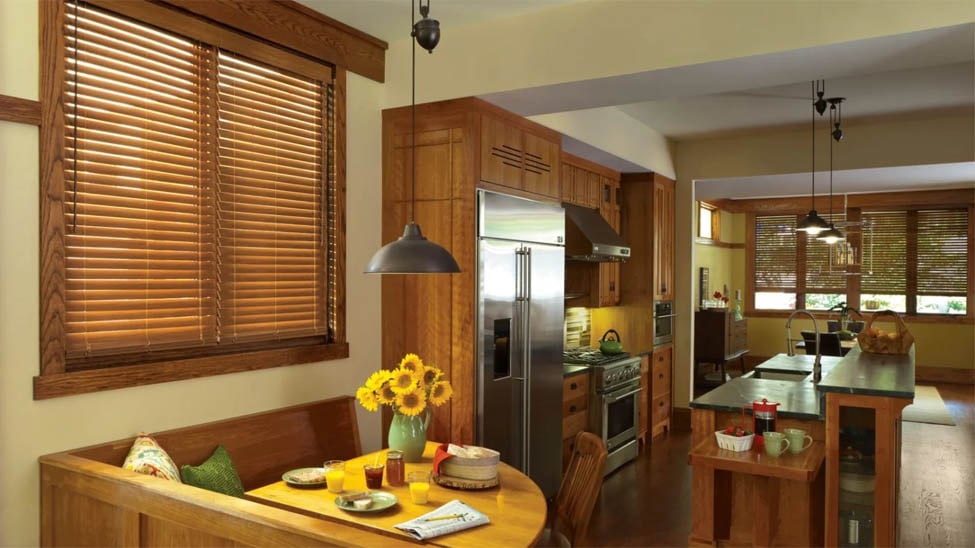
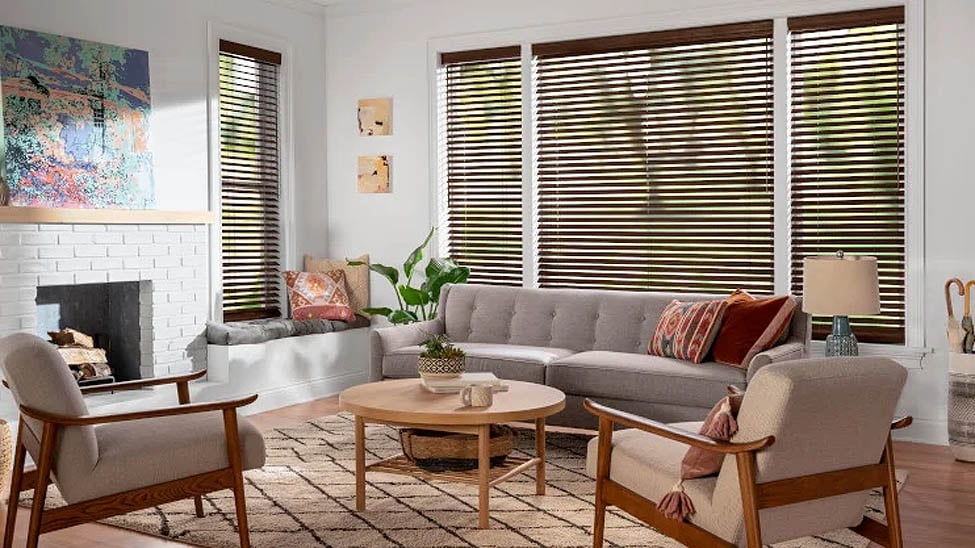
Glare control works one of three ways, and understanding them saves you from over-darkening a room that just needed diffusion. A translucent fabric scatters the direct beam into soft, even light. A screen-weave fabric reflects part of the sun's energy outside before it reaches the room. And a slatted blind lets you redirect light, tilting the slats to bounce it up toward the ceiling instead of onto your screen. That last option is why faux wood blinds still earn a place in a bright room, though tilted slats can throw stripes of light and shadow across a desk.
For a home office: Cut the glare, keep the daylight
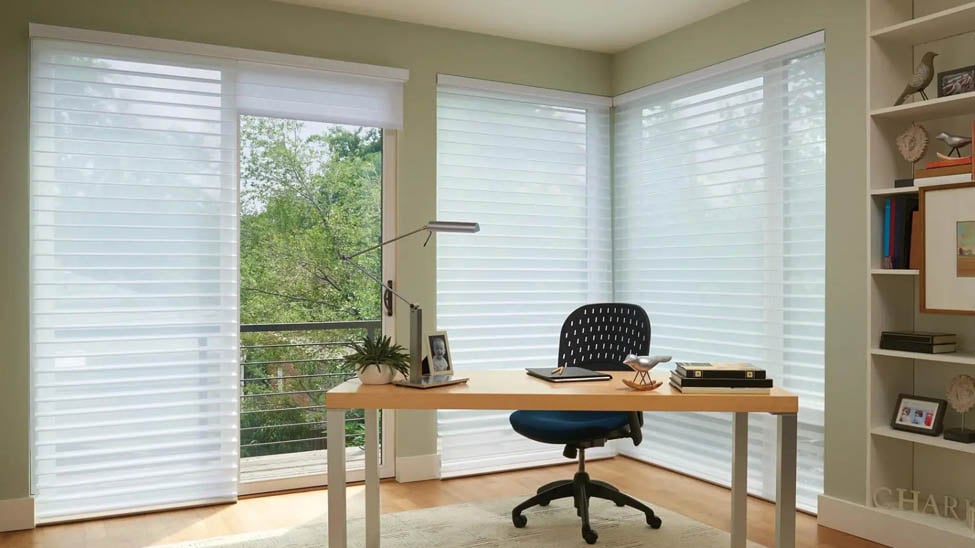
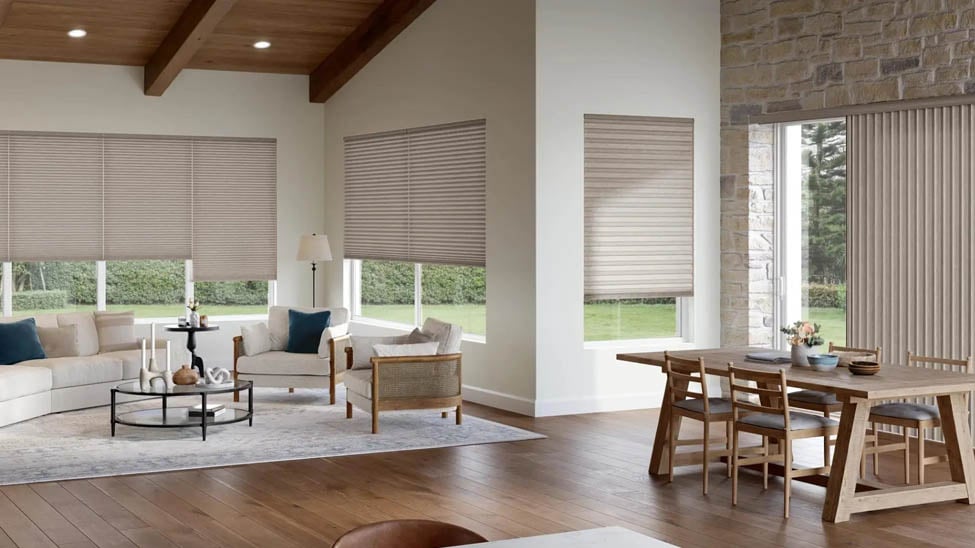
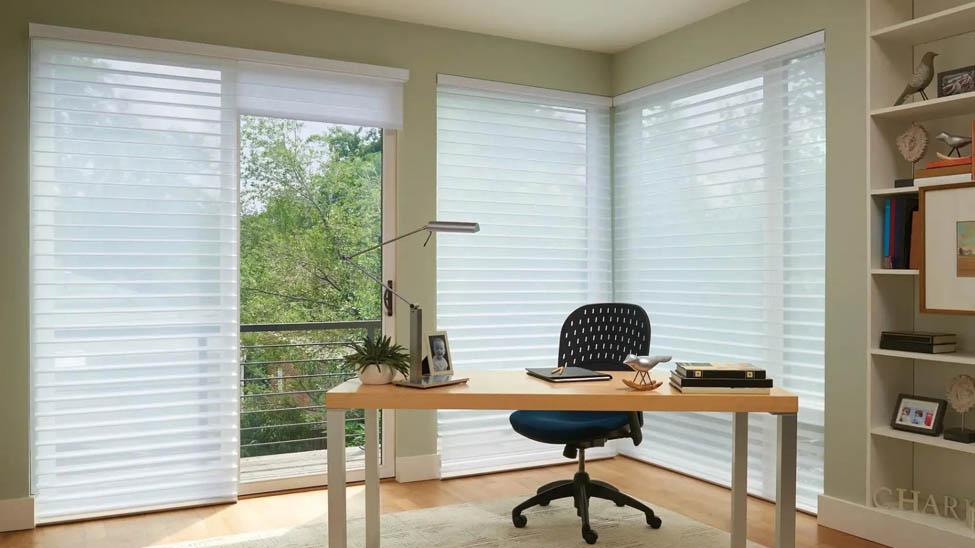
An office wants the glare gone without losing the daylight that keeps you alert, so the goal is diffusion, not blackout. Solar shades are the strongest all-around pick here, since they filter the harsh beam and block UV while preserving your view outside. A motorized Deluxe Light Filtering Solar Shade does exactly that, and its openness level lets you dial in how much sun it stops. If you would rather have a soft, glowing room than a view, a light-filtering roller shade scatters the light beautifully, and a cellular shade in a top-down configuration lets you drop it from the top to admit daylight while keeping the sun off your screen at desk height.
For a TV or media room: Kill the reflections
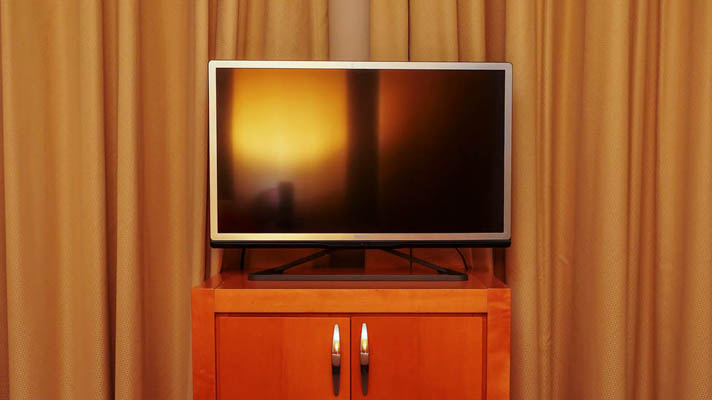
A media room is the opposite problem. You want the reflections gone, and you can afford to go dark to get there. A room-darkening or blackout roller shade eliminates the direct light that bounces off a screen, which is what you want for a dedicated theater or daytime gaming. If you still want a little view during an afternoon game, a low-openness solar shade cuts most of the glare while keeping a connection to outside. Blindster's own guide to fixing TV glare before the big game walks through that balance in a living room setup.
Understanding solar shade openness
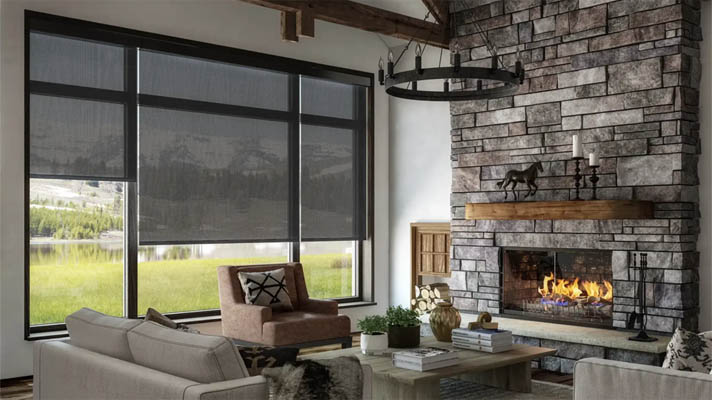
Solar shades are rated by openness factor, which is the one number that decides how much glare they stop. It is specific to solar shades, so do not look for it on other fabrics.
- 1 to 3 percent: the strongest glare, heat, and UV reduction, plus the best daytime privacy, at the cost of a slightly dimmer view.
- 3 to 5 percent: the office sweet spot, balancing real glare control against a clear view. A 5 percent shade blocks around 95 percent of UV.
- 5 to 10 percent: the most natural light and the clearest view, with less glare control. A 10 percent shade still blocks about 90 percent of UV.
A darker fabric, counterintuitively, gives a clearer outward view and stronger glare reduction than a light one at the same openness.
Add motorization for glare that moves with the sun
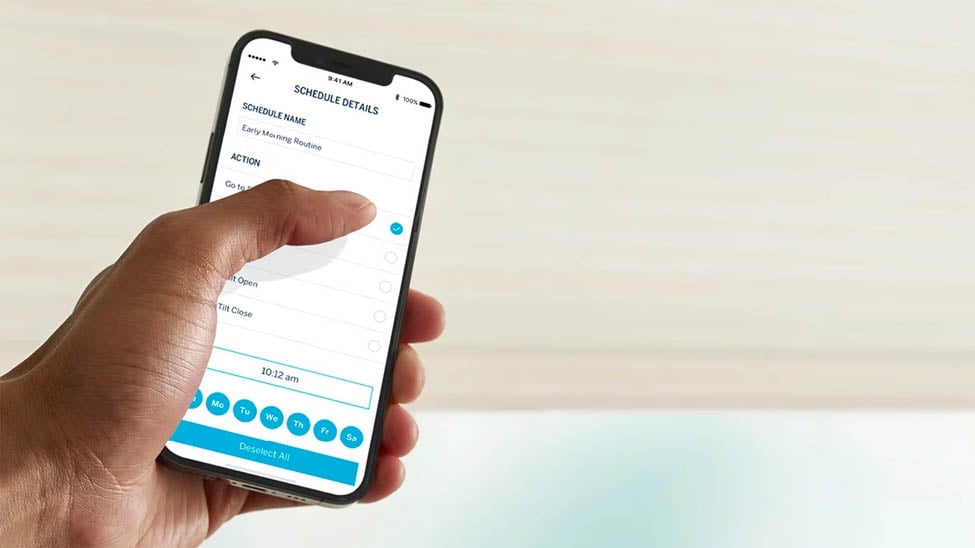
Glare is not constant; it tracks the sun across the day, which is why motorization is a genuine upgrade in a screen-heavy room. A motorized shade with a smart home connection can be scheduled to drop before the afternoon sun reaches your desk and rise again once it passes, so you are not interrupting a call to fight the light. It also handles the tall or awkwardly placed windows that so often cause the worst glare. The same convenience makes it easy to lower every shade in a media room at once when the movie starts.
Soften the light, don't sit in the dark
The best glare-reducing blinds solve the problem without taking the daylight with them. In an office, reach for a solar or light-filtering shade that diffuses the beam and keeps your view. In a media room, go room-darkening to kill reflections outright. Match the openness to how much sun you are fighting, and let motorization handle the timing. Browse solar shades and light-filtering options and match the fabric to the room's real glare.
FAQs
Which blind material reduces screen glare the most?
Solar shade fabric, especially at a low openness factor. Its tight screen weave scatters and absorbs the direct beam that causes monitor glare, while still letting you see out. Blackout fabric blocks glare completely but darkens the room.
Do light-filtering shades reduce glare without darkening the room?
Yes, that is their strength. Light-filtering fabric scatters harsh sunlight into soft, even light, cutting glare while keeping the room bright. It is often the best balance for a workspace that needs daylight.
Are solar shades better than blinds for glare control?
For screens, usually yes. Solar shades diffuse light evenly and keep a view, while slatted blinds can leave stripes of light and shadow across a desk. Blinds still win when you want precise, adjustable tilt control.
What openness factor works best for reducing glare?
A 3 to 5 percent openness is the sweet spot for most offices, balancing glare control with a clear view. Drop to 1 to 3 percent for severe afternoon sun, and go to 5 to 10 percent only when the view matters more than the glare.
Can glare-reducing blinds still provide privacy?
Solar shades give daytime privacy but turn see-through at night when interior lights are on. Light-filtering shades provide privacy day and night, and blackout fabrics offer full privacy around the clock.
How do you stop glare on a TV without making the room dark?
Use a low-openness solar shade. It cuts most of the direct glare and reflections off the screen while keeping a dim view and some ambient light, so the room stays usable rather than pitch black during a daytime show.
- How to Choose the Right Faux Wood Blind ColorBlinds, Shades & ShuttersHow To
- Best Blinds for Glare Control (Home Office & TV Rooms)Blinds, Shades & ShuttersHome Advice
- Smart Blinds: Alexa, Google Home & Smart Home CompatibilityBlinds, Shades & Shutters
- Blind Slat Sizes ExplainedBlinds, Shades & ShuttersCommon Questions
- Best Blinds by Window Direction (North, South, East & West)Blinds, Shades & ShuttersHome Advice