How to Choose the Right Faux Wood Blind Color
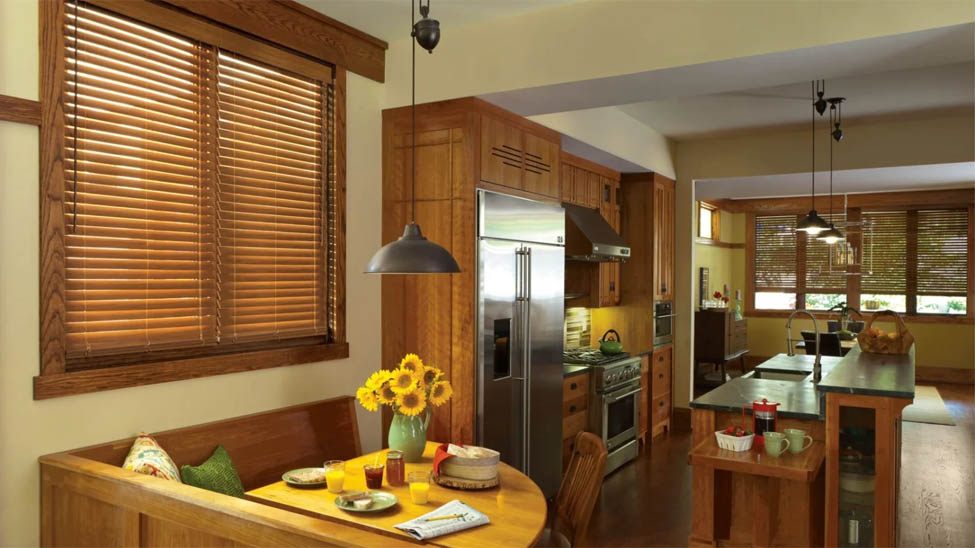
The reason faux wood blind colors feel hard to choose is that most people try to match the blind to the whole room at once, to the walls and the trim and the floor, and end up matching nothing. The fix is simpler than it looks. Pick one element to coordinate with, get the undertone right, and check it in your own light before you commit. Do that, and the color almost chooses itself.
Pick one thing to match, not everything
Blinds look best when they connect to a single element in the room rather than trying to echo all of them. Choose your anchor first, and let the rest of the room coordinate around it.
- Trim: the safest, most timeless anchor. Matching the trim frames each window cleanly and rarely dates.
- Wall tone: the move for a seamless, modern look, where the blinds recede into the wall instead of standing out.
- Flooring: coordinate with it, but do not match it exactly, since a blind that mirrors the floor tone usually reads flat.
White, wood tone, or dark: what each color does
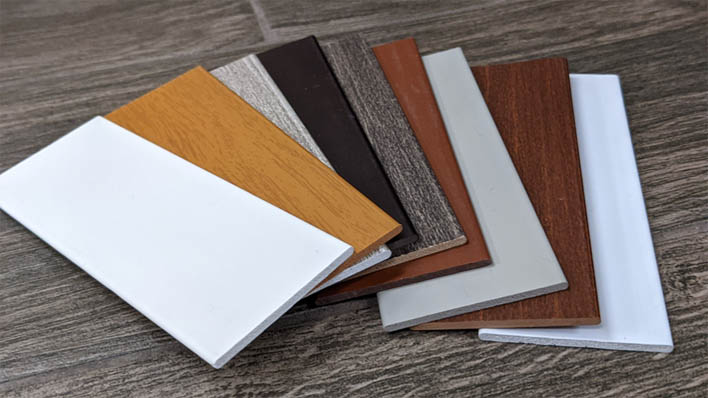
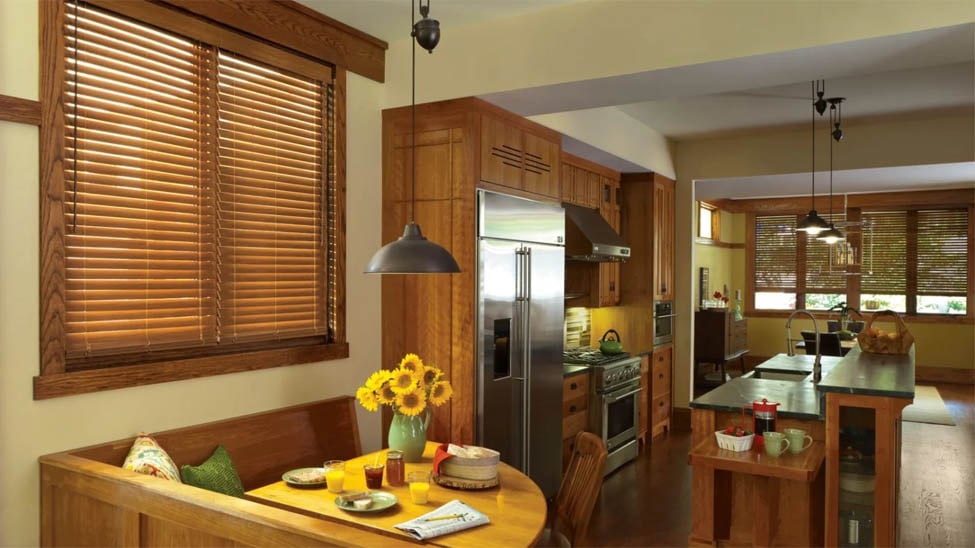
White is the most popular faux wood blind color for good reason. It brightens a room, makes a space feel larger and airier, and works with almost any style, which is why it pairs so easily with white or off-white trim. Light and mid wood tones bring warmth and a natural, lived-in feel, and they hide everyday dust better than the extremes because dust is pale and shows most on very dark surfaces.
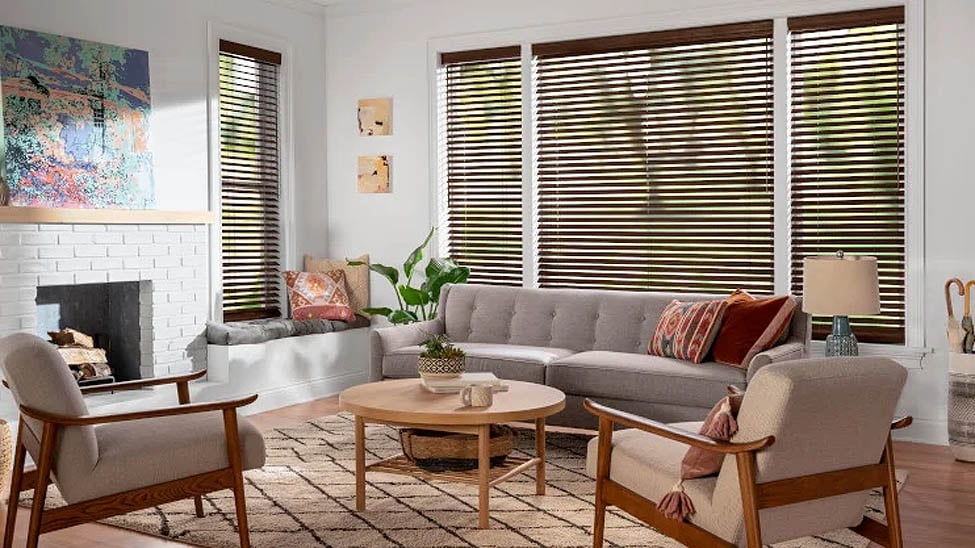
Deep finishes like espresso or walnut turn the window into a focal point and add drama, at the potential cost of showing dust and lint more readily. If you want a cool, contemporary finish rather than a wood look at all, aluminum blinds give a crisp, modern edge that wood tones cannot. Whatever direction you lean, Blindster's faux wood blinds come in a range of whites and wood-grain stains to match it.
Undertones are what actually make or break it
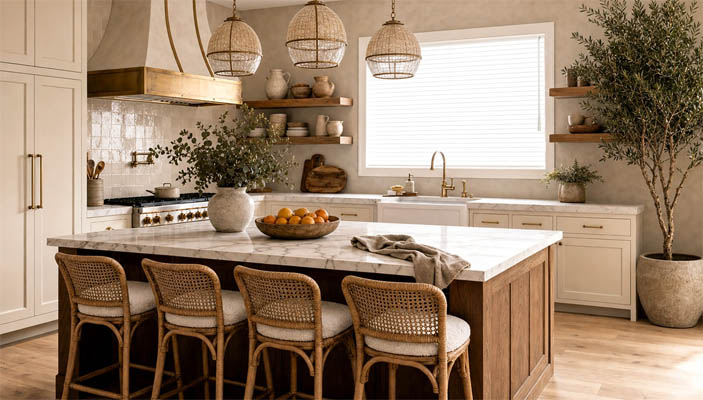
This is where good color choices quietly go wrong. White is not one color, and a cool white blind against warm, greige walls or cream trim can look dingy or slightly off, even though both are technically neutral. Match the undertone, not just the name: a warm white for warm trim, a cooler white for cool trim.
The same holds for wood tones, where a cool grey-washed finish can clash with warm oak flooring. When two neutrals feel wrong together in a room, an undertone mismatch is almost always the reason.
Check the color in your own light before you commit
A finish that looks perfect on a screen can read completely differently on your wall, because a lit display flattens the undertone that daylight and evening lamps reveal. Order samples of the two or three finishes you are weighing and hold them against your trim and walls, in daylight and again at night with your usual lights on.
That five-minute test is the fastest way to catch an undertone problem before it becomes a reorder. A 2-inch Deluxe Cordless Faux Wood Blind comes in enough whites and stains that seeing them in the room is worth the wait.
Should every room have the same blind color?
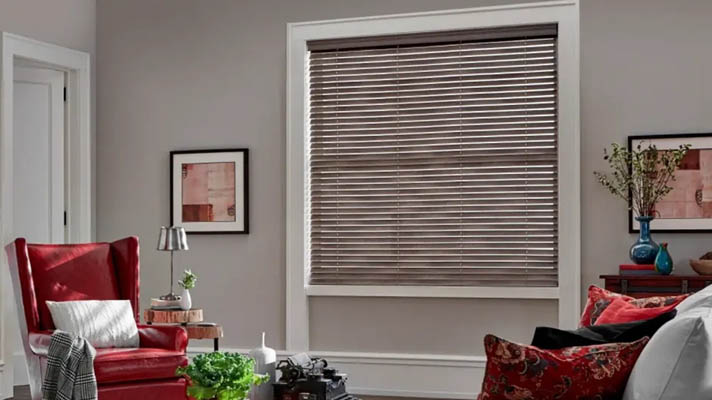
Consistency reads as intentional, so a single anchor color carried across the open, visible areas of a home usually looks more polished than a different blind in every room. The sensible exceptions are rooms with a clearly different job. A bathroom may push you toward a material and finish that handle moisture, and a child's room might take a more forgiving mid-tone. For a patio or sliding door, Faux Wood Vertical Blinds come in colors that match the horizontal blinds elsewhere, so the whole home still coordinates. Outfitting several rooms at once is easier on the budget with a value option like the Super Value Cordless Faux Wood Blind.
Coordinate around one color you love
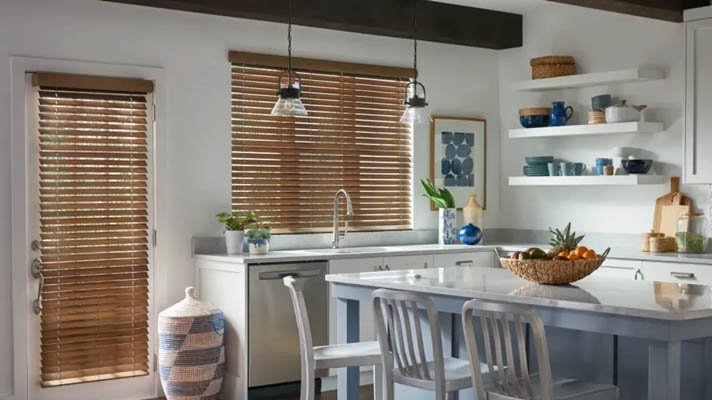
The right faux wood blind color is not the one that matches everything; it is the one anchored to a single element you already love, in an undertone that agrees with your trim, checked in your own room's light. Pick the anchor, confirm the undertone, and sample before you buy. Browse the full range of custom faux wood blinds and coordinate every window around it.
FAQs
Should blinds match the window trim or flooring?
Usually the trim. Matching the trim frames the window cleanly and reads as timeless, while matching the floor exactly tends to look flat. Coordinate with the floor tone rather than copying it.
Do white faux wood blinds make rooms look larger?
Yes. White reflects light and blends with white or off-white walls and trim, which opens up a room and makes it feel brighter and more spacious. It is the most popular faux wood color for exactly that reason.
Which faux wood colors hide dust best?
Light and mid-tone wood-grain finishes. Dust is pale, so it shows most on very dark or high-gloss surfaces and blends into lighter, textured finishes. Pure white also hides pale dust well but shows darker grime.
What blind color works best with gray walls?
Crisp white for contrast, a soft grey to blend, or a light natural wood for warmth. Watch the undertone: warm greige walls pair better with warm white or light oak than with a cool grey blind.
Should every room have the same blind color?
Carrying one anchor color across visible, open areas looks the most cohesive. Vary it only where a room's purpose differs, such as a moisture-prone bathroom or a child's room that suits a more forgiving tone.
What is the most popular faux wood blind color?
White. It brightens rooms, works with nearly every style, and coordinates easily with common white and off-white trim, which makes it the default choice for most homes.
- How to Choose the Right Faux Wood Blind ColorBlinds, Shades & ShuttersHow To
- Best Blinds for Glare Control (Home Office & TV Rooms)Blinds, Shades & ShuttersHome Advice
- Smart Blinds: Alexa, Google Home & Smart Home CompatibilityBlinds, Shades & Shutters
- Blind Slat Sizes ExplainedBlinds, Shades & ShuttersCommon Questions
- Best Blinds by Window Direction (North, South, East & West)Blinds, Shades & ShuttersHome Advice