Child-Safe Window Treatments: The Complete Parent's Guide
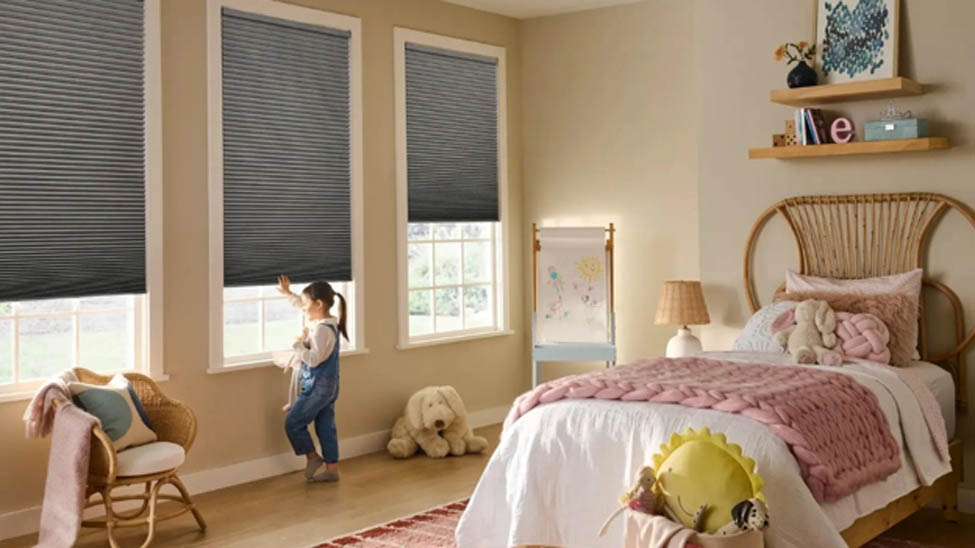
When you are preparing a home for children, you think about every surface, every edge, every small object that could become a hazard. But one of the most significant safety risks in a family home is often the quietest one: the window treatment. For decades, free-hanging lift cords on blinds and shades were a standard feature that most people never questioned. Those cords have been responsible for serious injuries and fatalities among young children, and the window treatment industry has finally responded with a fundamental change.
Today, child-safe window treatments are not an upgrade or an add-on. They are the default. Understanding what changed, why it matters, and which products provide the highest level of safety helps you make choices that protect your family without compromising the design of your home.
Why Window Treatment Safety Matters
The primary hazard with traditional window treatments is the free-hanging lift cord. These cords can form loops that pose a strangulation risk to young children, particularly toddlers who are naturally curious and drawn to dangling objects within reach. The risk is highest in bedrooms and nurseries where children spend unsupervised time near windows.
The U.S. Consumer Product Safety Commission has identified corded window coverings as one of the top hidden hazards in homes with young children. The danger is not theoretical. It is documented, and it is the reason the industry moved to eliminate exposed cords rather than relying on retrofit devices or warning labels.
What Changed in 2024 (and What It Means for Your Home)
In 2024, the Window Covering Manufacturers Association updated its safety standard to require that all new window treatments sold in the United States eliminate free-hanging cords. This was not a recommendation. It was a mandatory change that reshaped the entire product landscape.
Every product sold on Blindster.com meets this standard. Cordless lift is included at no extra charge on virtually all blinds and shades, and motorized lift is available as an upgrade for hands-free operation. Blindster's overview of the shift to cordless window coverings explains the history and reasoning behind this industry-wide change.
If your home still has window treatments installed before this standard took effect, those products may still use free-hanging cords. Replacing them is the most effective way to eliminate the hazard.
The Safest Window Treatment Types for Homes with Children
All new cordless blinds and shades from Blindster meet current safety standards, but certain product types offer additional advantages for families with young children. Here are the styles that parents choose most often.
Cordless Cellular Shades
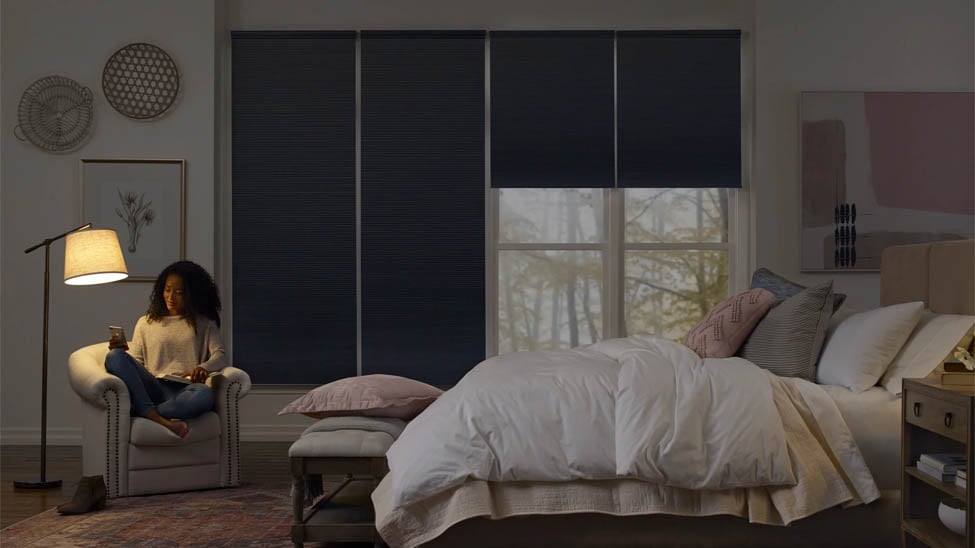
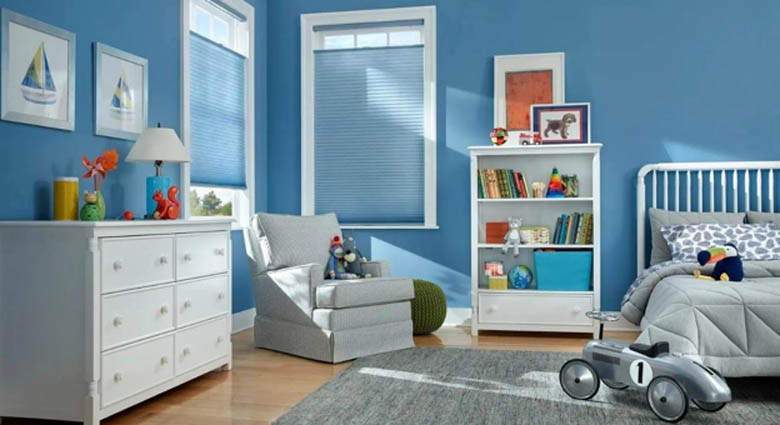
Cellular shades are one of the most popular choices for nurseries and children's rooms. Their cordless lift operates with a simple push and pull of the bottom rail, with no cords, chains, or external mechanisms to manage. The honeycomb construction also insulates the room, which helps maintain a comfortable and consistent temperature for naps and sleep.
Top-down/bottom-up cellular shades add another layer of flexibility, allowing you to lower the shade from the top for natural light while keeping the bottom closed for privacy. This is especially useful in nurseries where you want daylight without exposing the room to passersby.
Cordless Roller Shades
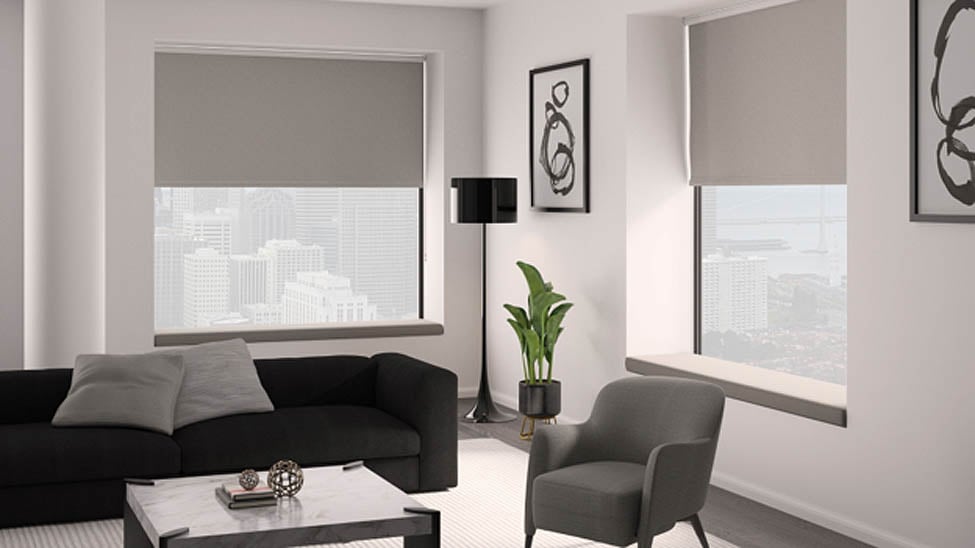
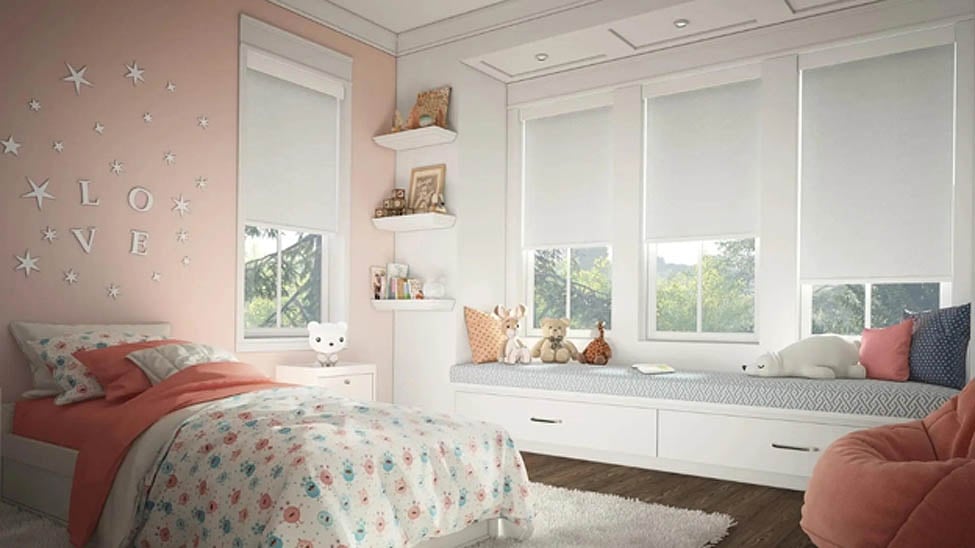
Roller shades offer a clean, minimal profile that works well in children's rooms, playrooms, and family living areas. Cordless roller shades raise and lower smoothly without any external cord, and their flat, single-panel design has no slats, folds, or crevices that children can pull at or damage.
For bedrooms, blackout roller shades create the darkness that helps young children sleep through early mornings and daytime naps. Light filtering options work well in playrooms and living areas where soft, diffused daylight is the goal.
Faux Wood Blinds with Wand Control
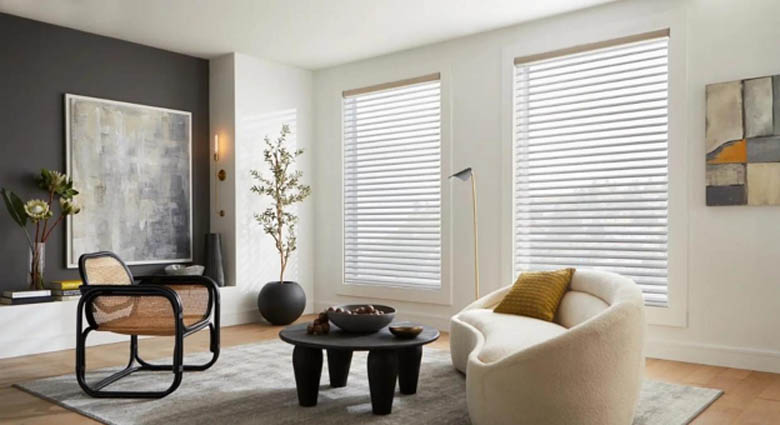
Faux wood blinds use a cordless lift to raise and lower and a separate wand to tilt the slats. The wand is a rigid plastic rod that rotates the slats open and closed, replacing the traditional twist cord that older blinds used. Nothing is dangling, nothing looped, and nothing for a child to pull on or become entangled with.
Faux wood is also durable enough to handle the wear that comes with active family life. It resists moisture, does not warp, and cleans easily with a damp cloth.
Plantation Shutters
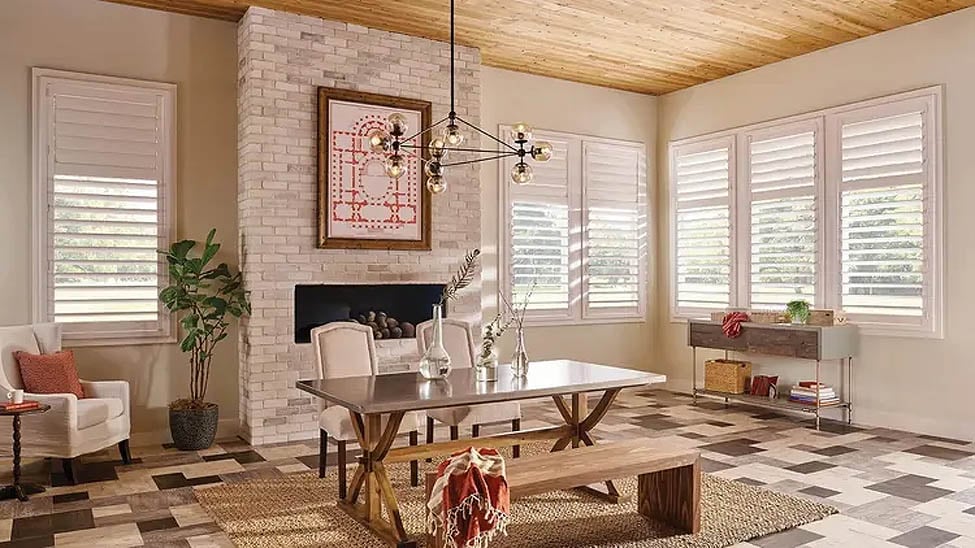
Plantation shutters are inherently cordless by design. Their solid panels open and close on hinges, and the louvers tilt with a tilt rod or hidden gear system. There are no cords, no chains, and no fabric for children to pull at. Shutters are one of the most child-safe window treatments available because the hazard simply does not exist in their construction.
Their durable, solid build also means they stand up to the kind of daily contact that happens in homes with young children, from curious fingers to toys bumped against the window.
What to Do About Older Window Treatments
If your home has blinds or shades that were installed before the 2024 safety standard, they may still have free-hanging lift cords. The most effective step is to replace them with current cordless products. No retrofit device or cord cleat provides the same level of protection as removing the cord entirely.
When prioritizing which rooms to address first, start with any room where a child sleeps or spends unsupervised time. Nurseries, bedrooms, and playrooms are the highest-priority spaces. Then move to living areas, kitchens, and any other room where a child could access a window.
Replacing older treatments also brings the benefits of modern features like energy-efficient fabrics, updated colors, and simpler operation, so the upgrade improves both safety and daily life.
Peace of Mind, Built In
Child-safe window treatments are no longer a special category you have to seek out. They are the standard across every product Blindster sells. Cordless lift is typically included at no extra charge, motorized options are available for hands-free convenience, and every order is custom-built to your exact window measurements. The Fit or Free Guarantee ensures the fit is right, and if you want to see fabrics and colors before committing, you can order up to 10 free samples shipped within one business day.
Protecting your children at the window should feel as natural as any other part of preparing your home for a family. When the safety is built into the product itself, there is nothing to add, nothing to check, and nothing to worry about.
Frequently Asked Questions
Are all new blinds and shades child-safe?
Yes. As of 2024, all new window treatments sold in the United States must eliminate free-hanging cords. Every product on Blindster.com meets this standard, with a cordless lift included at no extra charge on virtually all blinds and shades.
What makes cordless blinds safer than corded ones?
Cordless blinds remove the primary hazard entirely. There are no dangling cords that can form loops, which eliminates the strangulation risk that traditional corded window treatments pose to young children and pets.
Are motorized blinds safer than cordless?
Both are equally safe in terms of cord hazard elimination. Motorized blinds add the convenience of remote or app-based control, which is useful for hard-to-reach windows or rooms where you want to adjust shades without entering and potentially waking a sleeping child.
What is the safest window treatment for a nursery?
Cordless cellular shades and cordless roller shades are both excellent choices for nurseries. Cellular shades add insulation for consistent temperature, while blackout roller shades create the darkness that supports longer, more restful sleep.
Should I replace older corded blinds even if my child cannot reach the cord?
Yes. Children grow quickly, and what is out of reach today may not be tomorrow. Furniture near windows can also serve as a climbing point. Replacing corded treatments with cordless ones removes the risk permanently rather than relying on ongoing vigilance.
Do child-safe blinds cost more than regular blinds?
No. At Blindster, a cordless lift is included at no additional charge on virtually all products. The cost of your blinds or shades depends on the material, size, and features you choose, not on whether the lift system is child-safe.
- Standard vs Reverse Roll Roller Shade: Differences & How to ChooseBlinds, Shades & Shutters
- When to Repair vs Replace Your Window TreatmentsBlinds, Shades & ShuttersCommon Questions
- Common Mistakes When Ordering Blackout Shades (and How to Avoid Them)Blinds, Shades & ShuttersCommon Questions
- Are Vertical Blinds Still in Style?Blinds, Shades & ShuttersDesign & Decor
- Are Plantation Shutters Still in Style in 2026?Blinds, Shades & ShuttersCommon Questions