Dining Room Window Treatments: Light, Privacy & Style Guide
The dining room is one of those spaces that gets overlooked in window treatment decisions. Kitchens get obsessed over. Bedrooms get the blackout-or-not debate. But dining rooms? People often grab whatever looks decent and move on.
That's a mistake.
The right window treatment in a dining room does three things at once: manages light during meals, provides privacy when you need it, and holds its own in a space built around presentation. Getting that balance right takes a bit more thought than most people give it.
Light: The Real Problem in Dining Rooms
Direct sunlight during a meal adds up fast. Glare across the table during Sunday brunch, late afternoon sun hitting guests in the eye, a beam of light landing directly on your food. None of these ruins a meal on its own, but all of them are avoidable.
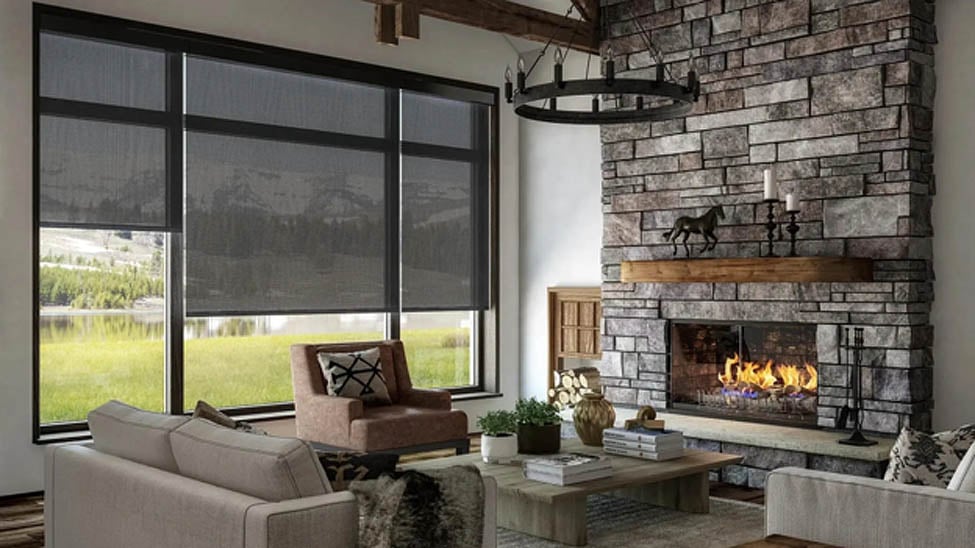
Solar shades are a strong first option for dining rooms with heavy sun exposure. They cut glare while keeping your view of the outside intact, which matters if you have windows worth preserving. The openness factor, typically expressed as a percentage, ranges from around 1% on the denser end to higher ratings for more open weaves. A 3% to 5% rating handles most dining rooms well, reducing glare without closing the room off.
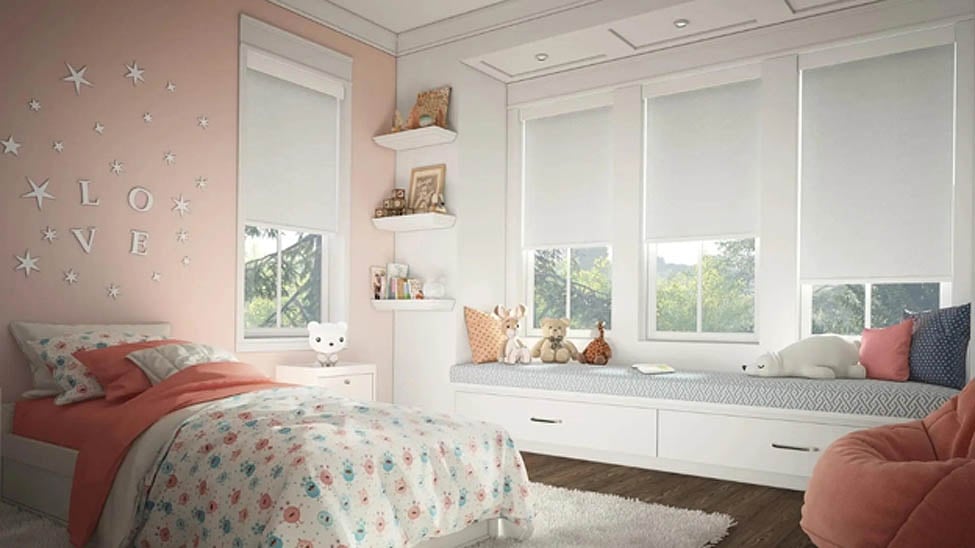
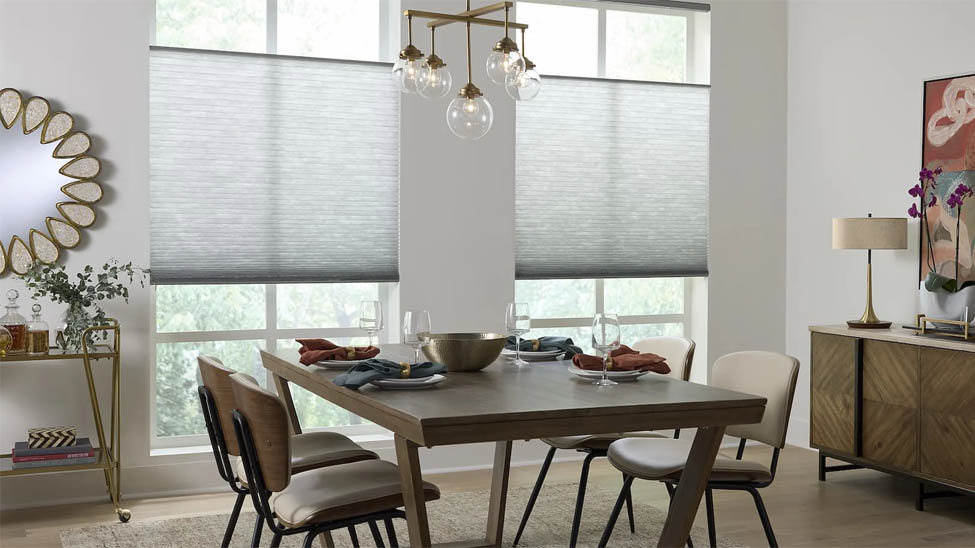
For rooms that get less direct sun, light-filtering cellular shades or sheer shades give you a softer, diffused glow throughout the day. The light feels even and flattering rather than harsh. If you host a lot of evening meals, that ambient softness during the day transitions well into a candles-and-overhead-light setup at night.
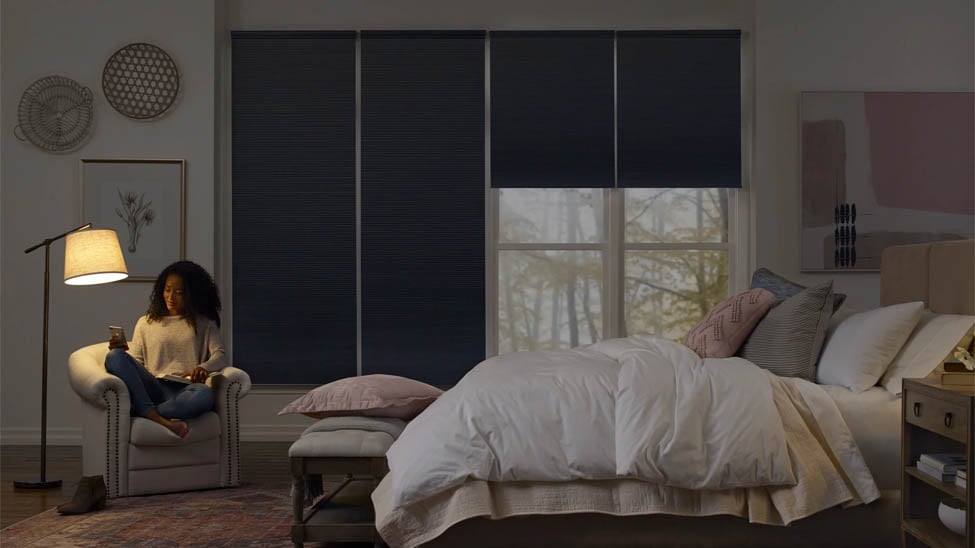
Light-filtering is not the same as room darkening. If you want the ability to block light completely, whether for a home theater setup or an open-plan dining area that doubles as a nap zone, plan for that separately.
Privacy in the Dining Room
Street-facing dining rooms come with a real tradeoff. Natural light is good; neighbors watching you eat is less ideal. The fix isn't always full coverage.
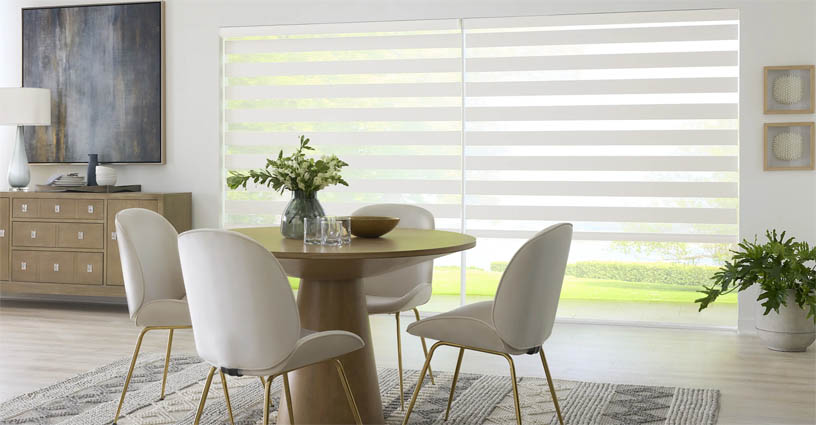
Zebra dual shades handle this well. They alternate between sheer and solid fabric bands, so you can position them to let light through while blocking direct sightlines from outside. It's a practical choice for rooms where you want daytime openness without feeling exposed.
Top-down/bottom-up shades are a solid option for windows at street level. You lower the top portion to bring light in from above while the bottom half stays raised, maintaining privacy where it counts. Roman shades and cellular shades both come in this configuration.
Sheer shades offer light diffusion and some daytime privacy, but they won't give you full coverage at night when your interior lights are on. Sheers alone won't do it. You'd need either a room-darkening option or a layered setup.
Style: Matching the Treatment to the Room
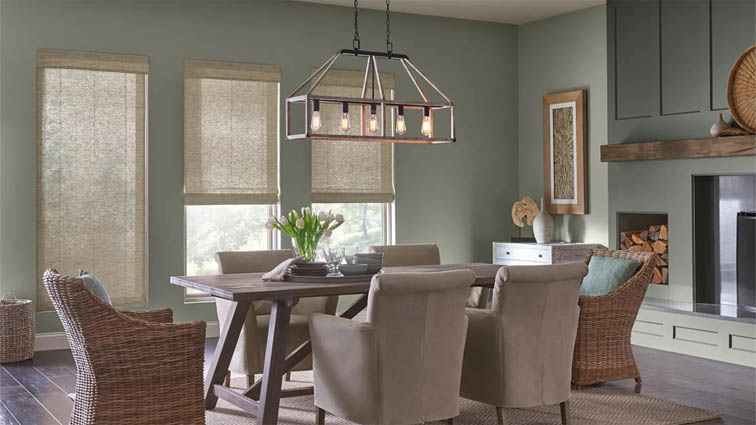
Dining rooms tend to fall into one of a few design directions: formal and traditional, casual and relaxed, or modern and minimal. The window treatment should fit that direction, not fight it.
Roman shades are the default for a polished, tailored appearance. They fold cleanly when raised, lay flat when lowered, and come in a wide range of fabrics. A solid linen or textured woven fabric suits both traditional and transitional spaces. For formal dining rooms, a flat Roman shade in a neutral or muted tone keeps the windows feeling intentional without competing with furniture or table settings.
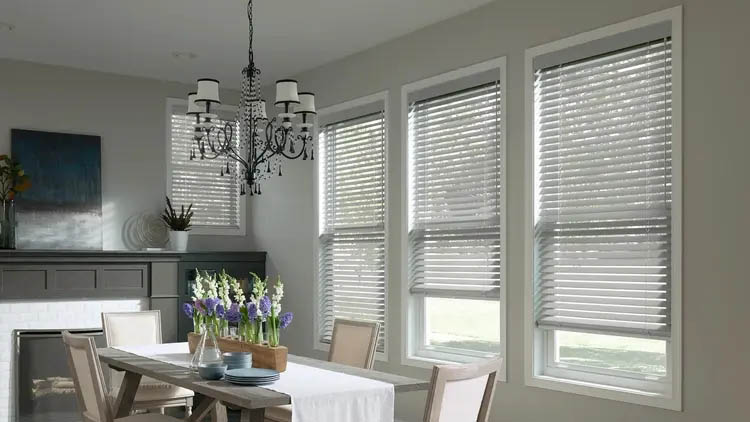
Wood blinds bring warmth and a classic feel that fits traditional or craftsman-style dining rooms well. Real wood carries a price premium, and while dining rooms don't face the moisture issues a kitchen or bathroom would, temperature swings near windows can cause warping over time in some cases.
Faux wood blinds are a strong alternative if you want the same aesthetic at a lower price point. They're more stable than real wood in variable conditions, and the visual difference is minimal from across the room.
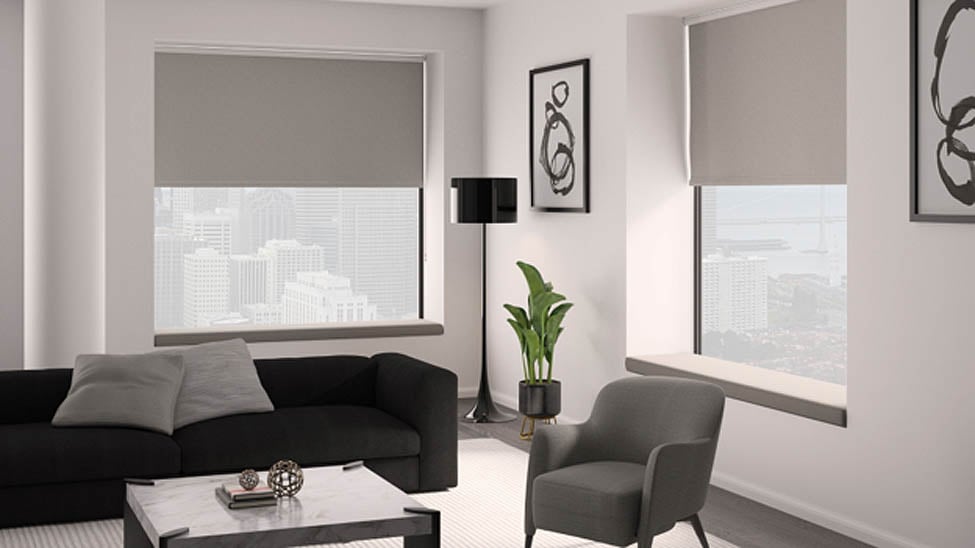
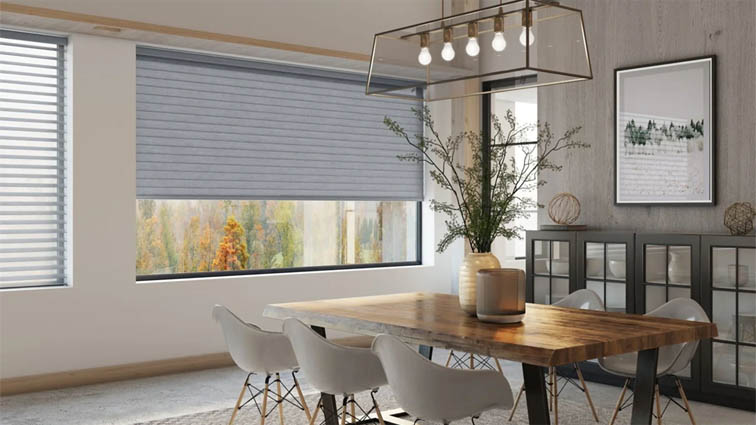
Roller shades are the right call for modern and minimalist spaces. Clean lines, low profile, and they disappear completely when raised. Pair them with quality hardware and they read as deliberate rather than an afterthought.
Bamboo shades add a natural, textured quality that fits casual, organic, or coastal-style rooms. Bamboo typically lets in some light even when fully lowered, so they're better suited for rooms where filtered light is the goal, not privacy or darkness.
Inside Mount vs. Outside Mount
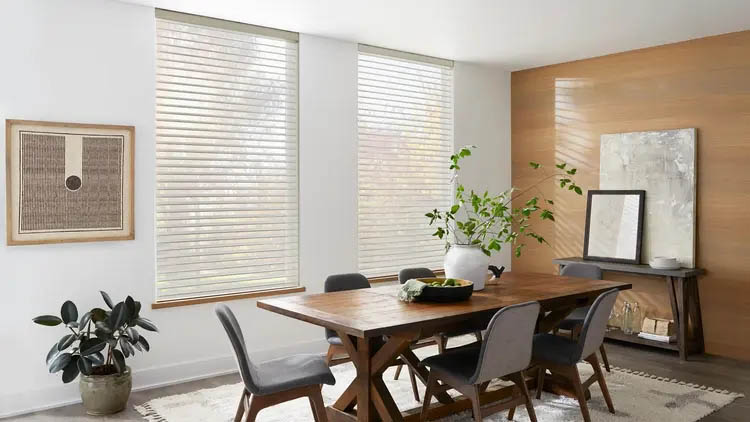
Few decisions affect a dining room's finished appearance as much as this one.
An inside mount sits within the window frame. The result is a cleaner profile that shows off the trim and keeps the visual footprint tight. The tradeoff: you need enough depth in the frame to fit the headrail, and coverage isn't fully edge-to-edge, so some light bleeds in at the sides.
Outside mount covers the window opening and extends beyond the frame on all sides. Windows read as larger, the edge light gets blocked, and the setup performs better when frames are shallow. For dining rooms where a more substantial window presence matters, outside mount is often the stronger design choice.
Exact sizing matters here. Blindster's custom-to-the-eighth-of-an-inch ordering means you're specifying real dimensions rather than rounding to a standard size, and a proper outside mount needs precise measurements to sit right and function well.
When One Treatment Isn't Enough
Some dining rooms need layering to get the job done. A sheer shade handles daytime glare but leaves you exposed at night. A Roman shade creates the right softness but can't block light when you need it.
Sheer shades or panels paired with a room-darkening roller behind them give you full flexibility: sheers down during the day for diffused light, roller down in the evening for privacy. Roman shades over cellular shades follow the same logic, combining the tailored front-facing appearance of the Roman with the insulating and light-blocking properties of the cellular behind it.
Layering does require attention to the hardware at the top of the window. Double brackets or properly spaced outside mount placement keep the whole setup looking planned rather than improvised.
A Few Things That Get Overlooked
Cord safety is a real consideration if children spend time in the dining room. Cordless options eliminate the hanging cord hazard entirely, and for most people, it's a straightforward upgrade.
Cleaning is closer to a practical decision than people expect. Fabric shades near an open kitchen will absorb cooking odors over time. Roller shades and faux wood blinds wipe down easily with a damp cloth. Roman shades in fabric require more careful maintenance, typically spot cleaning or dry cleaning, depending on the material.
Frame depth for inside mounting deserves a check before you order. Requirements vary by product and headrail size, so pull the specs for whatever you're buying and measure your frame before committing to an inside mount.
- Best Blinds For Windows That Get Direct Sunlight: UV Protection And Glare ControlBlinds, Shades & Shutters
- Standard vs Reverse Roll Roller Shade: Differences & How to ChooseBlinds, Shades & Shutters
- When to Repair vs Replace Your Window TreatmentsBlinds, Shades & ShuttersCommon Questions
- Common Mistakes When Ordering Blackout Shades (and How to Avoid Them)Blinds, Shades & ShuttersCommon Questions
- Are Vertical Blinds Still in Style?Blinds, Shades & ShuttersDesign & Decor