How to Choose the Right Window Covering for Every Room: A Decision Guide
Every room in your home asks something different of its windows. A bedroom needs darkness. A kitchen needs durability. A living room needs the ability to shift between open and private as the day changes. Choosing the right window covering for each of these spaces means starting not with a product, but with a question: what do you actually need this window to do?
When you approach the decision room by room, the choices become simpler. The treatment that works beautifully in a sun-filled living room may not suit a humid bathroom. The shade that creates perfect darkness in a bedroom may feel too heavy for a home office. This guide walks through the most common rooms in a home and the window coverings that suit each one best.
What Every Room Needs from Its Windows
Before choosing a specific product, it helps to think about the three qualities that matter most in any room: light control, privacy, and material suitability. Some rooms prioritize one over the others. Most rooms need a balance of all three.
Light control determines how much sunlight enters and how easily you can adjust it. Privacy determines how well the treatment blocks the view from outside. Material suitability determines whether the product can handle the conditions in the room, whether that means moisture, heat, dust, or heavy daily use.
Once you know which of these qualities matters most in a given room, the right window covering becomes much easier to identify.
Bedrooms: Darkness, Privacy, and Quiet
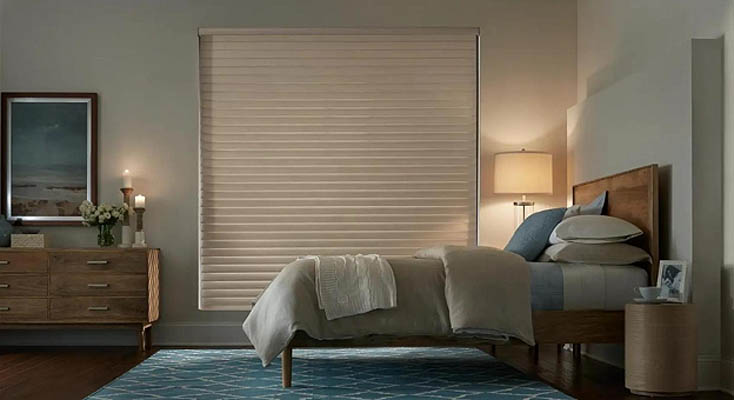
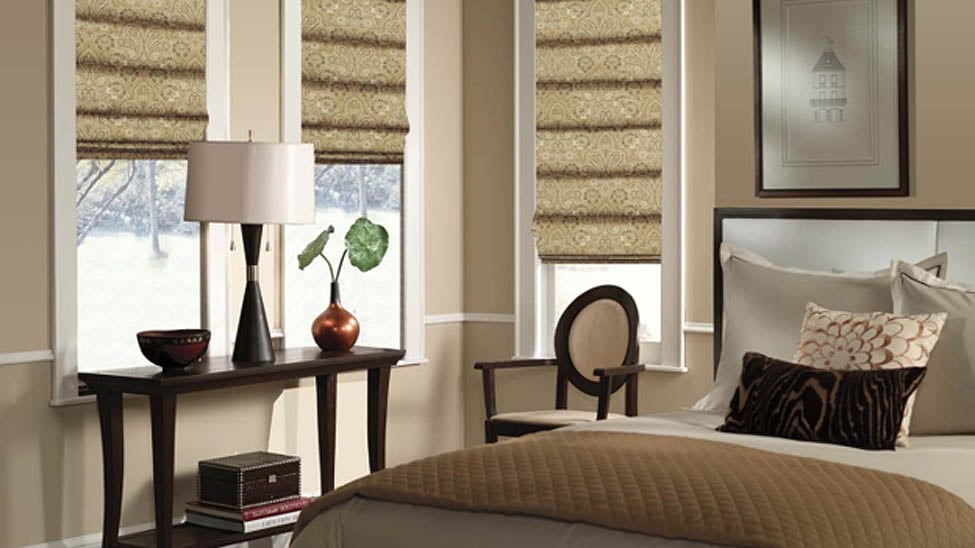
Bedrooms need window coverings that create meaningful darkness for sleep, provide full privacy, and complement a calm, restful atmosphere. These are the rooms where light blocking and insulation matter most.
Cellular shades are one of the strongest choices for bedrooms because they can combine blackout fabric with honeycomb insulation that regulates temperature and absorbs sound. Their cordless lift operates nearly silently, which matters when you are adjusting the shade while someone else is still sleeping.
Blackout roller shades are another excellent option. Their flat, single-panel design takes up very little space and pairs well with drapery for a layered look that adds warmth and softness to the room.
For a more architectural presence, plantation shutters bring lasting beauty and precise light control through adjustable louvers, with no cords and no fabric to maintain.
Living Rooms: Light, Flexibility, and Design
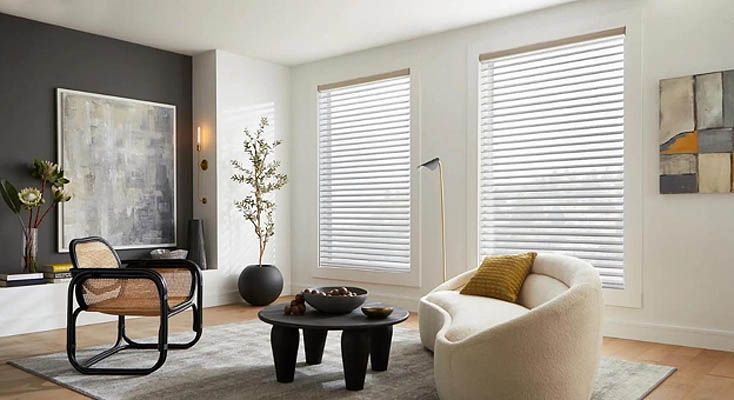
Living rooms need window coverings that balance natural light during the day with privacy in the evening. The treatment should also contribute to the room's design rather than sitting apart from it.
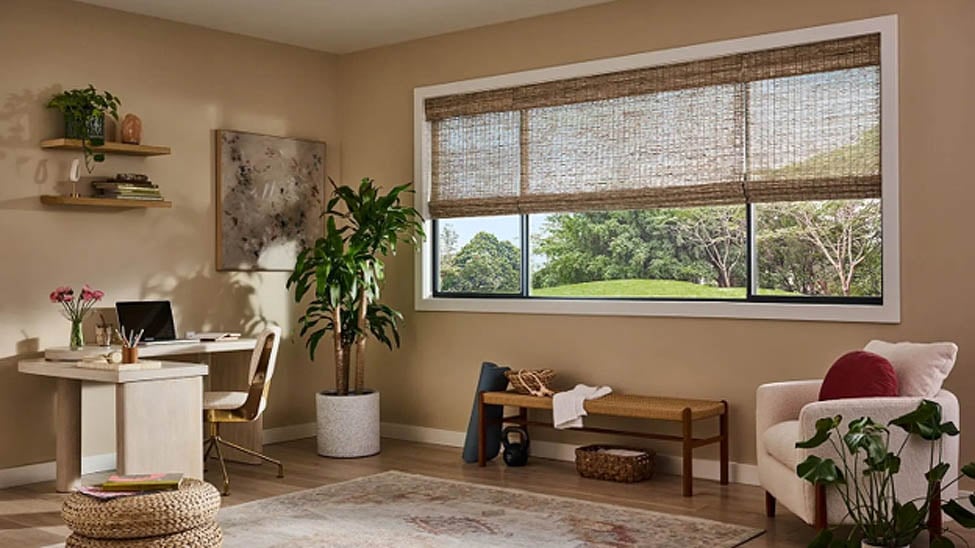
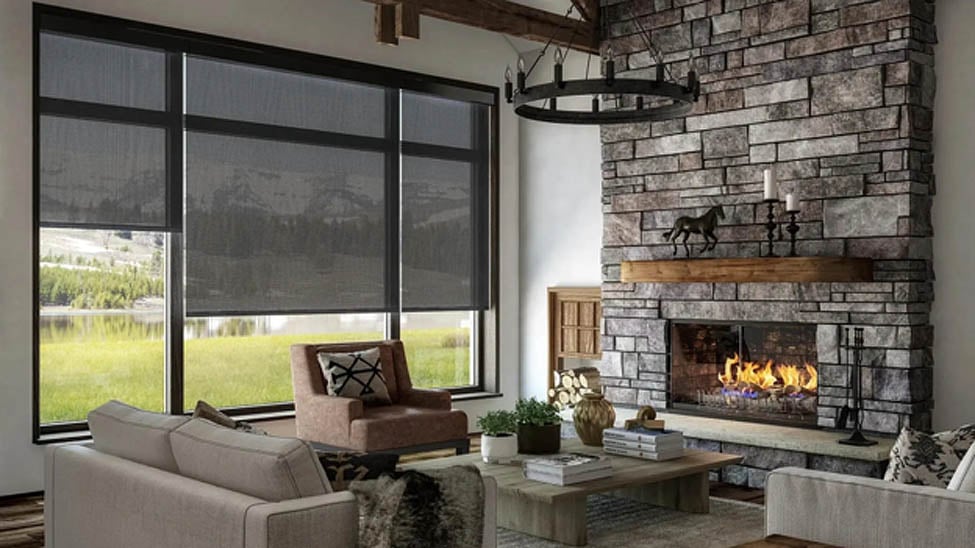
Light-filtering roller shades keep the room bright and open while softening harsh direct sunlight. Solar shades are especially well suited for living rooms with large windows or a view, as they reduce glare and block UV rays while still letting you see outside.
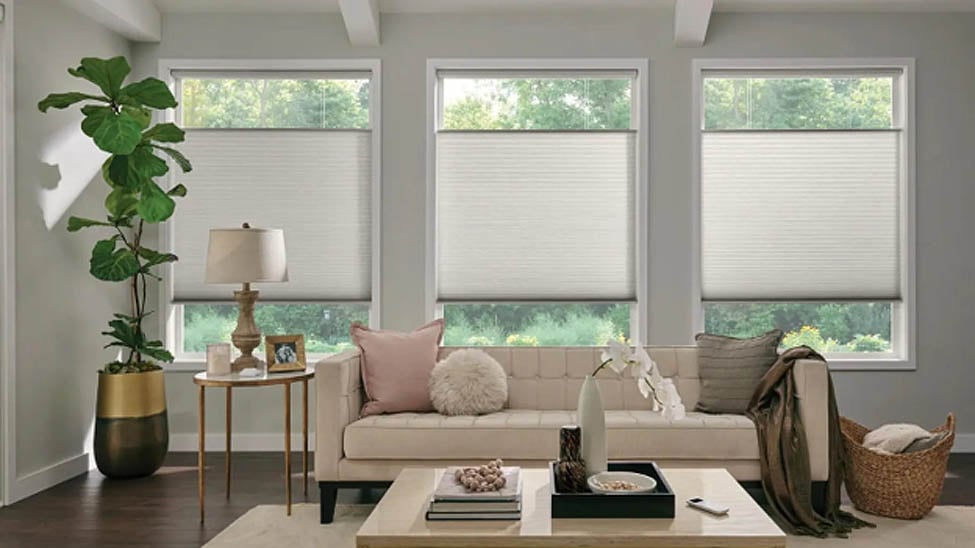
Bamboo shades add organic texture and warmth that complement earthy, coastal, and bohemian interiors. For living rooms where privacy shifts throughout the day, top-down/bottom-up cellular shades offer the flexibility to let in light from the top while keeping the bottom covered.
Kitchens and Bathrooms: Moisture, Durability, and Easy Cleaning
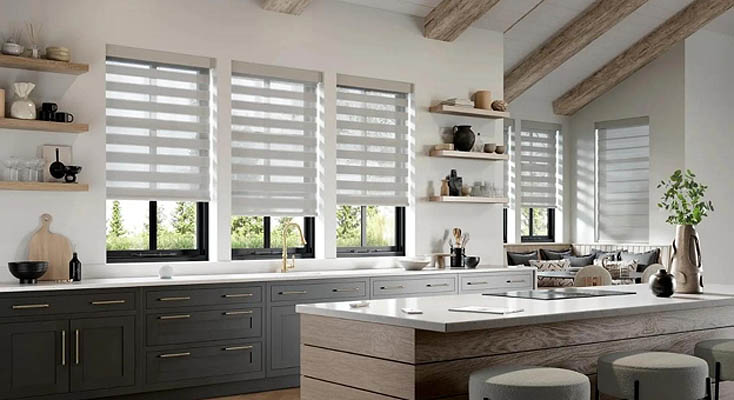
Kitchens and bathrooms present conditions that most fabrics are not designed to handle. Humidity, steam, grease, and water splashes all take a toll on window treatments, so the material you choose needs to resist moisture and clean easily.
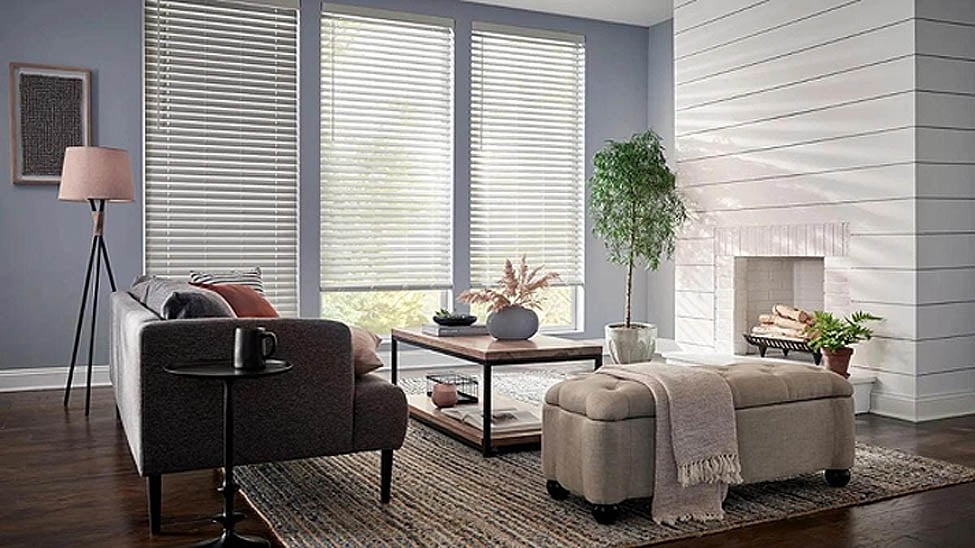
Faux wood blinds are the most popular choice for these rooms. Their sealed, non-porous surface repels moisture and wipes clean with a damp cloth, making them ideal for windows near sinks, stoves, and showers. They deliver the warm, classic look of real wood without the risk of warping or discoloring in humid air.
Vinyl roller shades are another practical option for kitchens. Their smooth surface resists stains and cleans quickly, and their compact profile stays out of the way in smaller window openings.
For bathrooms, privacy is as important as moisture resistance. Faux wood blinds handle both, with tilting slats that let you control exactly how much of the outside world you let in.
Home Offices: Glare Control and Focus
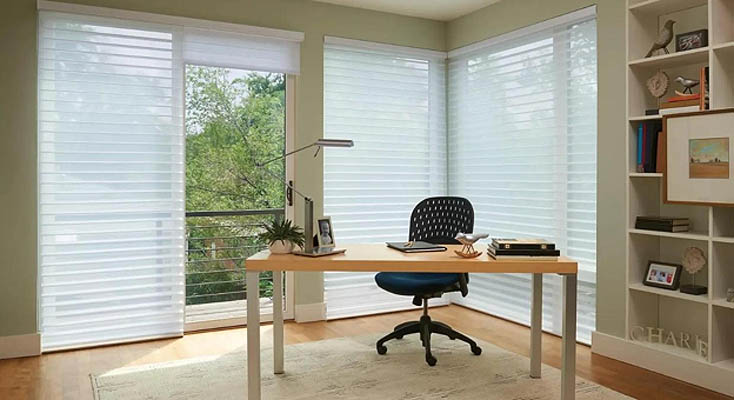
Home offices need window coverings that reduce screen glare during work hours without making the room feel dark or closed off. The goal is soft, even light that keeps the space productive and comfortable.
Solar shades excel in this role. Their woven fabric filters harsh direct sunlight into a soft glow that eliminates glare on screens while still allowing you to see outside. For offices that face south or west and take strong afternoon sun, a solar shade with a lower openness factor (3% or 5%) provides the best balance of view and protection.
Light filtering cellular shades are a strong alternative, especially for home offices where temperature regulation matters as much as glare control. Their honeycomb cells insulate the window while diffusing light evenly across the room.
Room by Room, Window by Window
The right window covering for every room is the one that matches the room's priorities, not the one that looks best in a catalog. Bedrooms need darkness. Living rooms need flexibility. Kitchens and bathrooms need durability. Home offices need glare control. When you start with what the room asks of the window, the product choice follows naturally.
Every Blindster window treatment is custom made to your exact measurements and backed by the Fit or Free Guarantee. If you want to compare fabrics, textures, and colors across rooms before committing, you can order up to 10 free samples shipped within one business day. The best decisions start with the material in your hand and the window right in front of you.
Frequently Asked Questions
What window treatment is best for bedrooms?
Blackout cellular shades and blackout roller shades are the two most popular bedroom choices. Cellular shades add insulation and sound absorption, while roller shades offer a sleek, minimal profile that pairs well with layered drapery.
What window coverings work best in kitchens?
Faux wood blinds are the top choice for kitchens because they resist moisture, wipe clean easily, and hold up well near heat and steam. Vinyl roller shades are another practical option for smaller kitchen windows.
Are cellular shades good for living rooms?
Yes. Light filtering cellular shades brighten the room while providing daytime privacy, and top-down/bottom-up models let you adjust light and visibility independently. They also insulate the window, which helps with temperature control.
What shades are best for reducing screen glare in a home office?
Solar shades are designed specifically for glare reduction. They filter direct sunlight into a soft, even glow without making the room dark. A 3% or 5% openness factor provides the best balance of glare control and view.
Can I use the same window treatment in every room?
You can, but each room has different priorities. A shade that works well in a bedroom may not hold up to the moisture in a bathroom. Choosing treatments room by room ensures each window performs at its best.
Should I order samples before choosing window coverings?
Yes. Colors and textures look different in person than they do on a screen, and the light in each room affects how the fabric appears. Holding a sample against your window frame, wall color, and furniture is the most reliable way to choose.
- How to Choose the Perfect Bamboo Shades for Your HomeBlinds, Shades & ShuttersHow To
- What Is a Window Treatment? Types, Uses & How to ChooseBlinds, Shades & ShuttersCommon Questions
- How to Choose the Right Window Covering for Every Room: A Decision GuideBlinds, Shades & ShuttersHow To
- Corded Vs Cordless Blinds: Which Is The Best Option For Your Home?Blinds, Shades & ShuttersCommon Questions
- Best Blinds For Windows That Get Direct Sunlight: UV Protection And Glare ControlBlinds, Shades & Shutters