
Interior vs. Exterior Plantation Shutters: Which Do You Need?
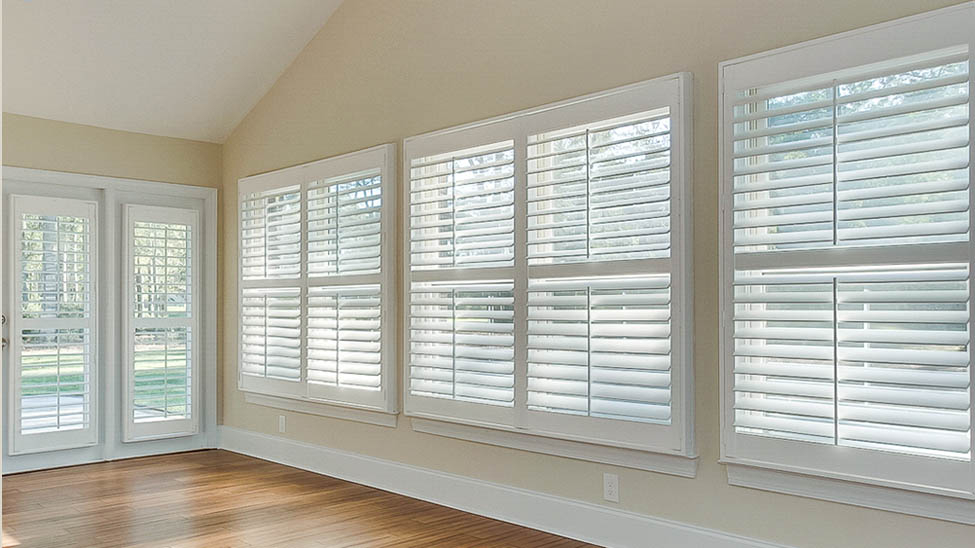
People searching for exterior plantation shutters usually want one of two completely different things. Some want the house to look better from the street. Others want to stop the sun before it heats the room behind the glass.
Neither describes what an interior plantation shutter does, and interior is the shutter most homeowners actually need, because it is the only one that gives you daily control of light, privacy, and temperature from inside the room. Working out which outcome you are after prevents buying the wrong category altogether.
What separates interior and exterior shutters
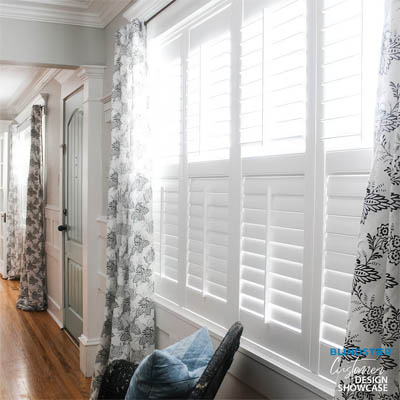
The split is cleaner than most window treatment comparisons.
- Interior shutters: Mounted in or over the window opening inside the room. The louvers rotate, so you adjust light and privacy through the day without removing anything.
- Exterior shutters: Fixed to the outside wall on either side of the window. On most homes today, the panels are decorative and do not close, so they add curb appeal rather than function.
- Operable exterior shutters: Still exist in storm-prone and historic contexts, where the point is shielding glass from wind, debris, and heat before it reaches the window.
Materials follow the same divide. Exterior panels have to survive sun, rain, and wind, so aluminum and composites outlast wood outdoors. Interior panels sit behind glass, which means the material can be chosen for looks and stability instead of weather resistance.
What interior plantation shutters do well
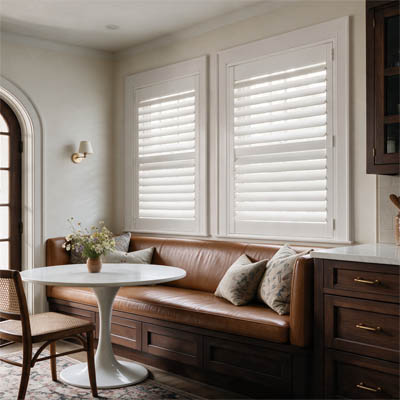
Interior shutters are the most architectural window treatment available, and they do several jobs at once.
- Precise light control: Tilting the louvers redirects sun toward the ceiling instead of onto a screen or a sofa, which a shade cannot do.
- Privacy without darkness: Angle the louvers and you keep sightlines out while daylight still enters.
- Insulation: A closed shutter adds a solid barrier at the glass, slowing heat transfer in both directions.
- Longevity: They are a fixed installation that stays with the house, and buyers tend to treat them as part of the property rather than a furnishing.
Blindster's plantation shutters are interior faux wood, which is the practical construction for most homes.
Why faux wood is the right shutter material indoors
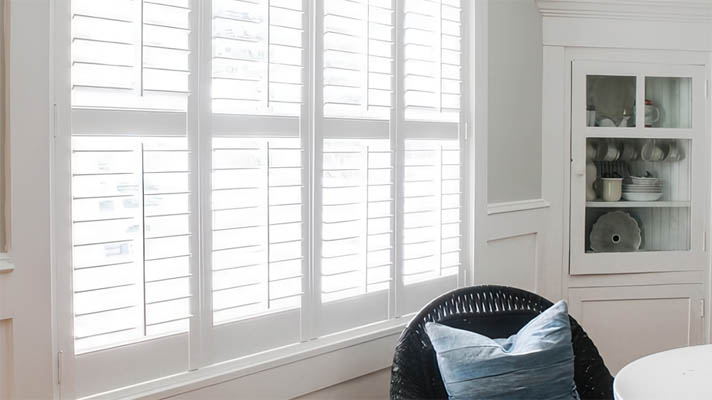
Real wood is the traditional choice, but faux wood has taken over for reasons that hold up under scrutiny.
- Stability: Faux wood does not warp, crack, or swell with humidity, so a premium faux wood plantation shutter holds its shape in a bathroom or kitchen where hardwood would fail.
- Consistency: The finish is uniform panel to panel, which matters when shutters run across several windows in one room.
- Cleaning: A wipeable surface handles dust, steam, and fingerprints without special care.
- Value: A faux wood shutter gives the look of painted hardwood at a lower cost, and a deluxe faux wood shutter steps up the build without moving to timber.
If you want exterior sun control, use a shade instead of a shutter
This is the point most comparisons miss, and it matters because it is usually the real intent behind the question. People searching for exterior shutters generally want one of two outcomes: Curb appeal, or stopping heat and glare before it hits the glass.
If the goal is curb appeal, decorative exterior shutters are a siding and trim decision handled by a contractor, not a window treatment purchase.
If the goal is heat and glare, the effective modern answer is an exterior shade. Blocking sun outside the glass is measurably more efficient than blocking it after it has already entered the room, which is why exterior shades are the standard solution for patios, porches, and hard-hit western walls. A motorized exterior solar shade retracts when you want the view back, which a fixed shutter panel cannot do.
Decide by the job, not the name
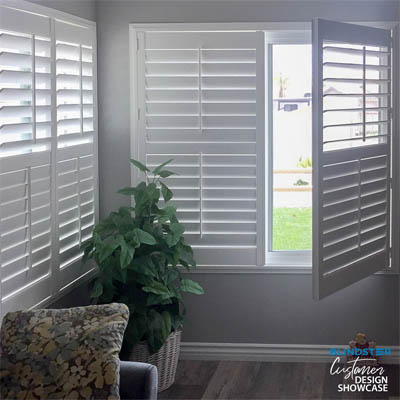
If you want daily control of light, privacy, and temperature from inside a room, you want interior plantation shutters, and faux wood is the material that will hold up. If you want to stop the sun before it reaches the glass, you want an exterior shade. If you want the house to look better from the street, that is a facade decision rather than a window treatment. Browse the range of interior plantation shutters and match the product to the problem.
FAQs
What is the difference between interior and exterior plantation shutters?
Interior shutters mount inside the room and have louvers you tilt to control light, privacy, and temperature. Exterior shutters mount on the outside wall and are usually decorative or, in storm-prone areas, protective, rather than adjustable.
Are exterior shutters functional on most homes?
Usually not. On the majority of modern houses, the exterior panels are fixed decoration. Genuinely operable exterior shutters are mostly found in storm-prone regions and historic properties.
Which material is best for interior shutters?
Faux wood, in most homes. It resists the warping, cracking, and swelling that humidity causes in real wood, keeps a consistent finish across multiple windows, and wipes clean easily.
Do interior shutters help with insulation?
Yes. A closed shutter adds a solid barrier across the glass, slowing heat escaping in winter and entering in summer, and the tilting louvers let you redirect sun rather than block it entirely.
What should I use to block heat before it reaches the window?
An exterior shade. Stopping solar heat outside the glass is more effective than intercepting it indoors, and a retractable exterior solar shade gives the view back when you want it.
Can plantation shutters go in a bathroom?
Faux wood shutters can, because they tolerate humidity without warping. Real wood is the material to avoid in a room with a shower or tub.
- Interior vs. Exterior Plantation Shutters: Which Do You Need?Blinds, Shades & ShuttersHome Advice
- Roman Shades for Living Rooms: Styles, Fabrics & How to ChooseBlinds, Shades & ShuttersHow To
- Blinds for Sliding Glass Doors: The Complete GuideBlinds, Shades & Shutters
- Best Window Blinds for KitchensBlinds, Shades & Shutters
- Blackout Roller Shades vs. Blackout Roman Shades Which Is Right for Your Room?Blinds, Shades & ShuttersHome Advice


