What Is a Window Treatment? Types, Uses & How to Choose
If you are new to outfitting a home or replacing older window coverings, the sheer number of terms, types, and options can feel overwhelming. Blinds, shades, shutters, and drapes all fall under the umbrella of window treatments, but each one works differently, looks different, and suits different rooms and priorities.
A window treatment is any product installed on or around a window to manage light, privacy, temperature, or appearance. Understanding the main categories and what each one does best is the simplest way to narrow your options and make a choice that fits both your room and the way you live in it.
What Counts as a Window Treatment
A window treatment is the broad term for anything that covers, filters, or frames a window. It includes blinds, shades, shutters, and drapery. Some people use the terms "window treatment" and "window covering" interchangeably, and in everyday conversation, they mean the same thing: a product at the window that serves a practical or decorative purpose.
The distinction that matters more than terminology is the difference between the main product types. Each one handles light, privacy, and design in its own way. Blindster's guide on what a window covering is covers the full range of product types and their benefits.
The Main Types of Window Treatments
Every window treatment falls into one of four broad categories:
- Blinds
- Shades
- Shutters
- Drapery
Here is how each one works and where it tends to perform best.
Blinds
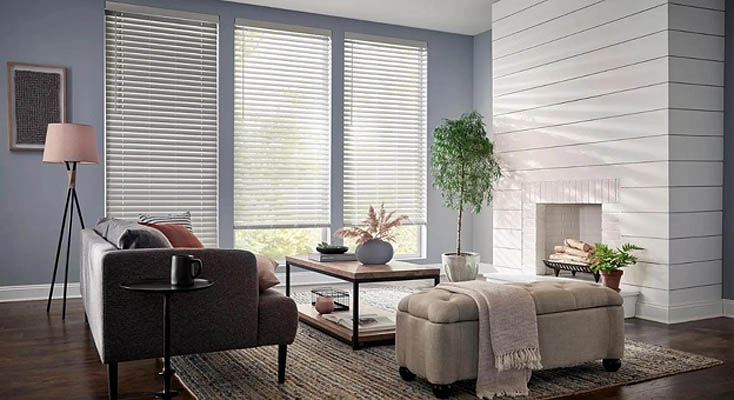
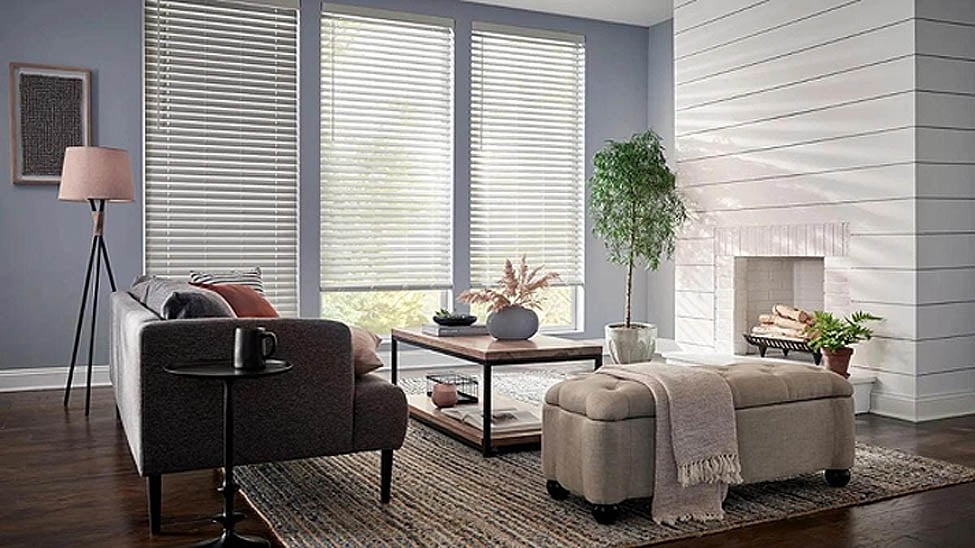
Blinds are window treatments made of individual horizontal or vertical slats that tilt to control light and privacy. Tilting the slats open lets light pass through. Closing them blocks the view and reduces light. Raising the entire blind clears the window completely.
Faux wood blinds are the most popular blind type because they combine the warmth of a wood look with moisture resistance, affordability, and easy maintenance. They work well in kitchens, bathrooms, bedrooms, and living rooms.
Shades
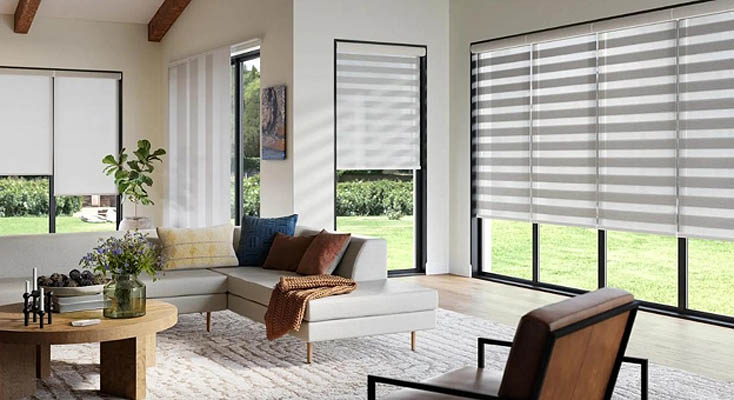
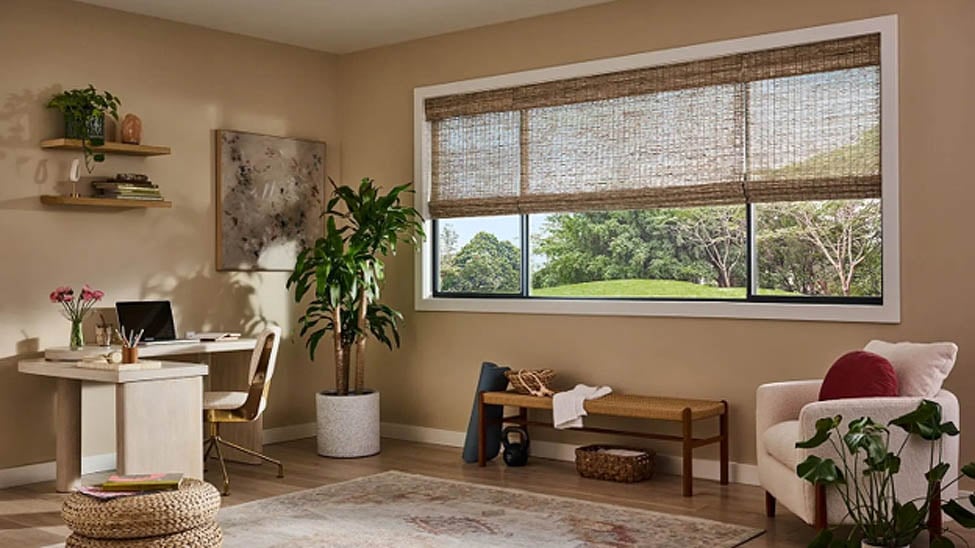
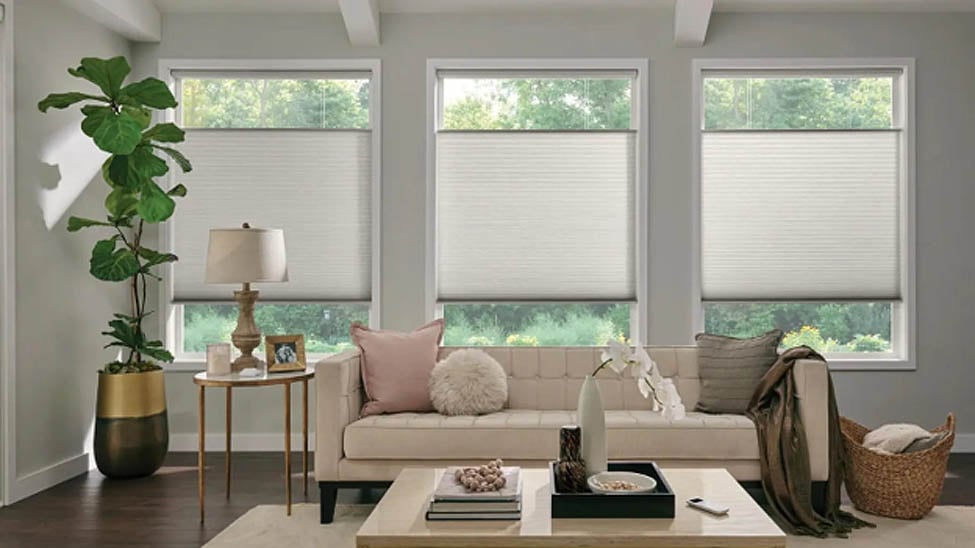
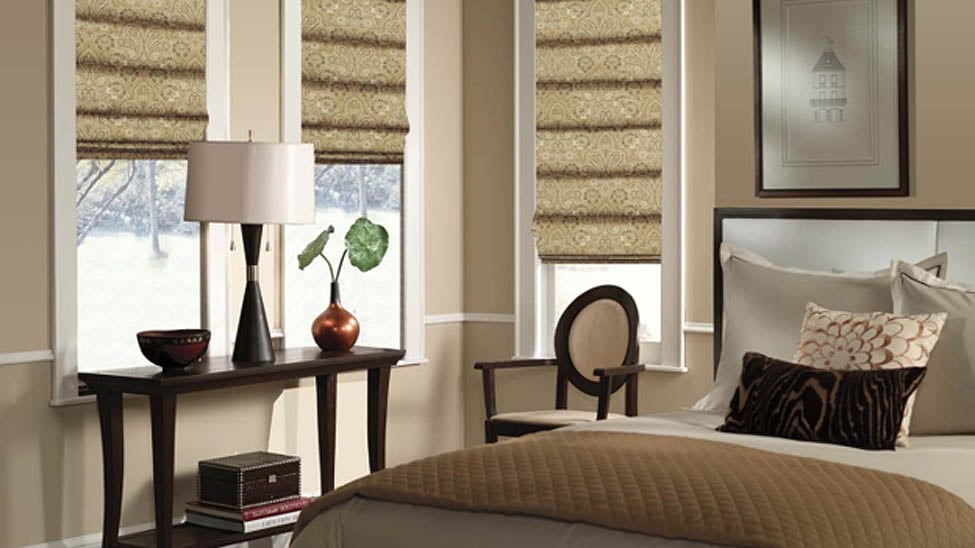
Shades are window treatments made from a continuous piece of fabric or woven material that raises and lowers as a single panel. Unlike blinds, shades do not have individual slats. They control light through the opacity of the fabric, ranging from sheer (allowing most light through) to blackout (blocking it almost entirely).
Roller shades are the simplest shade type, with a flat fabric that rolls around a tube. Cellular shades add insulation through their honeycomb structure. Solar shades reduce glare and UV rays while preserving the view. Roman shades feature soft fabric that raises in folds for an elegant appearance.
Shutters
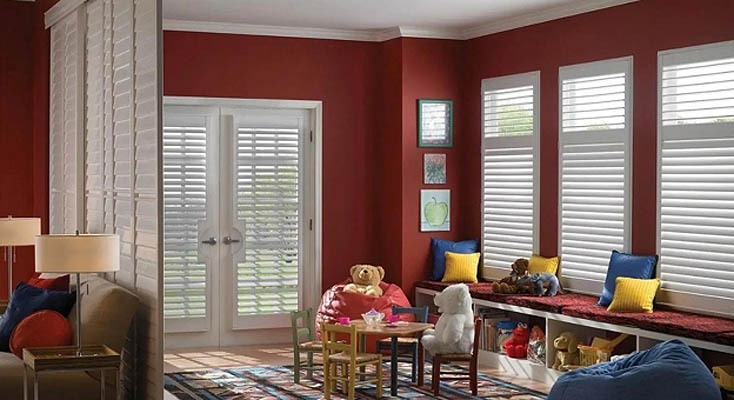
Shutters are solid panels with adjustable louvers that mount directly to the window frame. They become part of the architecture of the room and are operated by tilting the louvers rather than raising or lowering the entire panel. Shutters are inherently cordless and offer precise light control with a permanent, built-in appearance.
Drapery
Drapery consists of fabric panels that hang from a rod above the window. Drapes add softness, texture, and visual height to a room. They are often layered over blinds or shades for a combination of function and design. While Blindster specializes in blinds, shades, and shutters, drapery pairs beautifully with any of those products for a layered look.
How to Choose the Right Type for Your Room
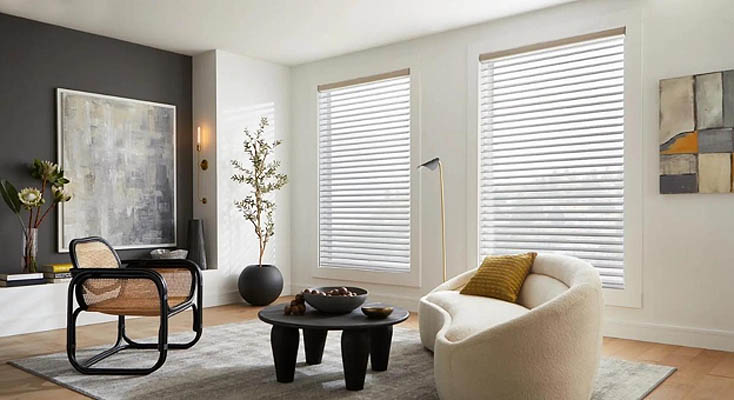
Choosing between blinds, shades, and shutters comes down to what you need the window to do most.
If adjustable light control through tilting slats is the priority, blinds are the best fit. If a clean, single-panel look with a range of fabric opacities appeals to you, shades are the stronger choice. If you want a permanent, architectural treatment with no cords and lasting durability, shutters deliver that.
Room conditions also guide the decision. Kitchens and bathrooms need moisture-resistant materials like faux wood blinds or vinyl roller shades. Bedrooms need blackout capability, which cellular and roller shades both provide. Living rooms need flexibility, which solar shades and light-filtering roman shades handle well. Home offices need glare control, which solar shades excel at.
Starting with the Window, Ending with the Room
A window treatment is not just a cover for the glass. It is the mechanism through which you shape the light, the privacy, and the atmosphere of every room you live in. Understanding the basic types and what each one does best gives you the foundation to make choices that feel intentional rather than overwhelming.
Every Blindster window treatment is custom-made to your exact measurements and backed by the Fit or Free Guarantee. If you want to see and feel the materials before choosing, you can order up to 10 free samples shipped within one business day. The right treatment starts with knowing what you need, and the right material starts with holding it in your hand.
Frequently Asked Questions
What is the difference between a window treatment and a window covering?
In everyday use, the terms mean the same thing. Both refer to any product installed on or around a window to manage light, privacy, or design. "Window treatment" is slightly more common in interior design contexts, while "window covering" is often used in product descriptions.
What are the main types of window treatments?
The four main categories are blinds (horizontal or vertical slats), shades (single-panel fabric), shutters (solid panels with louvers), and drapery (fabric panels on a rod). Each handles light and privacy differently.
Which window treatment is best for bedrooms?
Blackout cellular shades and blackout roller shades are the most popular bedroom choices. Both block light through the fabric and include cordless lift for safety. Cellular shades add insulation and sound absorption.
Are blinds or shades better for kitchens?
Faux wood blinds are the top kitchen choice because they resist moisture, wipe clean, and handle humidity without warping. Vinyl roller shades are another practical option for smaller kitchen windows.
Do I need different treatments for different rooms?
Not necessarily, but matching the treatment to the room's priorities produces better results. A shade that works well in a bedroom may not handle the moisture in a bathroom. Choosing room by room ensures each window performs at its best.
How do I know which window treatment is right for my home?
Start with what each room needs most: light control, privacy, moisture resistance, or design. Then match that priority to the product type that handles it best. Ordering free samples helps you compare materials and colors in your own space before committing.
- How to Choose the Perfect Bamboo Shades for Your HomeBlinds, Shades & ShuttersHow To
- What Is a Window Treatment? Types, Uses & How to ChooseBlinds, Shades & ShuttersCommon Questions
- How to Choose the Right Window Covering for Every Room: A Decision GuideBlinds, Shades & ShuttersHow To
- Corded Vs Cordless Blinds: Which Is The Best Option For Your Home?Blinds, Shades & ShuttersCommon Questions
- Best Blinds For Windows That Get Direct Sunlight: UV Protection And Glare ControlBlinds, Shades & Shutters