Are Vertical Blinds Still in Style?
Vertical blinds carry a reputation. For many people, the phrase conjures images of stiff white PVC slats clacking against a sliding door in a 1990s apartment. It is a specific memory, and an understandable one. For a long time, vertical blinds were sold as a purely functional product with very little thought given to how they looked in a room.
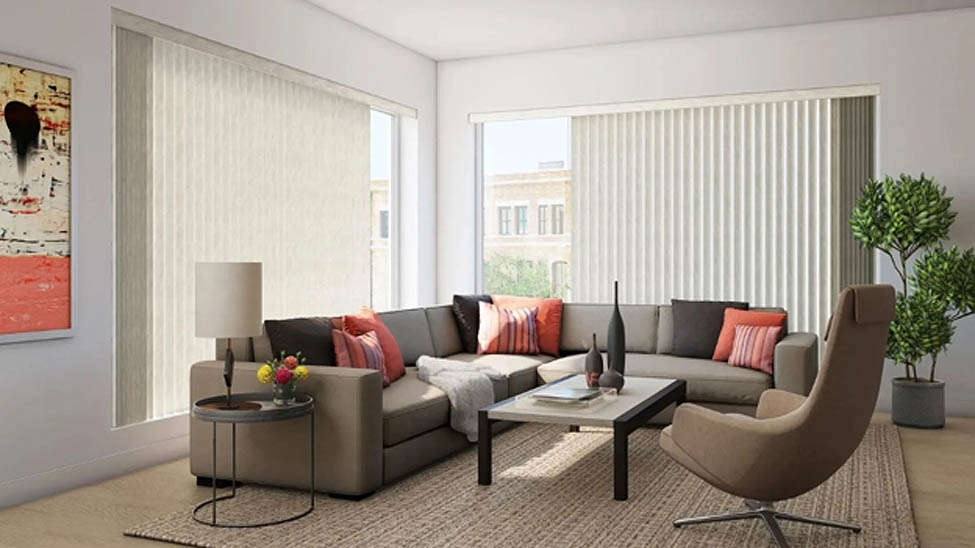
But the product has changed. The materials are softer, the hardware is quieter, and the design options are broader than they have been in decades. The real question is not whether vertical blinds are still in style, but whether the situations they solve best still exist. They do. Sliding glass doors, wide patio openings, and floor-to-ceiling windows are more common in today's homes than ever, and vertical blinds remain one of the most practical and well-proportioned ways to cover them.
Why Vertical Blinds Fell Out of Favor (and What Changed)
The vertical blinds that lost their appeal were a narrow version of what the product can be. Thin, rigid PVC vanes in limited colors gave the category a utilitarian look that felt out of step as interior design moved toward warmth, texture, and intentionality. Homeowners replaced them with curtains, sheer panels, and horizontal blinds that felt more current.
What changed is the product itself. Today's vertical blinds are available in fabric, faux wood, and updated PVC with textured and embossed finishes. The hardware has been refined with self-aligning wheeled carriers and smooth wand control that replaces the old noisy cord-and-chain systems. The result is a quieter, more polished product that earns its place in a well-designed room rather than simply filling a functional gap.
Where Vertical Blinds Still Outperform Everything Else
Vertical blinds are not the right choice for every window. On standard-sized bedroom or kitchen windows, other treatments often look and function better. But there are specific situations where vertical blinds remain the strongest option, and those situations happen to be some of the hardest windows in a home to dress well.
Sliding Glass and Patio Doors
Sliding doors move side to side, and vertical blinds move the same way. That alignment is why they have always been the natural choice for these openings. You can slide the vanes fully to one side for unobstructed access, partially open them for airflow and filtered light, or tilt them for privacy without closing off the door entirely.
Blindster's guide on the best blinds and shades for sliding doors covers additional options, but vertical blinds consistently stand out for their ease of use and ability to handle the width of a standard patio opening without sagging or binding. PVC vertical blinds are the most economical option for these spaces, while faux wood vertical blinds match the look of faux wood blinds you may already have on other windows in the same room.
Wide or Floor-to-Ceiling Windows
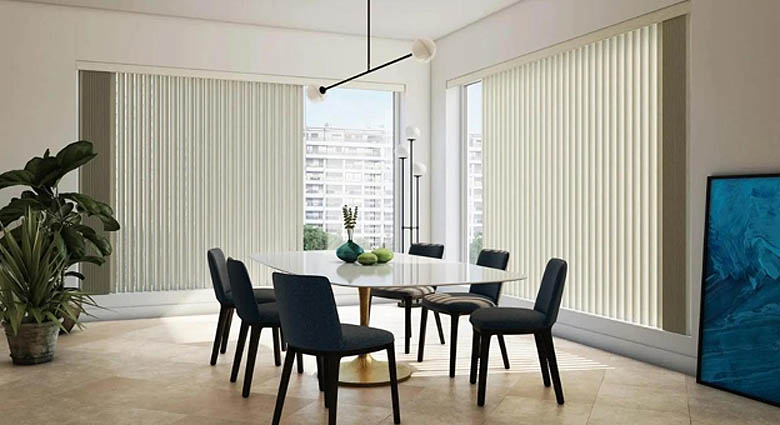
Standard horizontal blinds can struggle with very wide openings because the weight of the slats puts strain on the lift mechanism over time. Vertical blinds avoid this problem entirely. Their vanes hang independently from a headrail track, so even a window that spans 10 feet or more operates smoothly.
The vertical orientation also complements the proportions of tall windows. Where horizontal slats can make a tall window feel shorter, vertical vanes follow the window's height and maintain its visual openness.
What Today's Vertical Blinds Actually Look Like
The biggest shift in vertical blinds over the past decade is the range of materials available. Choosing the right vane material changes both the appearance and the function of the blind, and the options are wider than most people expect.
Fabric Vanes
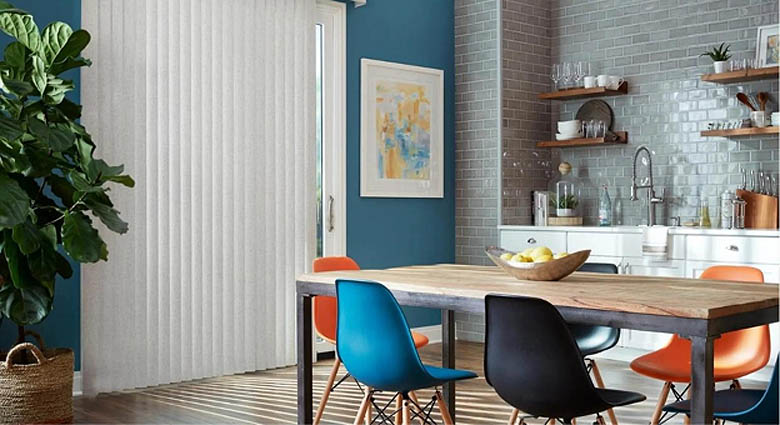
Fabric vertical blinds are a practical alternative to curtains and drapery. They provide the soft texture and warmth of fabric with the adjustable light control of a blind. Twist the wand to tilt the vanes for filtered light, or guide them fully open to stack neatly to one side.
Fabric vanes come in a wide range of colors and textures, and optional PVC backing can be added for better light blocking and a neutral appearance from the outside. For homeowners who want the softness of drapery with the convenience of a blind, fabric verticals offer both without the bulk.
Faux Wood Vanes
Faux wood vertical blinds bring the warm, classic look of wood to sliding doors and wide windows. They coordinate beautifully with horizontal faux wood blinds elsewhere in the house, which creates a cohesive look across a room where different window types need different treatments.
The material resists moisture and is easy to clean, making faux wood a smart choice for patio doors that open to humid air or high-traffic areas where vanes are touched frequently.
PVC Vanes
PVC remains the most affordable vertical blind option and performs well in high-traffic and high-humidity areas. Updated PVC vanes now come in both smooth and embossed textures, with a broader color palette than older versions. They are durable, lightweight, and simple to maintain, which is why they remain the most popular choice for rental properties and budget-conscious projects.
For a comparison of how vertical and horizontal blinds differ in performance and appearance, Blindster's guide on vertical vs horizontal blinds covers the distinctions clearly.
Still Standing, Still Working
Vertical blinds are not trying to be trendy. They are trying to cover a specific kind of window well, and they continue to do that better than most alternatives. The materials have evolved, the hardware has gotten quieter, and the design options have expanded far beyond the rigid white PVC that gave the category its dated reputation. In the right setting, with the right material and color, vertical blinds look clean, intentional, and entirely current.
Every Blindster vertical blind is custom-made to your exact window or door measurements and backed by the Fit or Free Guarantee. If you want to see colors and textures in person before you commit, order up to 10 free samples shipped within one business day. Some products earn their place not by chasing trends, but by simply continuing to solve the problem they were built for.
Frequently Asked Questions
Are vertical blinds outdated in 2026?
No. The dated look people associate with vertical blinds comes from older PVC styles in limited colors. Today's vertical blinds are available in fabric, faux wood, and textured PVC with modern hardware that looks and operates nothing like the versions from decades past.
What are people replacing vertical blinds with?
Panel track shades and cellular shades on vertical tracks are popular alternatives for sliding doors. Blindster's guide on the best coverings for sliding glass doors compares all the main options. However, vertical blinds remain the most practical and affordable option for wide openings, especially when you want precise tilt control and side-to-side access.
Why don't people like vertical blinds?
Most dislike stems from memories of cheap, noisy PVC verticals from the 1990s. The product has evolved significantly since then, with quieter hardware, softer materials, and a much wider range of colors and finishes.
Can vertical blinds look good in a modern home?
Yes. Fabric vertical blinds in neutral tones provide a soft, contemporary look. Faux wood verticals add warmth and coordinate with other wood-toned treatments in the same space. The key is choosing a quality material and a color that suits the room.
Are vertical blinds good for large windows?
Vertical blinds are one of the best options for large or wide windows because their vanes hang independently from a headrail track, so width does not affect operation. They can span openings up to 16 feet and still operate smoothly.
Do vertical blinds come in cordless options?
Yes. Blindster's vertical blinds use a cordless wand control system. Twisting the wand tilts the vanes, and guiding it from side to side opens or closes the blind. There are no dangling cords, which makes them safer for homes with children and pets.
- What Cell Size Do I Need? Cellular Shade Sizes ExplainedBlinds, Shades & Shutters
- How to Choose the Perfect Bamboo Shades for Your HomeBlinds, Shades & ShuttersHow To
- What Is a Window Treatment? Types, Uses & How to ChooseBlinds, Shades & ShuttersCommon Questions
- How to Choose the Right Window Covering for Every Room: A Decision GuideBlinds, Shades & ShuttersHow To
- Corded Vs Cordless Blinds: Which Is The Best Option For Your Home?Blinds, Shades & ShuttersCommon Questions